





Impact of Meteorological Drought on Pastoralist Livelihood Assets in Southwest Somalia

The study aimed to understand how meteorological drought, particularly rainfall deficits and prolonged dry periods, affects the key livelihood assets of pastoral communities that depend heavily on livestock production.
Like

Share this post

Choose a social network to share with, or copy the URL to share elsewhere

This is a representation of how your post may appear on social media. The actual post will vary between social networks

Explore the Research

SpringerLink
SpringerLink SpringerLink

Impact of meteorological drought on pastoralist livelihood assets in the Southwest of Somalia - Discover Sustainability

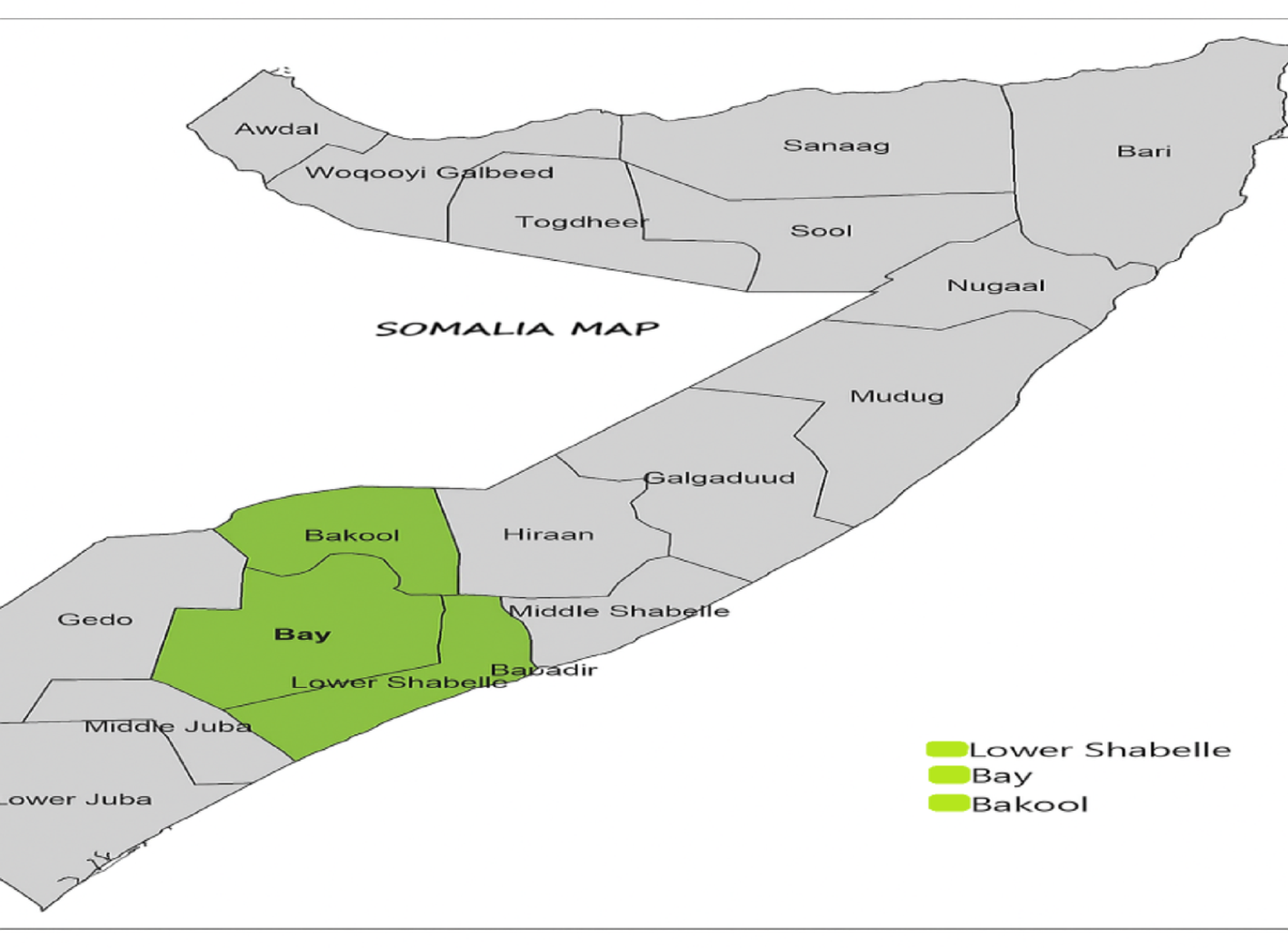
Somalia’s climate is mostly arid and semi-arid, with two major rainy seasons and irregular rainfall. Meteorological droughts are becoming more intense and frequent in the southwest of Somalia, increasing vulnerability, disrupting livelihoods, and causing drought-related migration and population displacements. The study examines the multifaceted impacts of meteorological drought on pastoralists’ livelihood asset categories: human, social, physical, financial, and natural. Data were gathered in southwest Somalia, focusing on three drought-prone regions-Lower Shabelle, Bay, and Bakool-through extensive semi-structured interviews and questionnaires with a sample of 180 pastoralists. The results indicated that pastoralists were vulnerable to the meteorological drought; natural resources such as water and pasture are becoming increasingly scarce. Simultaneously, essential physical infrastructure, such as water systems, irrigation facilities, and agricultural tools, has declined. At the same time, widespread livestock losses and the collapse of pastoralists’ incomes have significantly eroded the financial assets of households that raise animals. Human assets, such as education, health, and traditional knowledge, were affected by the drought. The patterns of migration, along with the absence of mutual support systems, have profoundly weakened the conventional social networks that once existed in the southwest. This situation has diminished social cohesion and overall community resilience. The findings indicate that asset losses are cumulative, underscoring the need for effective drought resilience strategies for pastoralist communities. To effectively address this crisis, policymakers and local institutions must work together to invest in long-term rangeland management, build financial resilience to help pastoralists recover, implement public health interventions, and rebuild and rehabilitate physical infrastructure.

Over the last 30 years, Somalia's climate has experienced an increase in climate variability. These climatic changes have led to increased frequent and severe drought events. These climate extremes, which negatively impact the natural resources of pasture and water essential in animal existence, are also extremely important for livestock to survive.

Meteorological drought means that precipitation falls below long-term averages, resulting in long-term drought where plants grow slow and water evaporates. For pastoral communities that depend on the kind of natural grazing systems, the impact of a minor fluctuation in rainfall affects herds productivity and family livelihoods a few degrees. Accordingly, the objective of the study was to investigate how meteorological drought impacts pastoral living resources of livelihoods can be related to the livelihood assets and the household coping mechanisms for such environmental stresses.

The study employed the Sustainable Livelihoods Framework (SLF) to study drought impacts in all types of livelihoods resources based on drought impacts. The SLF approach recognises that livelihoods are built up on the basis of a variety of natural, physical, financial, human, and social assets. In pastoral systems the natural factors pasture and water that are particularly important for the production of livestock, are directly dependent on pasture and water.

And in one of a study on the effect of meteorological drought on different kinds of livelihoods assets and how changes in the environment affect the resilience of households in pastoral practices. Field data were collected from pastoral households in drought-affected parts of Southwest Somalia, along with meteorological data to evaluate rainfall patterns and drought severity. This made a focus of the analysis on the relationship of rainfall variability with the availability of natural resources.

Results indicated that meteorological drought greatly lowers pasture availability, and that they lead to drying of common water sources including shallow wells, seasonal rivers and natural ponds. This means that during lengthy dry seasons when the vegetation becomes sparse, grazing areas for livestock are hard to come by and so pastoralists search for other grazing spaces instead.

Perhaps the most devastating impact of the study was the deterioration of the natural livelihood assets. Decreased rainfall led to poor pasture regeneration and reduced water availability in grazing areas, which compromised livestock productivity and health. Under drought condition, the body condition of livestock dropped because of the lack of sufficient nutrition and long distances for grazing land and water. Shepherds were often confined to the field for longer periods of time, causing them to run animals over very long distances, which raises their diseases and makes livestock suffer even more.

The implications of these environmental pressures were particularly painful for pastoral households who relied heavily on livestock as their main source of income. The study also found that meteorological drought created knock-on effects on other livelihood assets. As livestock output waned, income from livestock sales and milk production was hit by a pulldown in pastoral households. The reduced financial assets hindered household purchases of food, veterinary drugs and other critical merchandise. So, with this, many families faced more food insecurity during those harsh stretches of drought.

Households were obliged to sell animals cheaply, to meet their immediate need, which further undermined their future survivability. Drought conditions had an impact on human and social assets as well. Homes, in some instances, were forced to spread labor among households to make up for increased pressures of sheep husbandry and water fetching.

Community support networks and traditional social institutions were often central to enabling families to respond to drought. Informally, these networks provided such needs as food security, water access at common points, and cooperation among pastoralists when resources became scarce. But, as the drought continued or worsened, these social ways of coping were sometimes put to the test when communities competed for scarce resources.

One of our major findings, too, was that environmental stress in the form of drought affected the pastoral mobility pattern. Pastoralists often shifted sheep to pasture and water in response to limited pasture and water. Mobility though a conventional adaptation strategy in pastoral systems, the increasing occurrence of drought events has led to mobility of cattle into new territories and increased the frequency and thus frequency and also the likelihood at times the unpredictability of movement.

In certain circumstances, pastoralists may have relocated their livestock, on occasion in agriculture activities in addition (e.g. the cattle were also being farmed and land and water resources might have been competitive for control of resources and water.

Overall, the study showed that weather-induced drought is one of the contributing factors affecting livelihoods vulnerability in pastoral pastoral areas of Southwest Somalia. The results revealed how climatic shocks impact various aspects of pastoral livelihood, from access to natural resources to income and household food security.

Through a lens of livelihood assets, the study contributed to a more holistic analysis of the way changes of the landscape shape farm resilience to, and resistance from, the environment. The study also showed a number of issues that need to be further studied; however, all these factors were well done.

Although the research explored the direct direct influence of meteorological drought on livelihood assets, it did not investigate the socio-ecological processes that pastoral communities would navigate in responding to drought conditions. In particular, this requires further studies on how pastoral mobility, resource competition, and environmental pressures act on one another across multiple land-use systems.

Based on this study, the goal of this research is to contribute to the understanding by exploring the interaction between eco stress due to drought and the human response and resources within agro-pastoral systems through an applied ecological lens. This paper aims at developing a socio-ecological drought framework that focuses on community-based experiences, which, in turn, will allow local resources to connect during the time of drought in response to the complex entanglements among the climate variability, livelihood adaptation effects under drought-induced environmental stressors in Somalia.


Please sign in or register for FREE

If you are a registered user on Research Communities by Springer Nature, please sign in

Follow the Topic

Drought
Life Sciences > Biological Sciences > Plant Science > Plant Stress Responses > Drought
Food Security
Life Sciences > Health Sciences > Health Care > Nutrition > Food Security
SDG 11: Sustainable Cities
Research Communities > Community > Sustainability > UN Sustainable Development Goals (SDG) > SDG 11: Sustainable Cities
Climate Change Mitigation
Humanities and Social Sciences > Society > Sociology > Environmental Social Sciences > Climate Change Mitigation
Climate Change Management
Physical Sciences > Earth and Environmental Sciences > Earth Sciences > Climate Sciences > Climate Change > Climate Change Management
Sustainability
Research Communities > Community > Sustainability

What are SDG Topics?

An introduction to Sustainable Development Goals (SDGs) Topics and their role in highlighting sustainable development research.

Continue reading announcement

Related Collections

With Collections, you can get published faster and increase your visibility.

Economic Responses to Environmental Challenges: Evidence, Models, and Innovations

Environmental degradation, climate change, and resource scarcity have emerged as critical global challenges, posing significant threats to economic stability, public welfare, and sustainable development. These complex issues require not only technological innovation and policy reform but also a deep understanding of the economic mechanisms that drive environmental outcomes.

In response, this Collection focuses on how economies can effectively address these threats through data-driven research, advanced modeling, and strategic policy design. The issue brings together studies that apply econometric and statistical methods—such as time series analysis, panel regression, spatial econometrics, and simulation-based models like Integrated Assessment Models (IAMs) and Computable General Equilibrium (CGE) models—to assess environmental policies and measure their economic impacts. These analytical tools are used to quantify trade-offs, predict long-term outcomes, and guide decision-making under uncertainty. By bridging economics, environmental science, and public policy, this collection deepens the empirical and theoretical understanding needed to design effective responses. It strengthens the foundation for achieving environmental sustainability alongside economic resilience.

Publishing Model: Open Access

Deadline: Jun 30, 2026

Progress on Reforms and Transitions for Sustainable Development in the Developing Countries

The United Nations recognizes 125 developing economies in 2024. These nations possess vast untapped potential, offering abundant resources and a burgeoning workforce. Their growth and development help drive global economic expansion, offer new market opportunities, and stimulate international trade and investment. Moreover, their voices are indispensable in addressing global challenges such as climate change, poverty, and inequality. In the last three decades, many developing countries have undergone significant economic and social transformations. By embracing market-oriented reforms, investing in infrastructure, education, and healthcare, and adopting sustainable practices, many nations such as China, Thailand, Vietnam, etc., have achieved remarkable progress in reducing poverty, improving living standards, and addressing environmental concerns.

As the world continues to evolve, shaped by globalization and technological advancements, it is imperative to critically examine the reforms and transitions of developing countries. By critically examining and/or analyzing both successes and failures, we can identify valuable lessons and best practices to inform and/or devise future policies and strategies desired. It is paramount that sharing knowledge and experiences among nations can foster collaboration, accelerate progress, and ensure a more sustainable and equitable future for all.

Discover Sustainability is pleased to announce a Collection focused on the latest advancements in social-economic reforms and transitions aimed at achieving sustainable development in the world’s developing nations. This Collection seeks to explore strong policies, innovative models, effective practices, and real-world case studies that address the multifaceted challenges and opportunities facing these countries. By sharing insightful findings and practical recommendations, this Collection aims to support and facilitate reforms and transitions that contribute to a more sustainable development for all countries in the coming decades.

In this Collection, original research articles and reviews are welcome. Research areas may include (but are not limited to) the following:

• Institutional reforms and economic diversification

• Financial sector development and inclusive finance

• FDI, green FDI, The Global Minimum Tax

• Trade liberalization and regional integration

• Innovation and technological advancement

• Forestry, poverty reduction and rural livelihood

• Forest transition, land transition, land use policies

• Education and human capital development

• Environment, health, and growth

• Green tourism, green logistics, green transportation

• Gender equality and women’s empowerment

• Climate change mitigation and adaptation, nature-based solutions

• Sustainable forest management, restoration, and reforestation

• Renewable energy and energy efficiency

• Circular economy, sharing economy and waste management

• Good governance and corruption control

• Democratic governance and political participation

• Rule of law and property rights

• Public sector reform and capacity building

• Green transformation, digital transformation

• Knowledge management systems, Mindspongeconomics

• Culture Tower, environmental culture, eco-surplus culture, high-quality culture

• Sustainable consumption and production

• AI technology and cross-border trade for sustainable development

This Collection supports and amplifies research related to:SDG 8, SDG 9, SDG 11, SDG 12, SDG 13& SDG 16

Keywords: Sustainable Development; Economic Reform; Green Transformation; Digital Transformation; Economic Growth; Environmental Culture; Circular Economy; Mindsponge-Mindspongeconomics; Knowledge Management System

Publishing Model: Open Access

Deadline: Jun 30, 2026