Important to Involve Both Parents in Breastfeeding
Published in Public Health



Background
It is well known that breastfeeding provides the best nutrition for infants; thus, it is recommended that infants are exclusively breastfed for the first 6 months and continue breastfeeding for 2 years or longer. Most women plan to breastfeed during pregnancy, but many stop earlier than they intend to. In Sweden, exclusive breastfeeding among two-month-old infants has declined from 80% in 2000 to 60% in 2020.
The World Health Organization states that women and their families need breastfeeding support from the healthcare system. However, the healthcare system does not currently meet these support needs. It is important that expectant parents and breastfeeding families have equal access to parental support for breastfeeding. Nevertheless, socio-economically vulnerable groups and families with more than one child are reached to a lesser extent by parental support groups.
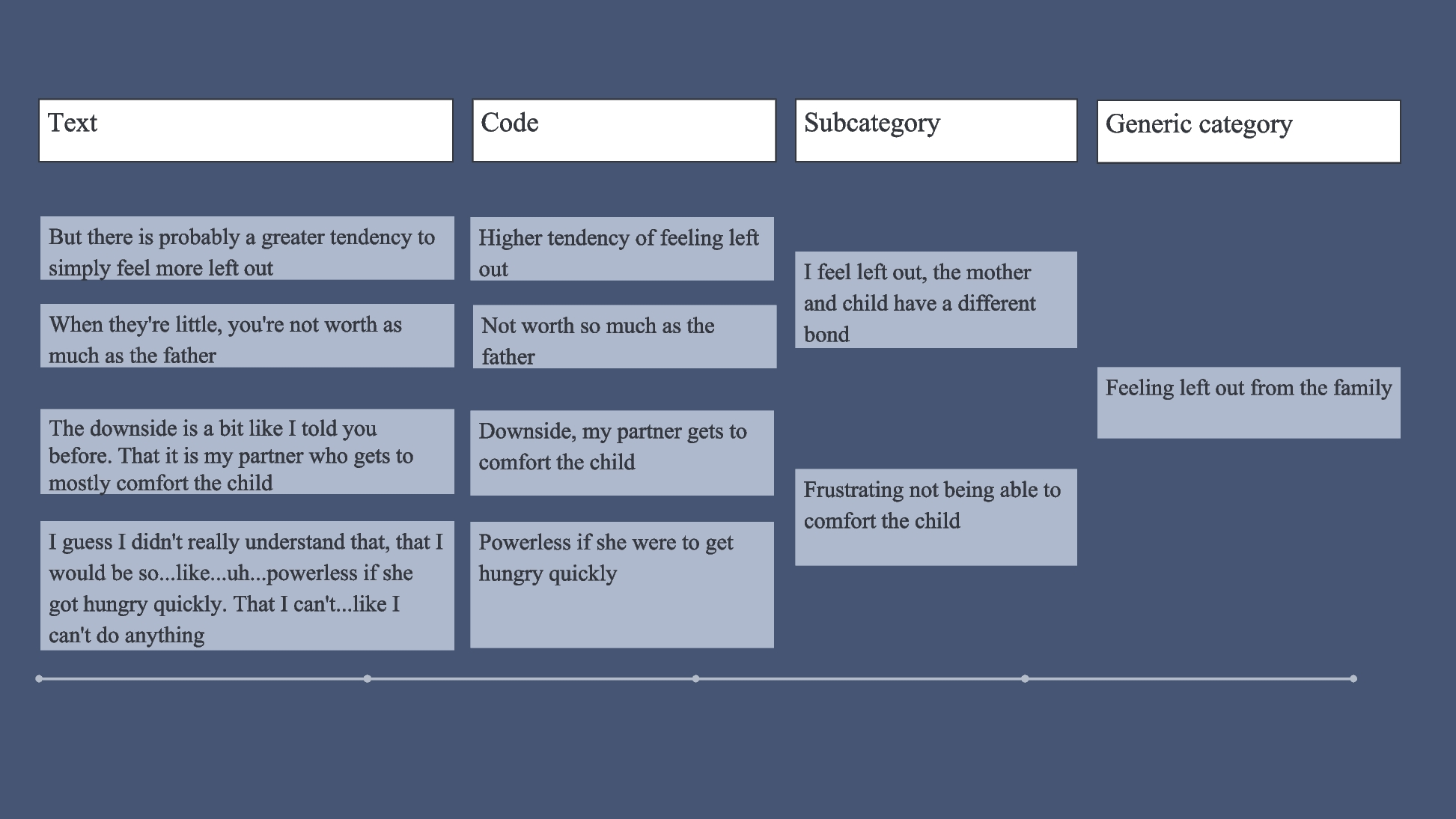
Women believe that their partner's attitude and support are essential for exclusively breastfeeding for 6 months. They appreciate it when their partner shares household chores, cares for them, and does not pressure them to use commercial milk formula. At the same time, previous research on partners' perspectives and experiences with breastfeeding shows that their primary goal is to bond closely with the infant. Partners often perceive breastfeeding as a barrier to bonding and feel left out during the breastfeeding period. They describe feeling excluded from breastfeeding decisions and are unsure of their role in making decisions about breastfeeding and providing support.
Partner support can influence breastfeeding, but there is a lack of knowledge about the most effective ways to involve partners in breastfeeding. The aim of the study was to explore partners’ experiences regarding breastfeeding while participating in The Breastfeeding Study.
The Intervention
A structured breastfeeding support programme was implemented in Region Sörmland, Sweden. In order to reach all parents, we offered reflective talks about breastfeeding during regular visits to the midwife at the antenatal clinic and the child healthcare nurse at the child healthcare centre. Parents received breastfeeding support both during the woman's pregnancy and after the infant was born. This support was provided to both first-time and experienced parents and included watching videos about breastfeeding. These videos covered topics such as recognising newborns' signals for breastfeeding and what to do if breastfeeding is challenging. Parents also learned about the benefits of breastfeeding and skin-to-skin contact between parent and infant.
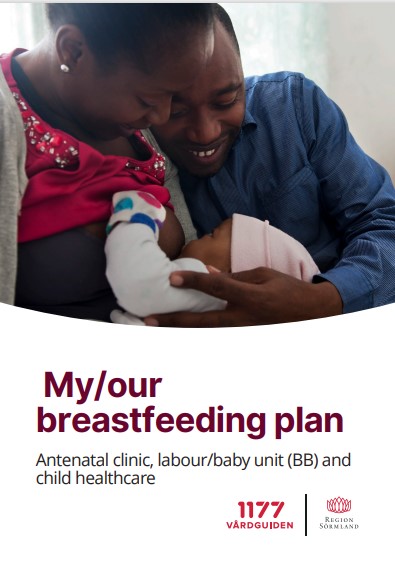
Expectant parents discussed their preferences with healthcare professionals and created a breastfeeding plan, considering their expectations and previous experiences with breastfeeding, as well as the help they desired from each other, relatives, and healthcare professionals. The support also included tips on how the partner could be involved in breastfeeding, such as skin-to-skin contact with the infant, bathing the infant, singing to the infant, or taking the infant for walks.
Results
Both partners in the intervention and control groups felt it was important to be part of the family and that the family's everyday life was well-functioning. Partners who participated in the support programme reported feeling involved and that they cooperated with the mother during the breastfeeding period:
I have taken him out in the pram myself and sit with him a lot. It has been great fun. I have been able to be very involved. There is no difference between us. (Interview IG, Informant 12).

We have been able to... communicate in a good way... you talk so that you are on the same page all the time. But also that you share the practical because it has to work as well. So we have to pump. But that’s not a disadvantage; it’s just that you have to be a little organised.” (Interview IG, Informant 7).
Partners in the intervention group also described how the support from healthcare professionals made them feel secure:
I think it feels safe to have that guidance, and she has been positive about breastfeeding, our nurse; it has felt good. (Interview IG, Informant 14).
However, partners in the intervention group said it was convenient when both parents could share feedings, since it simplified everyday life. They preferred bottle feeding with breast milk in the first place, but it could be topped up with commercial milk formula when the breast milk was not enough:
Practically - If there’s a moment when it’s just me at home. We think it’s important that he gets as much breast milk as possible and it’s good that...she has time to pump and that there is...in a bottle. (Interview IG, Informant 7).
Knowledge about the health benefits of breastfeeding helped partners to make informed decisions about whether to give breastfeeding or commercial milk formula to the infant:
As much antibodies as possible. Before, I probably thought that it was just a matter of supplementing with formula. But it doesn’t feel like that anymore, considering that we have come to understand that breast milk contains a lot more than just energy. (Interview IG, Informant 9).
Conclusion
The theme for the World Breastfeeding Week 2024 is Closing the gap: Breastfeeding support for all. It is important for healthcare professionals to offer structured support so that it reaches all parents, which means working with the whole family and having a reflective dialogue about how breastfeeding works. That dialogue has revealed that partners are keen to feed the infant. It's important to involve the partner, to explain how they can be involved without feeding the infant explains the researchers Ingrid Blixt, Eva-Lotta Funkquist and Ove Axelsson.
For single mothers, it is crucial for healthcare professionals to involve other relatives, such as grandparents, in the support programme.

Follow the Topic
-
International Breastfeeding Journal
This journal encompasses articles about breastfeeding, focusing on nursing, midwifery, paediatric, obstetric, family medicine, public health, immunology, physiology, sociology and many other topics.

Related Collections
With Collections, you can get published faster and increase your visibility.
Implementing the International Code of Marketing of Breast-milk Substitutes: Legislation, monitoring, enforcement, advocacy
Breastfeeding is the most cost-effective intervention available to protect and promote health and well-being of children, women and populations worldwide. The evidence shows that breastfeeding save lives, reduces the burden of infectious and chronic diseases, supports optimal cognitive development, and contributes to maternal health by reducing the risk of breast and ovarian cancer, type 2 diabetes, and postpartum depression. The 2023 Lancet Breastfeeding Series has documented that scaling up breastfeeding to near universal levels could prevent over 800,000 child deaths annually and avert an estimated 20,000 maternal deaths from breast cancer each year. Beyond its individual health benefits, breastfeeding carries implications for planetary health. It is a sustainable, zero-waste, low-carb food system that requires no packing, no supply chains, and no manufacturing.
Yet despite the strong evidence, breastfeeding rates remain far below recommended levels in almost every region of the world. Among the main and well-documented barriers to optimal breastfeeding are the inappropriate marketing practices of the breastmilk substitutes (BMS). Aggressive, misleading, and pervasive commercial promotion of the commercial milk formula and related products, targeting mothers, families, and health workers through advertising, free samples, sponsorships, and increasingly through digital and social media, systematically undermines breastfeeding initiation, exclusivity, and duration.
The World Health Organization responded to this challenge more than four decades ago with the adoption of the International Code of Marketing of Breastmilk Substitutes (the Code) by the World Health Assembly (WHA) in 1981, subsequently strengthened through multiple WHA resolutions. The Code and resolutions establish a framework to restrict inappropriate BMS marketing, protect health systems from commercial influence, and ensure that parents and caregivers receive accurate, unbiased information about infant feeding. Most recently, WHA resolution reaffirmed the urgency of regulating digital marketing of BMS and commercial foods for infants and young children.
Despite this international regulatory framework, frequent and continuous violations of the Code and of local legislation have been extensively documented globally. The 2026 WHO/UNICEF/IBFAN status report confirms that while 148 countries have enacted at least some Code-related legal measures, only 37 countries are substantially aligned with the Code, and 46 still have no legal measures. More critically, even among countries with legislation in place, implementation remains insufficient. One of the most significant and persistent gaps is the absence of clear, functional mechanism for monitoring compliance with the Code and local legislation. Equally concerning is the widespread lack of meaningful sanctions for violations. While 95 countries define sanctions, enforcement remains weak, inconsistent, and in many cases absent, allowing the BMS industry to operate with impunity. These structural failures allow unethical marketing practices to persist, undermine breastfeeding practices, and contravene obligations under international human rights instruments, including the Convention of the Rights of the Child.
The International Breastfeeding Journal invites submissions for this special collection dedicated to advancing the science, and practice of Code implementation and enforcement globally. The central purpose of this special collection is to build a comprehensive knowledge base that documents real-world experiences of Code implementation: what has been attempted, what has worked, what has failed, and what lessons can be drawn for strengthening regulatory and enforcement framework worldwide.
This special collection seeks contributions from all global regions, with particular interest in experiences from low-and-middle income countries and from context that are frequently underrepresented in international literature. We are interested not only in success experiences but also in the challenges, barriers, and setbacks that countries, institutions, and advocates have faced in their efforts to implement and enforce the Code.
We welcome original research articles, systematic and narrative reviews, and countries case studies addressing, but not limited, to the following themes:
- National legislative processes: Experiences of the Code enactment, strengthening, and reform including political, legal, and industry-related barriers and facilitators.
- Monitoring and enforcement mechanisms: Design, implementation, effectiveness, and outcome of compliance monitoring systems.
- Sanctions and accountability: Experiences with the application of sanctions for Code violations, and their impact on industry behavior and breastfeeding outcomes.
- Conflicts of interest in health systems: Evidence of industry influence on health workers, professionals’ associations, and health facilities, and strategies for protecting against commercial interference.
- Civil society, community, and media roles in Code monitoring, reporting, and advocacy.
- Health system protections: Implementation and enforcement of bans on free supplies, gifts, and incentives to health workers, and industry sponsorship of professional and scientific meetings.
- Digital and social media marketing surveillance and regulation: Scope, strategies, and methodologies for detecting and documenting online and social media Code violations, and regulatory responses.
This Collection supports and amplifies research related to SDG 3, Good Health and Well-Being and SDG 2, End hunger, achieve food security and improved nutrition and promote sustainable agriculture.
All submissions in this Collection undergo the journal’s standard peer review process. Similarly, all manuscripts authored by a Guest Editor(s) will be handled by the Editor-in-Chief. As an open access publication, this journal levies an article processing fee. We recognize that many key stakeholders may not have access to such resources and are committed to supporting participation in this issue wherever resources are a barrier. For more information about what support may be available, please visit OA funding and support, or email OAfundingpolicy@springernature.com or the Editor-in-Chief.
Publishing Model: Open Access
Deadline: Apr 30, 2027