Mapping the Hidden Geography of High-Risk Fertility in India: What District-Level Data Reveals
Published in Social Sciences



Why We Looked Beyond National Averages
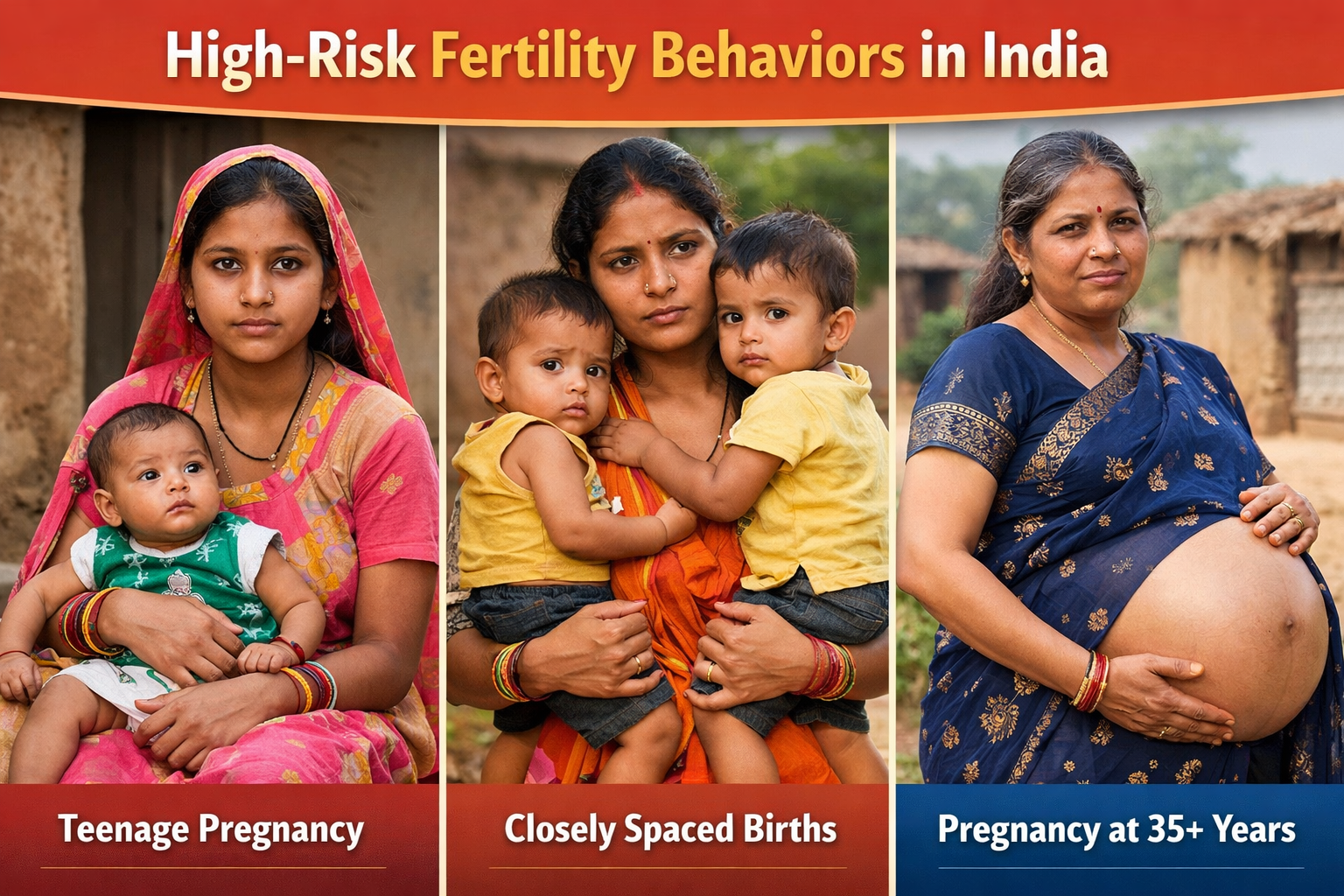
India’s fertility decline is often cited as a demographic success. However, national and state averages can conceal deep local inequalities. We were concerned that high-risk fertility behaviours—such as early or late childbearing, short birth intervals, and high birth order—may still be concentrated in specific pockets of the country, continuing to expose women and children to avoidable health risks.
Seeing Fertility Through a Spatial Lens
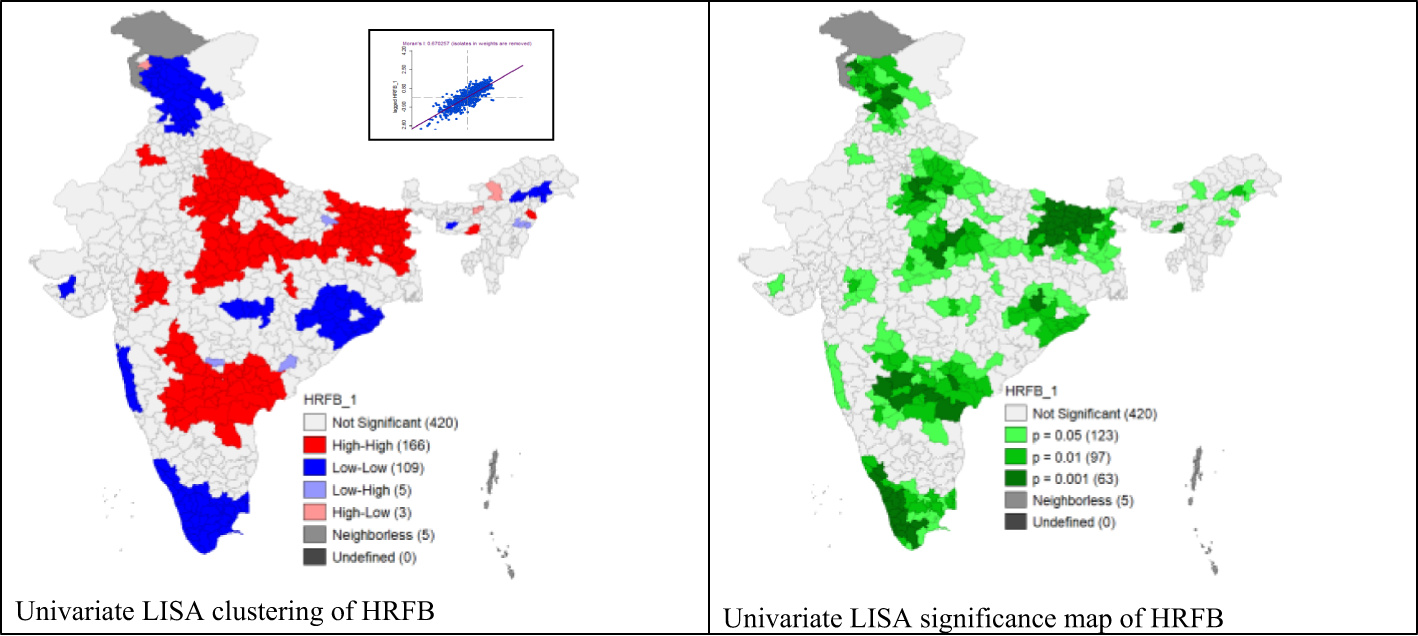
Using over 1.2 million birth records from the National Family Health Survey (2019–21), we applied district-level spatial analysis to identify clusters of high-risk fertility behaviour (HRFB). Instead of viewing districts in isolation, spatial methods allowed us to see how neighbouring districts shared similar fertility risks, revealing clear hotspots and coldspots across India.
What the Maps Revealed
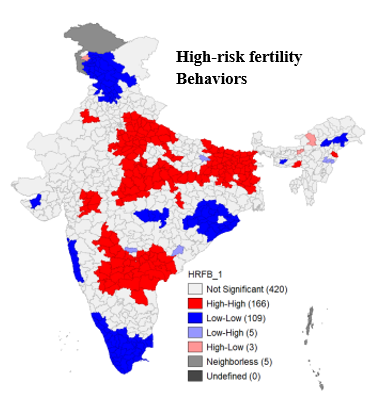
Nearly one-fourth of India’s districts emerged as HRFB hotspots, forming large contiguous belts across parts of Uttar Pradesh, Bihar, Jharkhand, Madhya Pradesh, Telangana, and West Bengal. In contrast, southern and hill states showed consistent coldspots. These patterns would remain invisible without district-level spatial analysis.
The Social Roots of Spatial Inequality
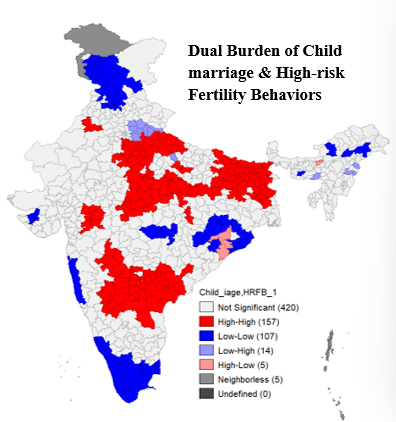
Hotspot districts were marked by significantly higher levels of child marriage, low female education, poverty, limited mass media exposure, and weaker engagement with family planning information. These disadvantages overlap spatially, reinforcing cycles of high-risk fertility across generations.
Why Child Marriage Matters Most
Decomposition analysis showed that child marriage alone explained nearly 70% of the gap in high-risk fertility between hotspot and coldspot districts. Early marriage extends women’s reproductive span while limiting autonomy over birth spacing and family size, making it a central driver of spatial inequality in fertility risk.
Implications for Policy and Practice
Many HRFB hotspots overlap with districts targeted under Mission Parivar Vikas, but our findings suggest the need to expand both coverage and scope. Beyond limiting births, district-specific strategies must address birth spacing, delayed childbearing, prevention of child marriage, and female education—especially in spatially clustered high-risk areas.
Reflections from the Research Journey
Working with spatial tools transformed how we interpreted familiar data. Seeing risk mapped across districts reinforced a key lesson: progress at the national level does not guarantee equity at the local level. Geography matters—and ignoring it risks leaving the most vulnerable behind.
Looking Ahead
Future research should combine spatial analysis with qualitative insights to understand how social norms and local contexts shape fertility behaviour. For policymakers, district-level evidence offers a powerful pathway to design targeted, equitable reproductive health interventions.
Further reading our paper: https://link.springer.com/article/10.1186/s12982-025-01263-5

I hold PhD in Population Studies and currently serve as a Senior Research Fellow at the International Institute for Population Sciences. My research interests span public health, sexual and reproductive health, and elderly health from a social science perspective. Additionally, I focus on gender-based discrimination, spatial health inequalities, migration and health, and environmental health impacts. I have published over thirty research papers and have presented at more than a dozen national and international seminars and workshops, which have enriched my multidisciplinary approach to research and policy formulation.
Follow the Topic
-
Discover Public Health
This is an open access journal publishing research from all fields relevant to public health.

Related Collections
With Collections, you can get published faster and increase your visibility.
The Economics of Longevity: Health Expenditure and Societal Implications for Public Health Systems
The relationship between health investment and life expectancy has long been a focal point in public health research and policy. As nations grapple with rising healthcare costs and varying health outcomes, understanding how financial allocations influence population health becomes increasingly critical. Numerous studies have illustrated that increased spending on health services often correlates with improvements in life expectancy; however, the complexities of this relationship are not fully understood. Factors such as socioeconomic status, healthcare accessibility, and the efficiency of health systems play significant roles in determining how investments translate into health outcomes.
At the national level, health investments primarily encompass government expenditure on healthcare systems, public health initiatives, and health infrastructure. Nations that allocate substantial resources toward healthcare often experience better health outcomes and increased life expectancy among their populations. For instance, countries with robust healthcare funding tend to provide more comprehensive services, including preventive care, chronic disease management, and health promotion programs, all of which contribute to enhanced population health. However, it is crucial to consider how these investments are distributed across different segments of the population. Inequities in health spending can exacerbate existing disparities, leading to significant differences in life expectancy among various demographic groups. Effective health investment strategies must address these disparities to ensure that improvements in life expectancy are equitable and inclusive.
The motivation for this Collection arises from the urgent need to bridge the gap between health expenditures and tangible improvements in life expectancy. Recent global health crises and ongoing disparities in health outcomes across different populations have underscored the necessity for a deeper exploration of how resource allocation affects health dynamics. This Collection seeks to provide a platform for researchers and practitioners to discuss empirical evidence, theoretical frameworks, and innovative approaches to understanding these critical interactions. By fostering dialogue around effective health investment strategies, we aim to contribute to the development of more equitable and efficient health systems worldwide.
The purpose of this Collection is to gather comprehensive research that elucidates the dynamics between health investment and life expectancy across diverse contexts. We welcome contributions that analyze historical trends, comparative studies, and policy evaluations, as well as those that explore the implications of financial investments on health equity. By highlighting interdisciplinary perspectives and fostering collaboration, this Collection aspires to advance the discourse on optimizing health investments for improved population health outcomes.
Topics of interest include, but are not limited to:
- Economic evaluations of health interventions
- Policy impacts on health spending and life expectancy
- Health equity and investment disparities
- Longitudinal studies on health expenditures and population health
This Collection supports and amplifies research related to SDG 3.
Keywords: health expenditure; healthcare economics; life expectancy; economic evaluation; population health; health investment; health policy
Publishing Model: Open Access
Deadline: Dec 31, 2026
Digital Frontiers in Public Health: Data-driven Solutions and Technologies for Efficiency, Effectiveness, and Equity
In recent years, the landscape of public health has been transformed by unprecedented access to high-quality data, advances in data storage and processing, and a growing willingness to share information across jurisdictions. The global response to the COVID-19 pandemic exemplified how coordinated data use and technological innovation can accelerate decision-making, enhance surveillance, and save lives. These developments mark a new era in which the application of modern data analytics in evidence-driven public health practices is not only possible but essential.
Building on this momentum, contemporary innovations are contributing to significant improvements in the three Es of public health: efficiency, effectiveness, and equity. Improved efficiency enables resources to be allocated and managed in a manner that generates the maximum attainable outputs; enhanced effectiveness ensures that public health policies, interventions, and practices achieve the expected health outcomes; and strengthened equity promotes fair access to healthcare and public health services across all populations. Together, these dimensions reflect the evolving priorities and capabilities of modern public health systems.
This Collection, “Digital Frontiers in Public Health: Data-driven Solutions and Technologies for Efficiency, Effectiveness, and Equity,” invites contributions that explore these themes through empirical studies, methodological advancements, case studies, and policy analyses. We seek manuscripts that highlight innovative data applications, cross-sector collaborations, digital health initiatives, and strategies that enhance equity through technology and data integration, as well as collaborative public health practices.
Topics of interest include, but are not limited to:
- Applications of novel data linkage and analytics methods in public health
- The role of participation and co-creation in addressing public health issues
- Digital and technological innovations in public health
- Complete or partial assessments of triple Es in public health
- Economic evaluations of public health interventions
By showcasing diverse approaches from around the world, this Collection aims to provide a comprehensive overview of how data-driven innovations are reshaping public health practice today, and in the future. Researchers, practitioners, and policymakers are encouraged to share their insights and experiences to contribute to this critical dialogue on the future of public health.
This Collection supports and amplifies research related to SDG 3.
Keywords: digital applications; data sharing; data infrastructure; economic evaluations; health equity; public health; policy analysis; health informatics
Publishing Model: Open Access
Deadline: Sep 30, 2026