Methane-eating bacteria hitchhiking on micro-algae
Published in Earth & Environment

Methane (CH4) is the second most potent greenhouse gas, after carbon dioxide. Lakes are a significant source of methane (CH4) to the atmosphere, with emission levels comparable to those from agriculture, which is the primary human activity contributing to the rise of atmospheric CH4. The emissions of CH4 from lakes are determined by the balance between CH4 production—via methanogenesis in the sediments—and CH4 loss through microbial oxidation. CH4 serves as substrate for certain bacteria (known as methanotrophs) as a source of energy and biomass.
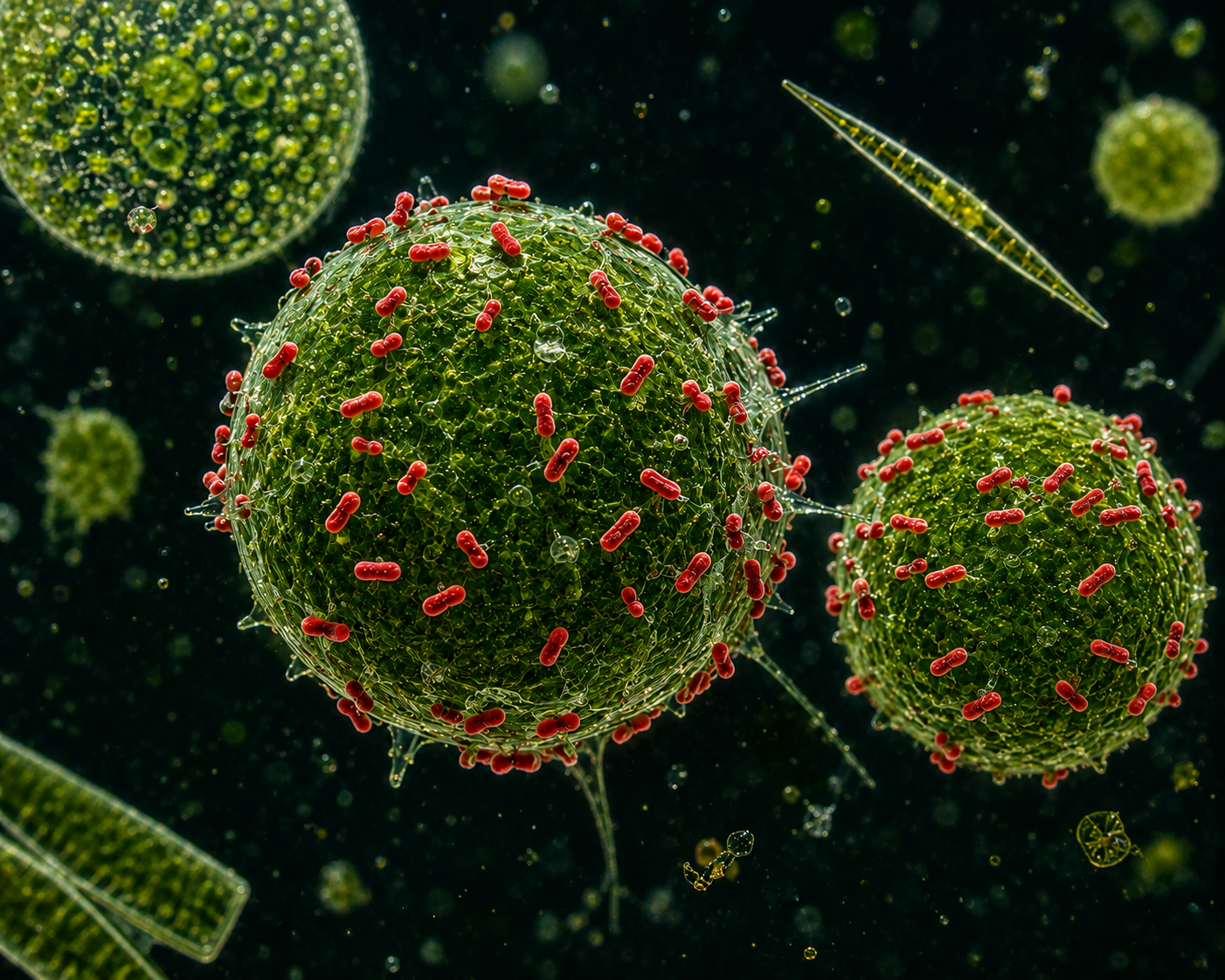
We conducted a study across 79 African lakes, ranging from very low-productivity lakes with clear water to highly productive lakes with green water, colored by the presence of microalgae (phytoplankton). The main finding of our study is that CH4 oxidation increases significantly with the quantity of microalgae. The surface of these microalgae is colonized by bacteria that live together in a mutually beneficial association. Among the bacteria attached to the phytoplankton are methanotrophic (methane-consuming) bacteria. Consequently, the more abundant the microalgae, the more abundant the methanotrophic bacteria, and the more intense the CH4 oxidation becomes.
This has significant implications for CH4 emissions from lakes. In a previous study, we demonstrated that an increase in phytoplankton biomass in lakes leads to greater CH4 production within the sediments, as phytoplankton detritus serves as a substrate for CH4-producing microorganisms. Our study therefore shows that water pollution (eutrophication) which increases the amount of phytoplankton in lakes and triggers CH4 production in the sediments, simultaneously promotes the growth of methanotrophic bacteria attached to the phytoplankton, which then assimilate the CH4. Were it not for these methanotrophic bacteria attached to the microalgae, the amount of methane released into the atmosphere would be even greater.
Finally, due to the presence of large quantities phytoplankton in lakes, and methanotrophic bacteria attached to phytoplankton cell we also showed that methane oxidation in lakes in higher than in the ocean and than in rivers, which we quantified in a separate study.

Follow the Topic
-
Nature Communications
An open access, multidisciplinary journal dedicated to publishing high-quality research in all areas of the biological, health, physical, chemical and Earth sciences.

Related Collections
With Collections, you can get published faster and increase your visibility.
Women's Health
Publishing Model: Hybrid
Deadline: Ongoing
Data for AI, AI for Data: cross-disciplinary cleaning, processing and analysis approaches
Publishing Model: Open Access
Deadline: Dec 31, 2026