More Than Just Power: How Fish Farms Can Unlock the Full Potential of Offshore Wind
Published in Earth & Environment and Sustainability

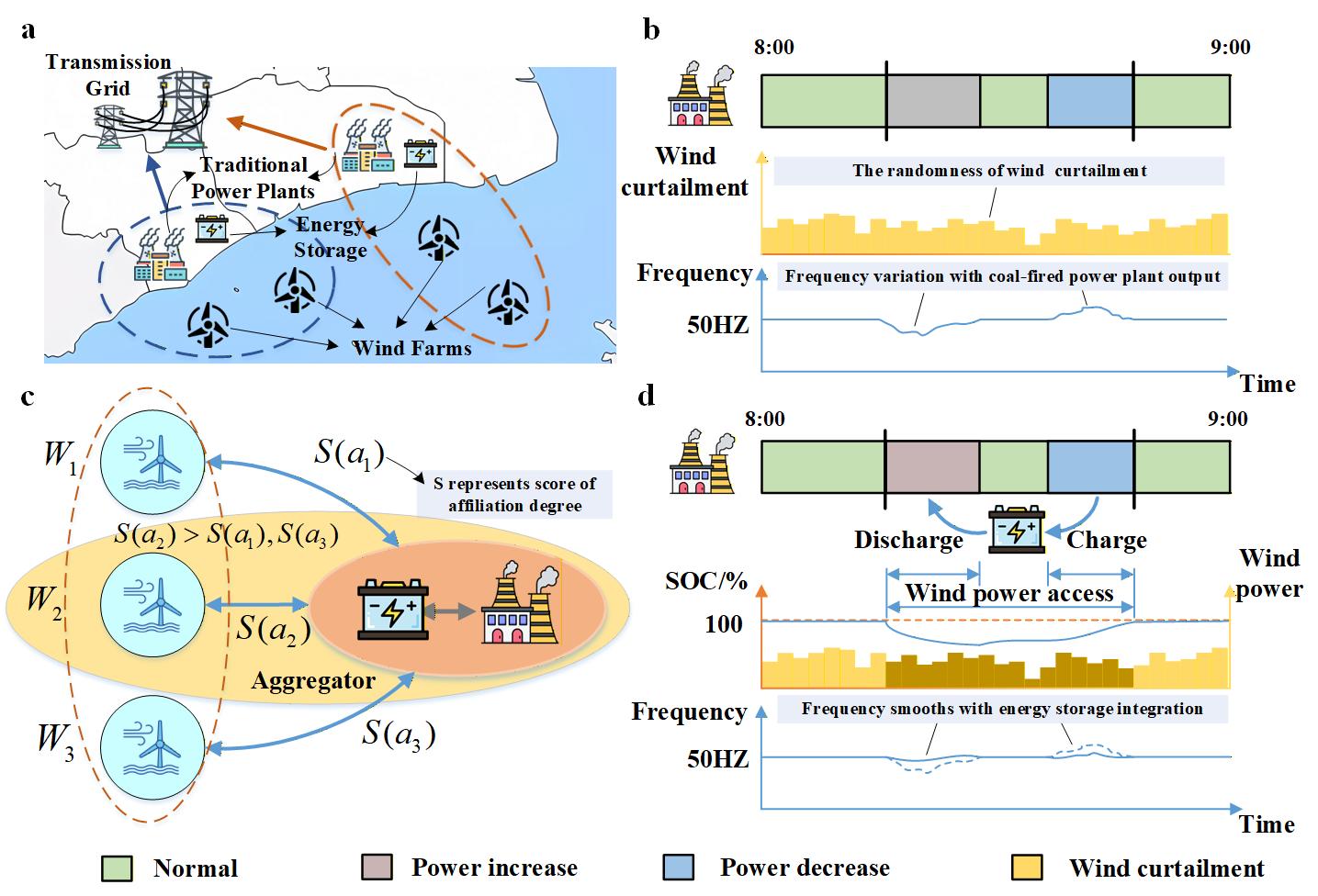




As researchers working in the energy sector, we often grapple with a frustrating paradox. We know that offshore wind energy is vital for addressing global climate challenges. Yet, the wind is fickle. It doesn't always blow when we need it, and sometimes it blows too much when demand is low. This variability creates a headache for grid operators and often leads to "curtailment"—a technical term for a wasteful reality where clean, renewable energy is simply thrown away because the grid can't handle it.
In East China, where offshore wind is developing rapidly alongside a massive fleet of traditional power plants, we asked ourselves a simple question: How can we stop wasting this wind?
Usually, the answer is "build bigger batteries." But batteries are expensive and resource-intensive. We realized we needed to think outside the battery box. We needed a "flexible load"—something that could consume excess energy on demand.
Our answer came from looking at what else shares the ocean with these wind turbines: Marine Ranches.
Finding Synergy: Integrating Energy and Aquaculture
We looked at the eastern coastal regions of China and noticed a unique overlap. This area isn't just a hub for power generation; it's also a major center for aquaculture. Modern deep-sea fish cages need power for automated feeding, monitoring, and lighting. Traditionally, these remote farms run on dirty, expensive diesel generators.
We wondered: What if we connected these dots? What if the fish cages became the "batteries" of the future—not by storing electricity, but by using it exactly when the wind is blowing hardest?
This led us to develop the concept of a "Source-Storage Aggregator." It sounds complex, but the idea is like a well-coordinated team. We combined four players into one system:
- Offshore Wind Farms: The clean but unpredictable energy source.
- Traditional Power Plants: The steady backup that ensures stability.
- Energy Storage: A smaller, more affordable battery for quick adjustments.
- Marine Ranches (Fish Cages): The "flexible consumer" that soaks up excess wind power.
Transforming Waste into Food and Revenue
Our modeling of 23 different aggregators along the East China coast produced results that surprised even us.
By integrating fish farms as flexible loads, we found we could drastically reduce the wasted wind energy. In our simulations, the regional wind absorption rate rose above 98%. This means almost every gust of wind captured by the turbines is actually used.
But the benefits go beyond electricity. This system is a win-win for sustainability:
- Decarbonization: We replace the diesel used by fish farms with clean wind power, cutting millions of tons of carbon emissions.
- Cost Savings: Because the fish farms absorb the jagged peaks of wind production, we don't need to build as massive a battery storage system, saving significant construction costs.
- Food Security: These marine ranches aren't just energy sinks; they are food producers. Our study estimates they could provide 35 kilotons of high-quality protein annually—including species like large yellow croaker and golden pomfret—advancing food security for the region.
A Blueprint for the Blue Economy
One of the most exciting aspects of this research is its scalability. While our study focused on East China, this model isn't limited to one region. Our analysis suggests that similar "wind-fish" aggregators could be effective in Europe and other parts of the world where wind resources and aquaculture potential overlap.
We believe this represents a shift in how we should think about renewable energy. It's not just about installing more turbines; it's about system-level thinking. By breaking down the silos between energy generation and food production, we can create a "Blue Economy" that is cleaner, more profitable, and puts more food on the table.
In the future, we hope to see offshore wind farms that do more than just stand in the sea—they will be the beating heart of vibrant, sustainable marine ecosystems.
Follow the Topic
-
Communications Engineering
A selective open access journal from Nature Portfolio publishing high-quality research, reviews and commentary in all areas of engineering.

Related Collections
With Collections, you can get published faster and increase your visibility.
Generative AI for mechanical engineering design and optimization
Publishing Model: Open Access
Deadline: Dec 31, 2026
Engineering Solutions in Wind Energy Systems: Design, Efficiency, and Sustainability
Publishing Model: Open Access
Deadline: Sep 30, 2026




Please sign in or register for FREE
If you are a registered user on Research Communities by Springer Nature, please sign in