More than the sum of its parts: Indigenous communities, archaeologists and genomicists uncover human history in the Andes
Published in Social Sciences, Microbiology, and Genetics & Genomics

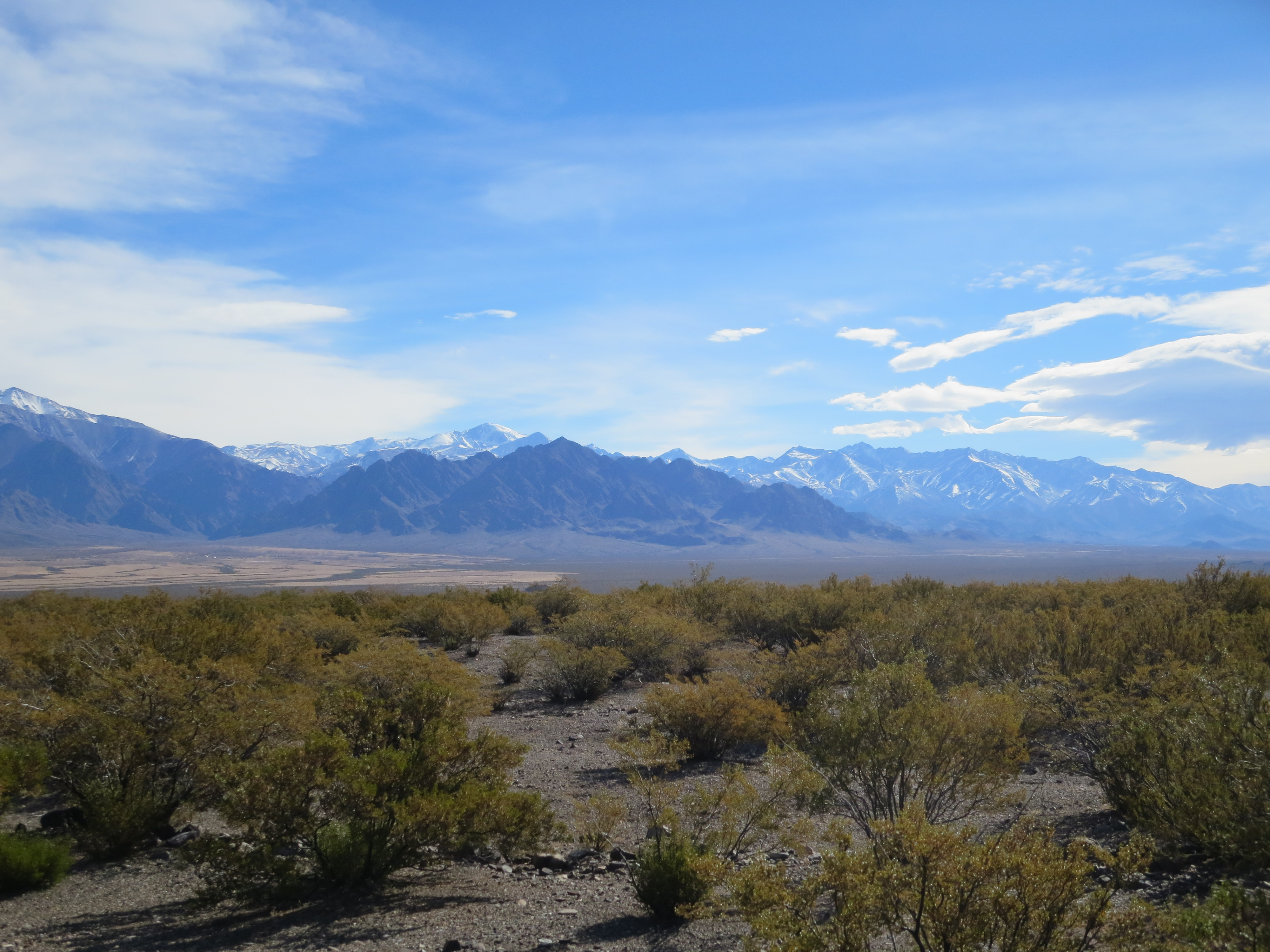

Embracing serendipity–in science as in life
Serendipity is defined as something interesting happening by chance, but chance needs to be accompanied by attitude. In science, as in life, paths rarely unfold as planned. The people we encounter reshape the journey through sustained and constructive dialogue. When such opportunities arise, one must be willing to leave the original roadmap and embark on longer journeys with more uncertain outcomes.
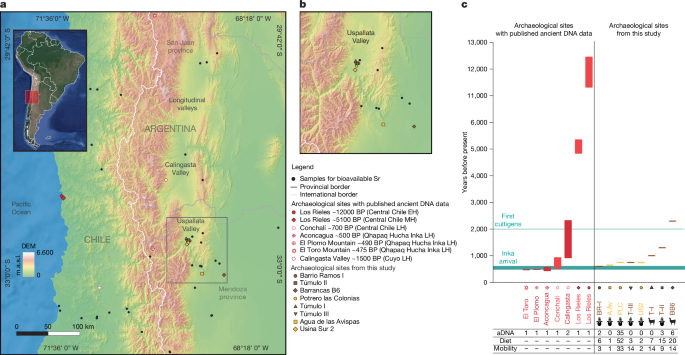
Conceived in the first place to include only the archaeological results, we had expected this research to be published some time ago. The encounters that came later between archaeologists, Indigenous communities, and genomicists brought delays and challenges along, but also widened the project in unanticipated ways, growing from (a) a small-scale archaeological study of past human mobility and migration1, to (b) a multivocal project incorporating the Huarpe Indigenous communities of Uspallata to investigate the biographical trajectories of people from the past, and finally to (c) a large-scale interdisciplinary collaboration including human and pathogen genomicists and paleoecologists seeking to understand the origins and trajectories of agriculture in the southern Andes (Figure 1).
The research presented in “Local agricultural transition, crisis and migration in the southern Andes” became for us a breakthrough in two dimensions: one academic, the other profoundly human. Combining complementary forms of knowledge and distinct worldviews, our intercultural and interdisciplinary approach was the source of astonishing discoveries.
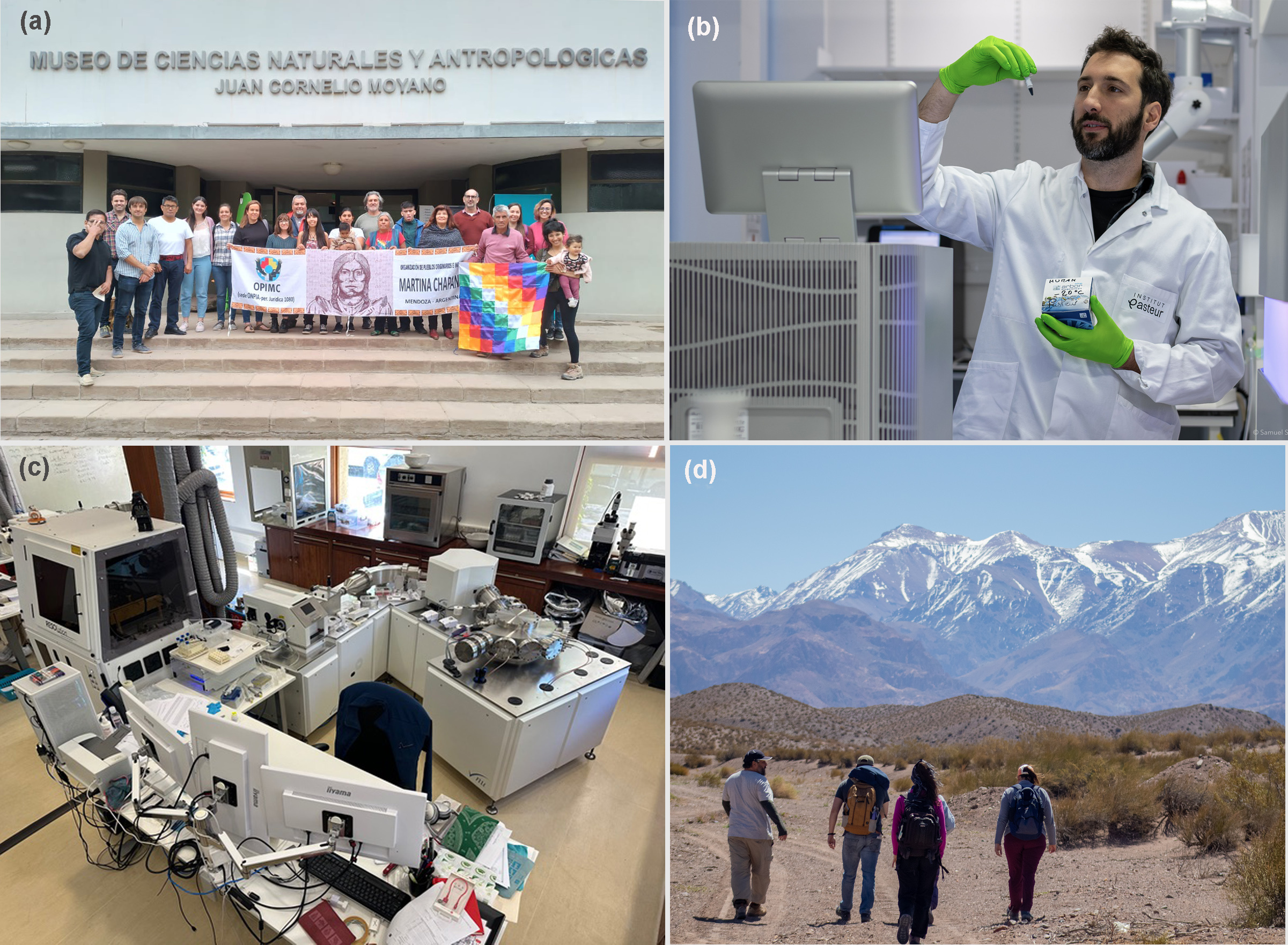
Figure 1: Dimensions of work in the multicultural project of the southern Andes: (a) Group meeting in October 2022 at the Museo Provincial de Ciencias Naturales y Antropológicas Juan Cornelio Moyano, Mendoza City, Argentina (Credit: Pierre Luisi?); (b) Nicolas Rascovan observing genomic samples at the Institut Pasteur, France (Credit: © Samuel Sotto/SIPA); (c) Isotopic lab at the Dept. of Geological Sciences of the University of Cape Town, South Africa (Credit: Petrus le Roux); (d) Archaeology team sampling plants for strontium analysis in Uspallata, Mendoza (Credit: Ailín Novellino).
When disciplines speak on different “scales”
At the beginning we were not aware that the remains we were studying could speak about the questions we ended up addressing. Ramiro, the archaeologist that initiated the study, was thinking at the scale of persons, sites and landscapes: where people lived, what they ate, how they buried their dead, and how mobile they were across the territory. The isotopic and contextual data he had assembled were already rich, but, on their own, did not have the capacity to tackle the biggest question people often ask about farming: How did agriculture arise? Did it arrive with newcomers, or did local groups adopt it?
Pierre and Nicolás–a French researcher based in Argentina and an Argentine researcher based in France, respectively–on the genomics side, were thinking about population history, focusing on topics such as the peopling of South America, dispersal routes, ancestry and changes through long timescales. Their initial motivation for investigating ancient Uspallata populations was to test whether a distinct genetic ancestry component previously identified in present-day populations from Central Western Argentina2 was already present in pre-contact populations, thus reflecting a deeper historical population structure. They did not initially appreciate how much nuance the isotopic information gathered by Ramiro could add: it gives concrete clues about dietary and geographic decisions made throughout human lives, which allow in turn inferring the contexts of long-term demographic and genomic trends. By focusing on averaged population stories (as many genomicists do), the valuable information of individual histories would have been overlooked.
The turning point was not a single analysis–it was a series of insightful conversations trying to translate each discipline’s evidence into testable hypotheses for the others. Archaeologists would point to a pattern in the record and say, “This feels economically expensive for a community to sustain” or “This regionally unusual mortuary behavior may respond to a sort of crisis”; and genomicists would reply, “let’s test demographic decline with effective population size analyses” or “If these people moved together, we could test if there were kinship links.” The archaeologist would add, “Fantastic! Strontium tells that they spent their lives somewhere else, arrived shortly before death, and were buried together with local people”, thus providing the geneticists a relatedness hypothesis to test for. That iterative back-and-forth–evidence, hypothesis, test, surprise, repeat–was the real engine of the paper. Interdisciplinary dialogue may feel tiresome at times, but it holds the most revealing discoveries.
The “mystery cemetery” that kept us awake
One archaeological site excavated in the 1930’s by the pioneer archeologist Carlos Rusconi became the beating heart of these conversations: Potrero Las Colonias (PLC)3. It is unusual by any standard in the region–a large cemetery, isotopically determined as largely composed of migrants of all ages and sexes, buried over a century in a small structure without grave goods, showing signs of malnutrition and disease, but without evidence of violence. For archaeologists and local communities likewise, it raises questions that are deeply human: Who were these people? Where did they come from and why did they move? Were they related? Were they welcomed?
These questions were “burning” in Ramiro’s mind long before we had a single genome. PLC is precisely the kind of site that pushes you to go beyond one line of evidence.
When genetic and isotopic results came together, we all remember one moment of collective realization: genetically, the migrants and the locals belonged to the same broader metapopulation. So this was not a story of strangers replacing the former inhabitants of a region; it looked more like a story of movement within a socially connected world.
Then kinship analysis added another layer of complexity: many of these persons were closely related, but migrated at different times, consistent with people moving into the regions where other family members arrived before, indicating planned and concerted moving decisions. And dietary evidence suggested a remarkably high reliance on maize. Put together, it painted a picture that was both sobering and astonishing: people likely left hard-earned fields and homes behind (something no farming community does lightly) and moved away in family groups. The best explanation was not opportunism, it was force majeure (Figure 2).
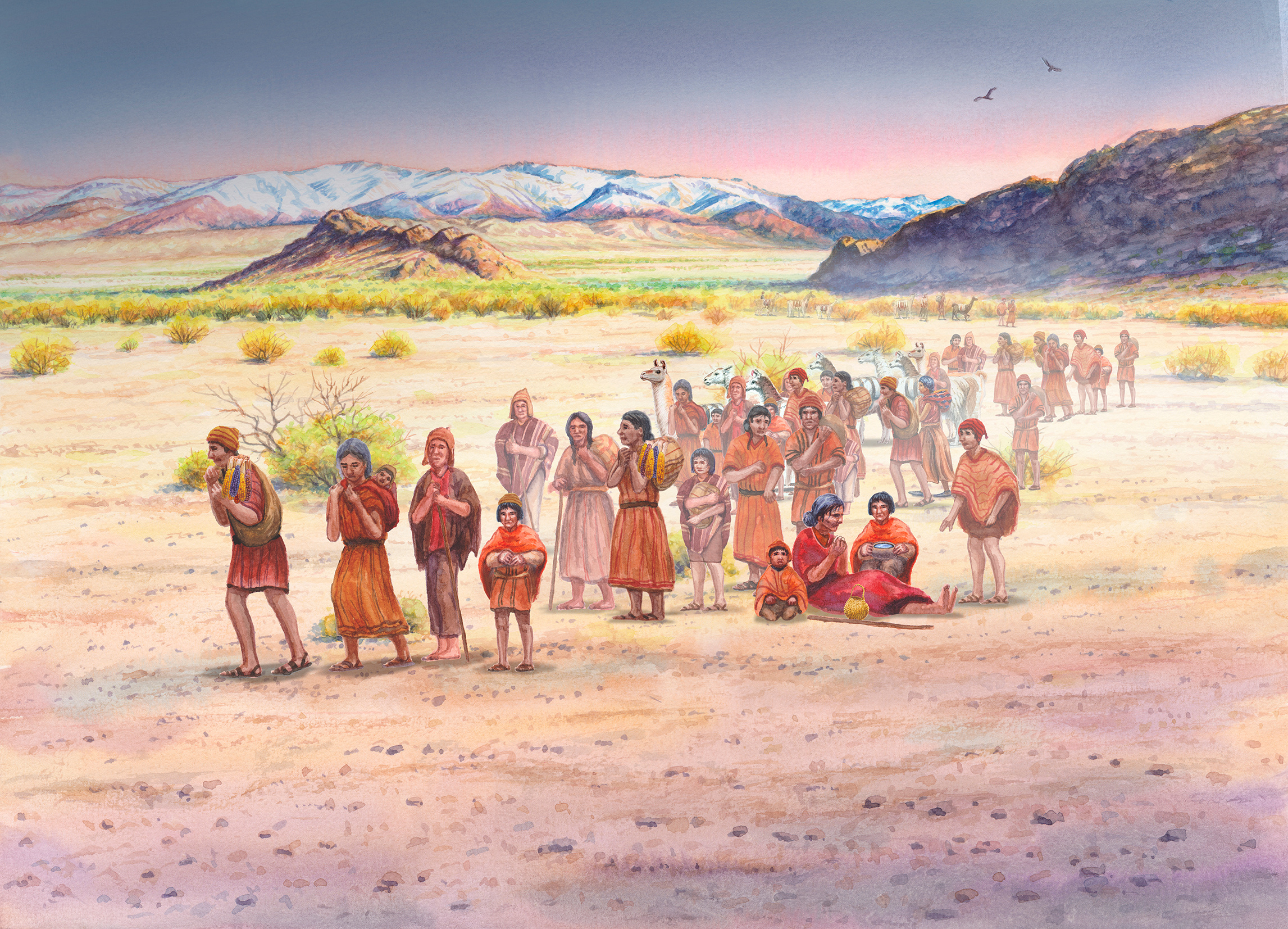
Figure 2: Pictorial representation of the migrating groups that reached the Uspallata Valley between 800 and 600 years before present (Artist and credit: Mauricio Alvarez).
We also found evidence of infection, including tuberculosis detected through ancient DNA, making the PLC story more understandable: a multi-causal crisis involving ecological instability, small population size, nutritional stress, and disease, with migration as a strategy of resilience rather than just a geographic event. At this stage, we clearly felt that we could tie independent clues together into a coherent narrative.
A contribution that changed the project’s ethics and meaning
We did not “add” community engagement as an epilogue; we grew into it as the work expanded. Working together with the Huarpe Omtas (leaders) Claudia Herrera (Guaytamari) and Graciela Coz (Llahué Xumec), who co-authored the paper along Matías Candito, the archaeologists obtained funding from National Geographic Society to develop a multivocal project. Then, at all stages of the project, we shared a multiplicity of in-person and virtual meetings to listen to the concerns and goals of the communities, as well as discuss the scientific findings. For instance, before obtaining any results, the genomicists met the communities to inform about the data being generated and to engage in dialogue about the questions to address, integrating Western and Indigenous knowledge systems. This collaborative process continued as results emerged and throughout the preparation of the article.
This reshaped our interpretation of the past and our understanding of why this research matters. Archaeology and paleogenomics are not neutral when they involve the ancestors of living peoples. For us, that became a practical reality: how we requested permission, how we explained methods and uncertainties in the results, how we discussed what could be shared publicly and how. We jointly chose the most appropriate framing for the narrative.
These conversations also placed our findings in a broader frame. Respectfully reconstructing the history of ancestors contributes to build collective memory, identity, and cultural patrimony. That is true in many places. In Argentina, it has particular weight because Indigenous presence and heritage were and still are invisibilized in the symbolic and institutional foundations of the nation-state. In that context, scientific work is never just about the past; it affects who is seen and heard and how, and whose histories are recognized–or not.
This is not abstract. Today, the Huarpe communities of Uspallata are engaged in ongoing struggles against large-scale mining projects threatening local water sources, while Argentinian Law 26.639 on the Protection of Glaciers and Periglacial Environments is under threat, ignoring the abundant scientific evidence in its favor. Centuries-old stories of land, mobility, and survival resonate differently when the present involves territorial pressure and environmental risk. For our collaborators, visibility matters not as publicity, but as a tool to make injustices legible to a broader public. A paper in Nature amplifies that visibility
These aspects also put in perspective how we think about impact and commitment. For researchers based in Argentina, carrying out a project of such magnitude is challenging. In a political context marked by massive budget cuts, unprecedented salary depreciation and constant delegitimization of science—particularly the humanities—makes everyday work uncertain and demands extraordinary efforts to accomplish the most mundane goals4. Even worse, indigenous communities not only face the most severe economic challenges, but also symbolic and practical attacks to their rights to land and resources.
What we learned–and what we hope others take from it
This project taught us that interdisciplinary work is not a checklist; it is a negotiation across scales, vocabularies, and priorities. It taught us that exciting scientific questions emerge when one discipline humbly admits what it cannot answer alone, and invites others in. In doing so, serendipitous encounters across disciplines and cultures–which necessarily force detours–are a uniquely valuable learning opportunity.
In a geopolitical context in which scientific systems in the Global North generally impose their own agenda to the Global South, and Indigenous voices are largely silenced5, our collaboration made possible something we now consider non-negotiable: the future of our fields depends on building transparent research relationships, with long-term and politically-aware objectives, and shaped with local and concerned communities, not merely around them. In other words, we should acknowledge and embrace the social and political dimensions of our work. It implies time, listening, accountability, and a willingness to let the work change direction. It means recognizing that “behind the scenes” is not just an entertaining add-on, but a reality that is worth making visible because it humanizes scientific work, it prompts reflection on the mechanisms operating within academia and invites us to think about the social and political contexts in which it unfolds.
References
- Barberena, R. et al. Multi-isotopic and morphometric evidence for the migration of farmers leading up to the Inka conquest of the southern Andes. Sci Rep 10, 21171 (2020).
- Luisi, P. et al. Fine-scale genomic analyses of admixed individuals reveal unrecognized genetic ancestry components in Argentina. PLoS ONE 15, e0233808 (2020).
- Rusconi, C. Poblaciones Pre y Posthispanicas de Mendoza. Volumen III. Arqueología. (Provincia de Mendoza, Mendoza, 1962).
- De Ambrosio, M. & Koop, F. ‘Scienticide’ in Argentina sparks huge protest by researchers. Nature 642, 282–283 (2025).
- Yáñez, B. et al. Pace and space in the practice of aDNA research: Concerns from the periphery. American Journal of Biological Anthropology 180, 417–422 (2023).
Follow the Topic
-
Nature
A weekly international journal publishing the finest peer-reviewed research in all fields of science and technology on the basis of its originality, importance, interdisciplinary interest, timeliness, accessibility, elegance and surprising conclusions.

Related Collections
With Collections, you can get published faster and increase your visibility.
Carbon Dioxide Removal
Publishing Model: Hybrid
Deadline: Jan 16, 2027
Cancer Neuroscience: from mechanisms to therapy
Publishing Model: Hybrid
Deadline: Jan 30, 2027