OPTIMISING REMANUFACTURING DECISION-MAKING USING THE BEES ALGORITHM IN PRODUCT DIGITAL TWINS
Published in Electrical & Electronic Engineering





What if we were to have plans for parts and materials from products well into their second lifecycle before they reach the end of their first? What if we were to make the activity of remanufacturing more desirable and profitable by making it more predictable? What if we were to see the goods offered by remanufacturers as first-tier reincarnations of end-of-life (EoL) products into newer, better, models, and not secondary to those sold by the OEMs?
At the University of Birmingham (UK), we study the process of remanufacturing. Our research covers key themes such as disassembly science, process planning and the deployment of Industry 4.0 technologies in this growing sector.
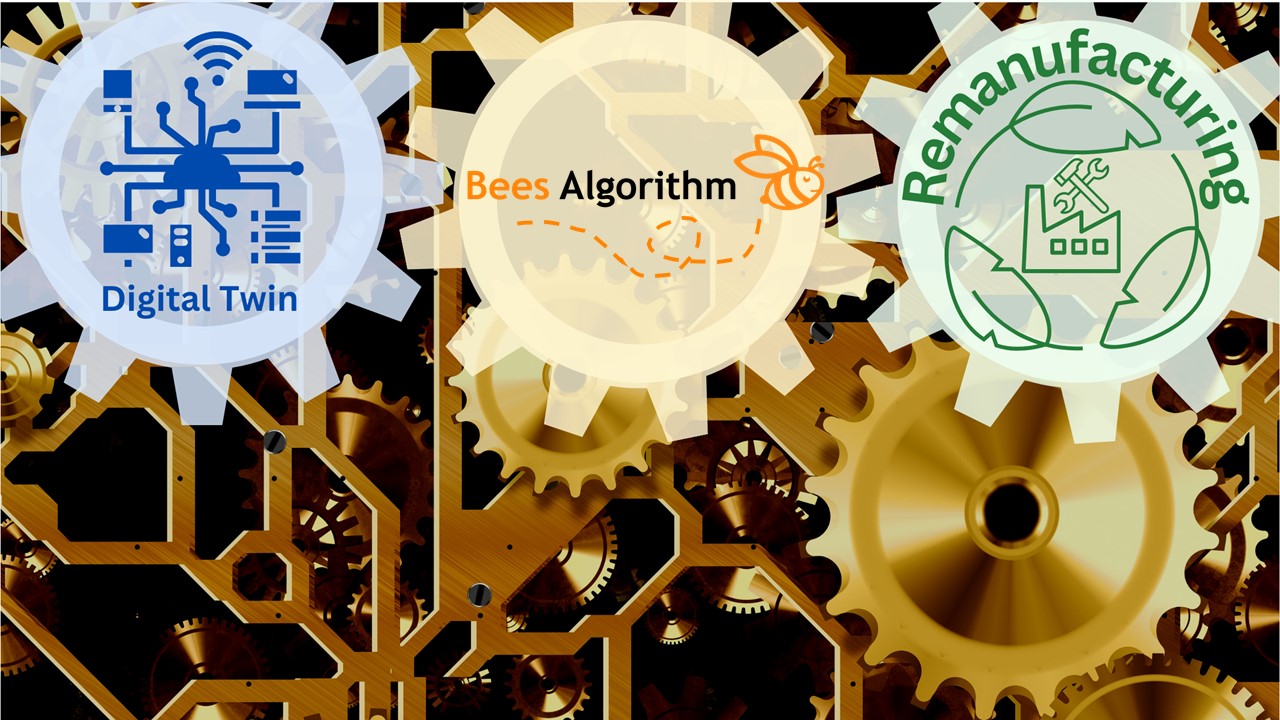
In this article, we take the challenges that differentiate manufacturing from remanufacturing and offer an insight into how a digital twin (DT) of a product that exists in its Middle-of-Life (MoL) state, can be used to optimise remanufacturing planning using data from different instances from its life cycle. The model employs a neural network for remaining useful life predictions and in keeping with the natural theme, uses the Bees Algorithm for deciding which parts are to be replaced, reused, remanufactured, recycled, or disposed of based on product quality, and triple bottom line costs.
Findings support the idea that intelligent tools within a DT can enhance decision-making if they have visibility and access to the product’s status and reliable remanufacturing process information.
Follow the Topic
-
Scientific Reports
An open access journal publishing original research from across all areas of the natural sciences, psychology, medicine and engineering.

Related Collections
With Collections, you can get published faster and increase your visibility.
Cancer Prevention and Control
Publishing Model: Hybrid
Deadline: Feb 19, 2027
Healthy Aging
Publishing Model: Open Access
Deadline: Dec 31, 2026