Probing planetary surface compositions in 3D



Abstract
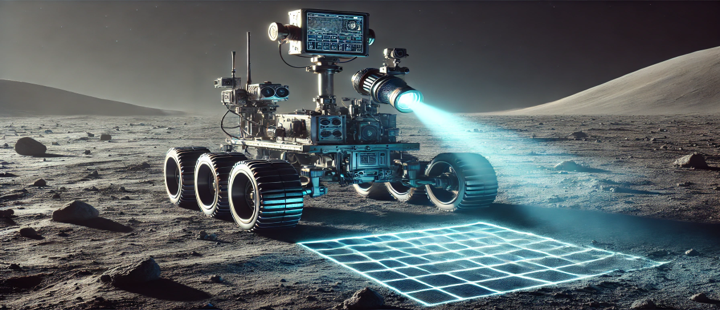
We designed and built a breakthrough instrument called INSPECT3R, which is a device that can see inside planetary surfaces in 3D with no need to drill or dig. Using high-energy neutrons as powerful probes and advanced particle imaging techniques, INSPECT3R reveals what lies on and beneath the surface, layer by layer, identifying elements and even buried objects with stunning precision. In recent tests using lunar soil simulants, the system measured and distinguished different minerals placed side by side, layered structures, and imaged a buried meteorite in full 3D, marking a major leap beyond any previous planetary nuclear spectrometer. This technology could revolutionize how we explore the Moon, Mars, and other worlds by helping scientists uncover geologic secrets, search for signs of life, and even locate and characterize resources for future astronauts and the building of permanent extraterrestrial bases. Read the full article here: https://www.nature.com/articles/s44453-025-00012-x
What We Did
We originally developed this technology to measure carbon concentration in terrestrial soils, as this provides valuable information for farmers looking to maximize crop yield and soil health, as well as scientists studying soil carbon dynamics. Similar technology is also used in security applications to detect illicit materials, explosives, and Special Nuclear Material (SNM). We soon realized the potential of this technology to measure bulk elemental surface compositions in solid-surface planetary bodies. NASA funded this effort through their Planetary Instrument Concepts for the Advancement of Solar System Observations (PICASSO) program. Our goal was to create an in-situ planetary nuclear spectrometer with vastly improved spatial resolution, Signal-to-Noise Ratio (SNR), and background suppression capabilities compared to existing spectrometers.
How It Is Done Today
The only active in-situ nuclear spectrometer deployed before was the Dynamic Albedo of Neutrons (DAN) instrument on the Curiosity rover, which landed on Mars in 2012. DAN used a DT pulsed neutron generator and two neutron detectors to measure compositional changes—particularly hydrogen content—along the rover’s traverse. Its sensitive volume was about 1 m³, and detailed modeling of the rover itself was required to separate the surface signal from the instrument’s background.
Then comes Dragonfly, which is one of the most daring and awe-inspiring NASA missions to date. It is an SUV-size nuclear-powered quadcopter that will fly on Saturn’s moon Titan in the mid 2030’s. As part of its payload, it carries the Dragonfly Gamma Ray and Neutron Spectrometer (DraGNS), which originally consisted of a DT neutron generator, neutron detectors, and a gamma ray detector. Because of budget and mass constraints, the neutron generator was replaced with a small neutron-producing radioactive source. DraGNS’ sensitive volume is somewhat smaller than 1m3 and it will be sensitive to far more elements than DAN because of its gamma ray detector. However, it will still need innovative methods to account for background signals from the lander itself.
What Is New In Our Approach
Our system employs the Associated Particle Imaging (API) technique on a DT neutron generator, enabling a completely new way to measure elemental composition. Each recorded event provides spatial coordinates (X, Y, Z) and a gamma-ray energy (E), allowing for precise 3D compositional imaging. This approach dramatically suppresses environmental background, significantly increasing the signal-to-noise ratio. The spatial resolution also lets us target specific volumes, or voxels, beneath the rover with unprecedented accuracy.
Why It Matters
Three-dimensional compositional imaging could unlock exploration capabilities once thought impossible. INSPECT3R can probe beneath the surface to reveal compositional anomalies, layered formations, concentrations of bio-relevant elements, and probing heterogeneity in general, offering a new window into planetary history and habitability. It can also guide sample collection for detailed in-situ analysis or for selecting valuable samples to return to Earth—whether for scientific discovery or resource prospecting. Finally, as humanity plans for a permanent lunar base, mapping and quantifying local resources through In Situ Resource Utilization (ISRU) will be essential. INSPECT3R provides the high-resolution data needed to take that first step.
Where We Go From Here
NASA measures flight-readiness through Technology Readiness Levels (TRLs), which range from 1 (basic principles observed) to 9 (flight-proven in mission operations). INSPECT3R is currently at TRL 4, roughly halfway to being flight-ready. Our next goals are to miniaturize the system and conduct environmental testing. The final design is projected to be about shoebox-size, draw less than 50 W at peak power, and weigh under 10 kg. Once these milestones are achieved, INSPECT3R will be ready to compete for missions to the Moon and other solid-surface worlds.

Follow the Topic
-
npj Space Exploration
npj Space Exploration considers research that explores all aspects of robotic/human exploration of the Solar System.