Recommendations for Enabling Research with Pan-European Datasets from the EuroCrops Experience
Published in Research Data
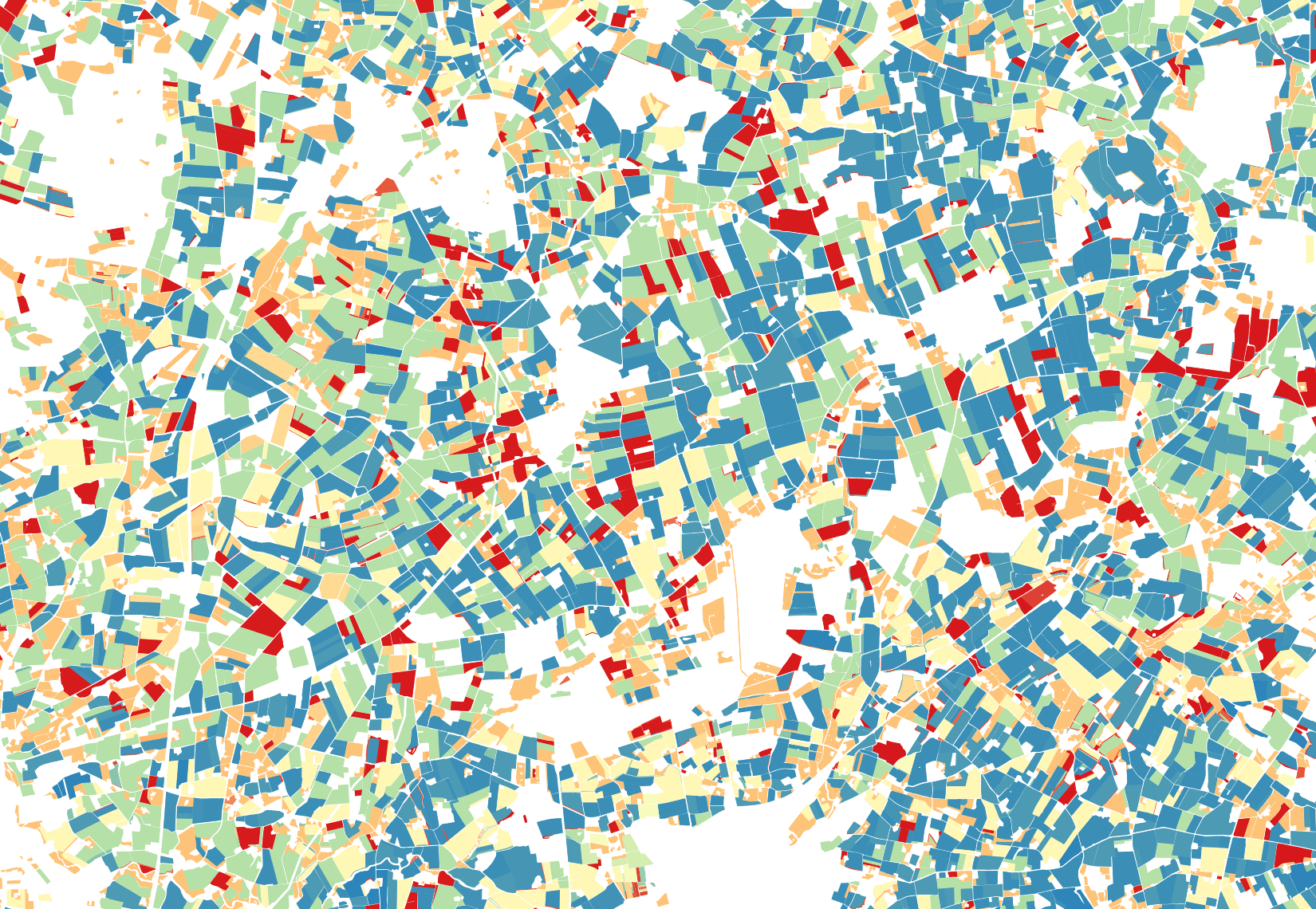



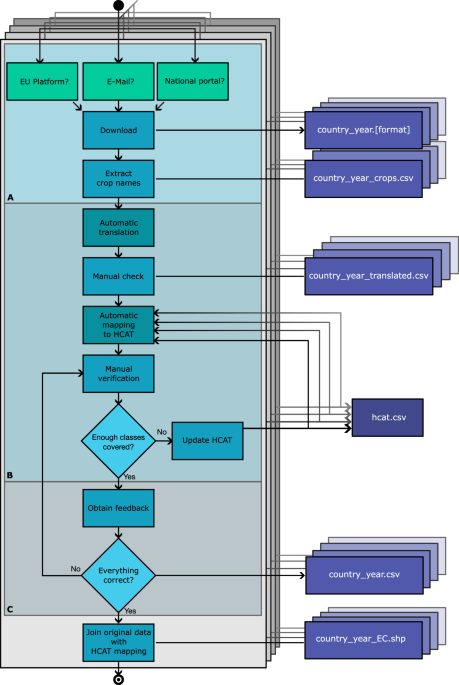

The EuroCrops Project began as a small research idea and has since gained momentum and impact across the globe. Two years after its release, it's time to reflect and think beyond the original publication.
The following recommendations were first published in From Unstructured Administrative Data to a Harmonised European Reference Dataset for Machine Learning in Remote Sensing (Schneider, Maja. From Unstructured Administrative Data to a Harmonised European Reference Dataset for Machine Learning in Remote Sensing. Diss. Technische Universität München, URL https://mediatum.ub.tum.de/doc/1750591/1750591.pdf, 2025.) and aim to place the work behind EuroCrops in a broader context.
Today, EuroCrops is being further developed by the Joint Research Centre of the European Commission, building on the foundation laid out in our initial release.
Recommendations
Standardisation and Harmonisation
-
Use a common language framework to ensure consistency and interoperability across countries and platforms.
-
Provide a unified taxonomy for agricultural data to allow consistent classification and comparison.
-
Include mappings to existing taxonomies to support compatibility with legacy and external datasets.
-
Support pan-European harmonisation efforts, not just in agriculture, to enable meaningful data sharing.
-
Collaborate on taxonomy mapping with Member States (MSs) as they best understand their own data.
-
At minimum, provide a central information hub with links, licences, and metadata if full harmonisation isn't feasible.
Data Access and Sharing
-
Lower the entry barrier to satellite data access for all stakeholders to enable faster, more inclusive development.
-
Encourage the use of cloud platforms to reduce redundancy and increase scalable processing.
-
Support regional LPIS teams and ministries with clear goals and direct communication.
-
Create a centralised EU data lake to gather datasets without the overhead of complex platforms.
-
Promote rich metadata to improve data context, usability, and discoverability.
Data Utilisation and Processing
-
Offer ready-to-use benchmark datasets to attract interdisciplinary users and speed up innovation.
-
Publish open models and processing pipelines to help stakeholders make use of the data.
-
Invest in fewer, larger datasets with broad applicability instead of fragmented small collections.
Policy and Regulation
-
Open communication on GDPR to build trust and align privacy with research needs.
-
Allow flexible transition phases to ease MSs into open data without overregulation.
Platforms and Community Engagement
-
Work toward a single trusted platform (e.g. INSPIRE) for sharing tools, data, and knowledge.
-
Investigate low platform adoption and fix usability issues rather than reinventing new systems.
-
Encourage community participation via open processes, transparent issue tracking, and feedback loops.
Technical and Operational
-
Ensure reliable satellite coverage to maintain trust in Earth Observation data.
-
Define standards for data formats to improve compatibility across geospatial systems.
-
Keep datasets use-case agnostic to support diverse applications and long-term utility.
Research and Collaboration
-
Give researchers access to real-world data to ground their work in practical relevance.
-
Talk to experts but prioritise minimal viable solutions to ensure progress and buy-in.
-
Facilitate direct communication between researchers and regional authorities for better outcomes.
Source: Harmonised European Reference Dataset for Machine Learning in Remote Sensing (Schneider, Maja. From Unstructured Administrative Data to a Harmonised European Reference Dataset for Machine Learning in Remote Sensing. Diss. Technische Universität München, URL https://mediatum.ub.tum.de/doc/1750591/1750591.pdf, 2025

Follow the Topic
-
Scientific Data
A peer-reviewed, open-access journal for descriptions of datasets, and research that advances the sharing and reuse of scientific data.

Related Collections
With Collections, you can get published faster and increase your visibility.
10 years of the FAIR principles
Publishing Model: Open Access
Deadline: Nov 14, 2026
Data to support cancer treatment, diagnosis, and disease understanding
Publishing Model: Open Access
Deadline: Jan 02, 2027