SDG3 Newsletter: Children and Young People
Published in Healthcare & Nursing, Social Sciences, and Sustainability





This newsletter relates to the WHO's SDG3 targets 3.1, 3.2 and 3.8 and to children and young people's general health and wellbeing. Use these links to navigate to a section!
- Q&A - Supporting Kids In Loss
- The impact of malaria on young people
- World Health Day: healthy beginnings, hopeful futures
- Dr Ahmed's reproductive health research
- Meet the SDG3 researcher Dr Al Khodor
- Collections in IJIR: Your Sexual Medicine Journal
- LGBTQ+ young people's mental health
- Childhood obesity: shifting the narrative
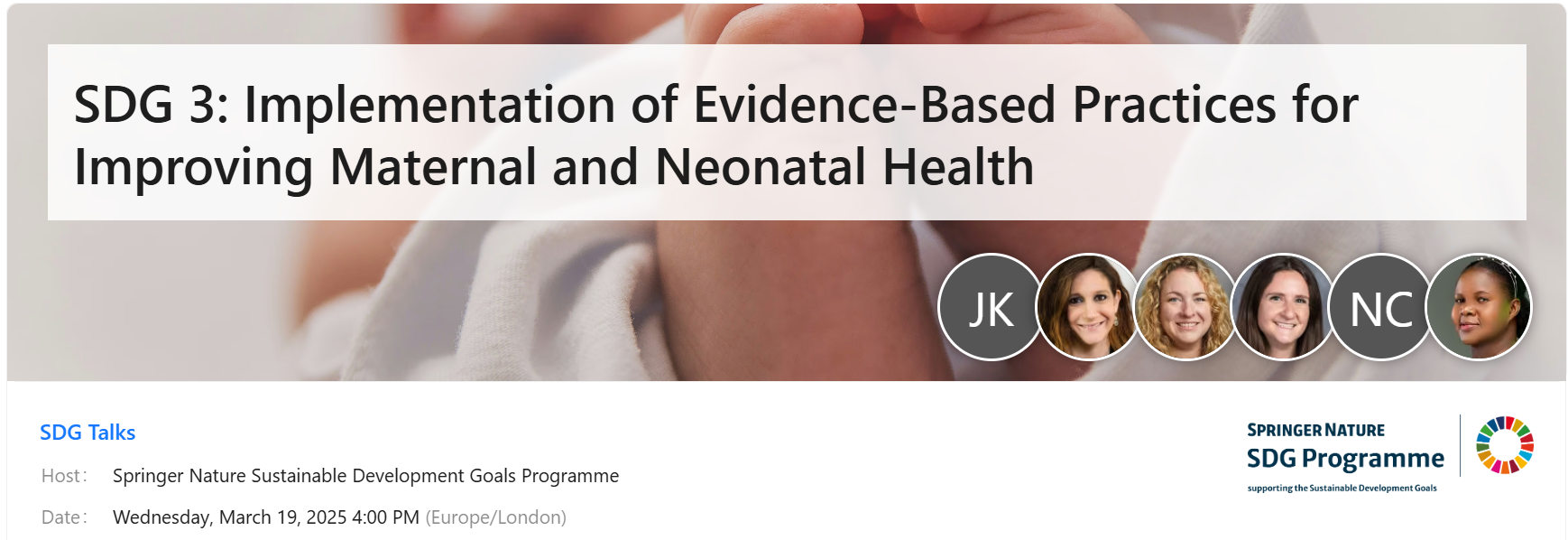
- Maternal and Neonatal Health webinar recording
In other news...
Q&A - Supporting Kids In Loss
Read Professor Sarah Egan's recent interview on her new study, Project SKIL, and how it provides online Cognitive Behavioural Therapy to children who have experienced some kind of grief - whether that's the death of a family member, the loss of a pet or the divorce of their parents.
Malaria and young people
Read this blog for World Malaria Day. Explore the impact of malaria on young people, the diagnosis and treatment of malaria, and the power of education and advocacy.
World Health Day: healthy beginnings, hopeful futures
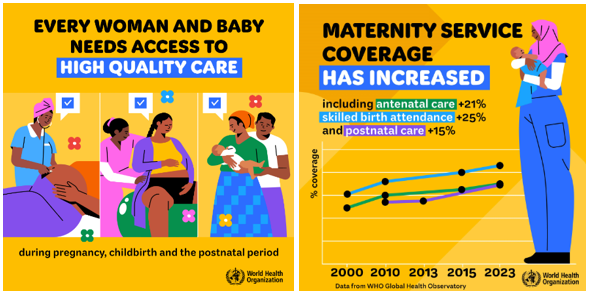
Check out this blog for World Health Day's 2025 campaign 'Healthy Beginnings, Hopeful Futures', highlighting research and featuring blogs from editors and authors. This year’s theme, ‘healthy beginnings, hopeful futures,’ supports WHO's aim of reducing global maternal mortality rate to less than 70 per 100,000 live births by 2030.
Dr Ahmed's reproductive health research
Read this Q&A about reproductive health. Dr Ahmed discusses ways we can empower women and improve maternal and child health care.
Meet the SDG3 researcher Dr Al Khodor
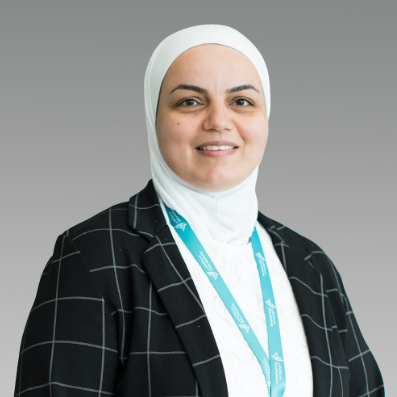
Read this interview where Dr Al Khodor discusses her career investigating the microbiome’s role in health and disease. Dr Al Khodor hopes her research will lead to better interventions for mothers and children.
Collections in IJIR: Your Sexual Medicine Journal
Find article collections on young people's sexual, reproductive, and mental health in IJIR: Your Sexual Medicine Journal. In Pediatric Sexual Medicine and the two-part series on Child Genital Cutting and Surgery, the authors discuss sensitive and sometimes overlooked areas of research.

LGBTQ+ young people's mental health
Read about how LGBTQ+ young people in particular can experience feelings of depression and anxiety. Explore the different risk factors involved and the potential solutions for the mental health crisis.
Childhood obesity: shifting the narrative
Read this blog that assesses global actions to manage and prevent childhood obesity in light of World Obesity Day.
Maternal and Neonatal Health webinar recording
Watch: "Implementation of Evidence-Based Practices for Improving Maternal and Neonatal Health". Thank you to the speakers for a wonderful discussion.
In other news...
Q&A for World Happiness Day
Read this Q&A where Tamara shares her insights into how movement can promote happiness and improve wellbeing at work. Tamara recently led a popular dance and wellbeing workshop for Springer Nature Black Employee Network members based in London.

Meet the new co-Editor-in-Chief for Conflict and Health
Read Professor Karl Blanchet's Q&A announcing his position as co-Editor-in-Chief of Conflict and Health.
Get involved!
Thank you to everyone who contributed to this newsletter.* If you are a researcher or colleague who would like to be involved with our SDG 3 initiatives, get in touch. Follow me, Alice Coe, on Research Communities to be notified of future SDG 3 newsletters.
*Thank you to: Amy Joint, Prof Sarah Egan, India Sapsed-Foster, Abiola Lawal, Kesiena Okumagba, Freyja Austin, Sophie Gray, Louis Gautier, Tamara May, Dr Hamdia Mirkhan Ahmed, Suzuki Limbu, Dr Souhaila Al Khodor, Tamara Josephine, Rita Moreira, Prof Karl Blanchet, Virginia Mercer, Sarah Whitelock
If you are interested in the following journals or in contributing to Springer Nature's SDG 3 Newsletter, please email me. Happy to connect.
Injury Epidemiology, International Journal of Health Geographics, Journal of Epidemiology and Global Health, Health and Quality of Life Outcomes, Population Health Metrics
Follow the Topic
-
ISRCTN: The UK’s Clinical Study Registry
A primary clinical trial registry recognised by WHO and ICMJE that accepts studies involving human subjects or populations with outcome measures assessing effects on human health and well-being, including studies in healthcare, social care, education, workplace safety and economic development.
-
Conflict and Health
This is a highly-accessed, open access journal documenting the public health impacts and responses related to armed conflict, humanitarian crises and forced migration.
-
Reproductive Health
This journal focuses on all aspects of human reproduction, including adolescent health, female fertility, contraception, and maternal health and all articles are open access.
-
Journal of Translational Medicine
Journal of Translational Medicine is an open access journal publishing articles focusing on information derived from human experimentation so as to optimise the communication between basic and clinical science.




Related Collections
With Collections, you can get published faster and increase your visibility.
Computational Modelling and Network Medicine in Drug Toxicology and Clinical Pharmacovigilance
Computational approaches are becoming indispensable in the field of translational pharmacology and systems medicine. In particular, the integration of computational modelling and network medicine is reshaping our understanding of drug toxicity, safety profiling, and clinical pharmacovigilance. With the rapid accumulation of multi-omics, electronic health records, and real-world pharmacovigilance data, there is an urgent need for advanced computational frameworks to identify hidden drug–target–phenotype associations and elucidate mechanisms underlying adverse drug reactions (ADRs) and toxicities. Drug toxicology and pharmacovigilance are key components of translational medicine, bridging molecular mechanisms with patient outcomes. However, predicting and preventing drug-induced toxicities remain challenging due to the complexity of biological systems and individual heterogeneity. Network-based and machine learning methods, such as graph neural networks, causal inference, and mechanistic modelling, are providing new opportunities to reveal system-level toxicity pathways, optimize drug safety assessment, and enhance early signal detection in clinical practice.
This collection aims to gather latest research and comprehensive reviews that explore computational, network-based, and AI-driven strategies in drug toxicology and pharmacovigilance. We seek contributions that demonstrate how integrative modelling, network pharmacology, and multi-scale data analysis can advance the prediction, understanding, and management of drug-related adverse effects, ultimately contributing to safer and more effective therapeutics.
Potential topics include, but are not limited to:
- Computational modelling for drug toxicity prediction
- Network medicine approaches to drug safety and toxicity mechanisms
-Machine learning and AI in pharmacovigilance signal detection
-Integrative modelling of drug–target–pathway interactions
-Systems pharmacology and multi-omics network analysis in toxicology
-Network-based biomarker discovery for adverse drug reactions
-Data-driven prediction of idiosyncratic and immune-related toxicities
-Translational applications of network and computational models in clinical drug safety assessment
All submissions in this collection undergo the journal’s standard peer review process. Similarly, all manuscripts authored by a Guest Editor(s) will be handled by the Editor-in-Chief. As an open access publication, this journal levies an article processing fee (details here). We recognize that many key stakeholders may not have access to such resources and are committed to supporting participation in this issue wherever resources are a barrier. For more information about what support may be available, please visit OA funding and support, or email OAfundingpolicy@springernature.com or the Editor-in-Chief.
Publishing Model: Open Access
Deadline: Sep 07, 2026
Harnessing Innovative Machine Learning Techniques to Combat Drug Resistance in Solid Tumors
In recent years, the challenge of drug resistance in solid tumors has emerged as a significant barrier to effective cancer treatment, often leading to treatment failure and poor patient outcomes. As traditional therapeutic approaches struggle to overcome this hurdle, there is a growing interest in leveraging innovative machine learning techniques to enhance our understanding of drug resistance mechanisms and improve therapeutic strategies. This article collection aims to gather cutting-edge research that explores the intersection of machine learning and oncology, focusing on how advanced algorithms can be applied to predict drug resistance, optimize treatment plans, and ultimately foster personalized medicine approaches in cancer care. By fostering interdisciplinary collaboration and sharing novel insights, this collection seeks to pave the way for transformative advancements in the fight against cancer.
This article collection explores integrating advanced machine learning methodologies—including ensemble learning, deep learning, reinforcement learning, explainable AI, and quantum computing—in understanding and overcoming drug resistance in solid tumors. We invite contributions highlighting novel algorithms, examples of innovative machine learning technique implementation, and interdisciplinary approaches, ultimately leading to improved therapeutic outcomes and enhanced patient care in oncology.
opics of Interest
The collection welcomes original research, reviews, commentary and methodology articles on the following topics:
• Ensemble Learning Techniques;
• Applications in predicting drug resistance profiles;
• Comparative studies of ensemble methods versus traditional approaches;
• Deep Learning in Oncology;
• Neural network architectures for tumor characterization;
• Image analysis and interpretation for drug response prediction;
• Reinforcement Learning;
• Adaptive treatment strategies using reinforcement learning;
• Simulation models for drug resistance evolution;
• Explainable AI;
• Methods for interpreting machine learning models in clinical settings;
• The role of explainability in improving treatment outcomes;
• Quantum Computing Applications;
• Quantum algorithms for optimizing drug discovery processes;
• Examples of quantum-enhanced machine learning techniques in oncology.
All submissions in this collection undergo the journal’s standard peer review process. Similarly, all manuscripts authored by a Guest Editor(s) will be handled by the Editor-in-Chief. As an open access publication, this journal levies an article processing fee (details here). We recognize that many key stakeholders may not have access to such resources and are committed to supporting participation in this issue wherever resources are a barrier. For more information about what support may be available, please visit OA funding and support, or email OAfundingpolicy@springernature.com or the Editor-in-Chief.
This collection supports and amplifies research related to SDG 3: Good Health and Well-Being.
Publishing Model: Open Access
Deadline: Nov 30, 2026

Please sign in or register for FREE
If you are a registered user on Research Communities by Springer Nature, please sign in
Great newsletter as always Alice!
Thanks, Amy! It's great to see so many people involved with SDG 3. Keep an eye out for our next newsletter, which will focus on LGBTQ+ people and SDG 3.