Sharing My New Publication
Published in Electrical & Electronic Engineering and Mechanical Engineering
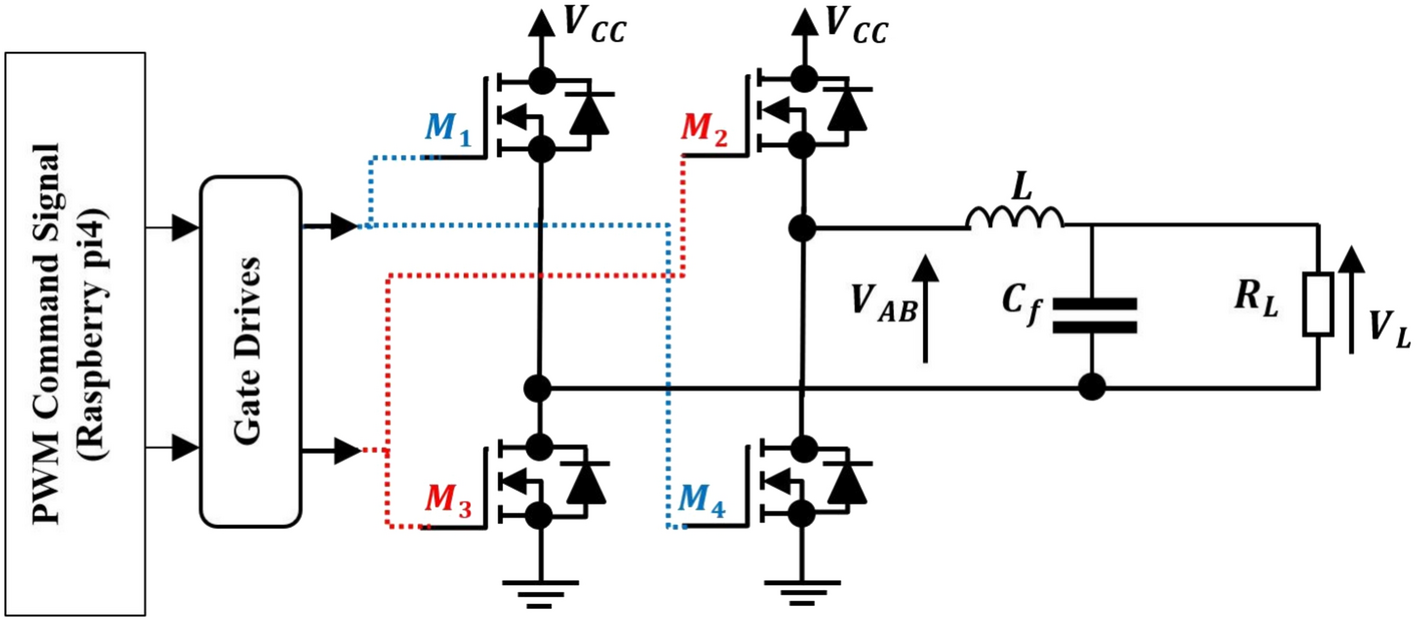

The paper presents a practical and optimized approach to selective harmonic elimination PWM applied to low- and medium-power single-phase converters. The study covers inverter modeling, control strategy development, prototype implementation, and experimental validation. The results demonstrate significant harmonic reduction and high-quality sinusoidal output, making the proposed method suitable for renewable energy and power electronics applications.
Full-text access is available through Springer Nature’s SharedIt link:
https://rdcu.be/eQ9Wh

Jalil Akaaboune holds a Master's degree in Renewable Energies and Energy Systems (Ms-ERSE) from the Faculty of Sciences Ain Chok in Casablanca, Morocco, obtained in 2019. He is currently a doctoral researcher at the Faculty of Sciences and Techniques of Sultan Moulay Slimane University in Beni Mellal, Morocco.
His work focuses on power electronics, including intelligent energy-management systems, advanced power-converter topologies, and optimized control strategies. His research covers artificial-intelligence techniques applied to converters, such as neural networks, fuzzy logic, genetic algorithms, particle swarm optimization, and the imperialist competitive algorithm. He also works on gravitational search methods, power-quality enhancement, and proportional–integral control.
Contact: jalil.akaaboune@gmail.com.
Follow the Topic
-
Discover Electronics

This is a fully open access, peer-reviewed journal that supports multidisciplinary research and policy developments across the fields of electronics and electrical engineering.
Related Collections
With Collections, you can get published faster and increase your visibility.
Advanced Electronic Systems for Intelligent Sensing, Control, and Energy-Efficient Technologies
The ongoing development of electronic systems—fueled by advances in embedded architectures, intelligent sensing, nonlinear signal processing, and optoelectronic devices—has led to technologies that significantly impact education, energy, and industrial innovation. Modern research in electronics increasingly combines computational intelligence, photonic and optoelectronic components, nonlinear control, and complex dynamic behaviors. These trends are seen in current applications such as smart energy platforms, advanced sensor networks, precision instrumentation, autonomous systems, and high-performance communication hardware.
This collection aims to gather high-quality submissions focused on the design, modeling, implementation, and analysis of advanced electronic and optoelectronic systems. Of particular importance are works that combine theoretical frameworks with experimental validation, address nonlinear or complex dynamics in electronic and photonic circuits, and propose innovative solutions for real-world constraints in industry, infrastructure, and sustainable development.
The thematic scope of this collection is aligned with the research activity of the Guest Editors, whose academic trajectories include:
-Intelligent and embedded electronic systems
-Nonlinear dynamics and control in electrical and optoelectronic devices
-Design and analysis of complex electronics networks
-Modeling and implementation of photonic systems and optical communication components
-Signal amplification circuits
-Electronic architectures for sensing and measurement
-Hybrid dynamical systems
-Energy-efficient and resilient electronic platforms
-Novelty, chaotic or hyper-chaotic circuits and some applications
By combining these perspectives, the collection aims to promote interdisciplinary dialogue across electronics, photonics, applied physics, mechatronics, control engineering, and computational modeling. Contributions that explore emerging paradigms—such as photonic-assisted electronics, energy-efficient embedded computation, or nonlinear electronic systems showing multistability or chaotic behavior—are particularly welcomed.
Scope and Topics of Interest
Submissions may include, but are not limited to, the following topics:
Electronic Systems and Embedded Architectures
-Advanced embedded systems and microcontroller platforms
-Real-time implementation of control algorithms
-Intelligent and adaptive sensing architectures
-FPGA-based systems, SoC integration, and hardware acceleration
Nonlinear and Complex Dynamics in Electronic and Photonic Devices
-Nonlinear electronic circuits (e.g., Rössler, Chua, Duffing systems)
-Control, synchronization, bifurcation, stability and multi-stability analysis
-Applications of chaos and complex dynamics in sensing, communications, or encryption/decryption methods
-Photonic and optoelectronic systems exhibiting complex dynamical regimes
Optoelectronics, Photonics, and Communication Systems
-Laser-based systems for sensing, measurement, or amplification
-Fiber-optic communication components and signal conditioning
-Photonic devices integrated with electronic control
-Structured light systems, optical modulation, and high-gain amplifier modeling
-Fiber optic sensor
Energy-Efficient and Sustainable Electronic Technologies
-Power electronics for renewable-energy systems
-Energy-efficient signal processing and embedded computing
-Smart grids, advanced monitoring, and instrumentation
-Electronics for solar energy harvesting and storage management
-Portable energy intelligent stations
Modeling, Simulation, and Computational Methods
-Mathematical modeling of electronic, optoelectronic, and hybrid systems
-System identification and data-driven modeling
-Machine learning for electronic system optimization
-Real-time simulation environments (e.g., MATLAB/Simulink)
This Collection supports and amplifies research related to SDG 4, SDG 7 and SDG 9.
Keywords: Nonlinear dynamics in electronic systems; Chaotic and multistable circuits; Real-time control; Complex systems; Intelligent sensing; Energy-efficient electronics; Optoelectronics and photonic devices; Fiber-optic communication; Fiber optic sensor; Computational modeling &Renewable energy instrumentation
Publishing Model: Open Access
Deadline: Sep 16, 2026
Electronics for Grid-Forming in Power Systems
Publishing Model: Open Access
Deadline: May 31, 2026




Please sign in or register for FREE
If you are a registered user on Research Communities by Springer Nature, please sign in