Small fish, small pond: The reality of biomedical early career research in regional Australia
Published in Biomedical Research






"You can do everything right, publish well, tick almost every box and still face the crushing uncertainty of whether your contract will be renewed, or whether you’ll even be allowed to apply for the next grant round."
That’s the stark reality facing many early career researchers (ECRs) across Australia. Yet for those in regional or remote institutions, the challenges stack up, creating a heavy burden of uncertainty, isolation, and lack of support. Regional ECRs are often left on the sidelines, overlooked and forgotten in the bigger picture of science. While their colleagues in metropolitan research hubs enjoy access to cutting-edge infrastructure, spontaneous networking opportunities, and supportive ecosystems, ECRs in the regions frequently find themselves cut off, under-resourced, and struggling for recognition. In a system where grant funding is the lifeline, being denied the chance to even apply can feel not just demoralising, but deeply inhumane.
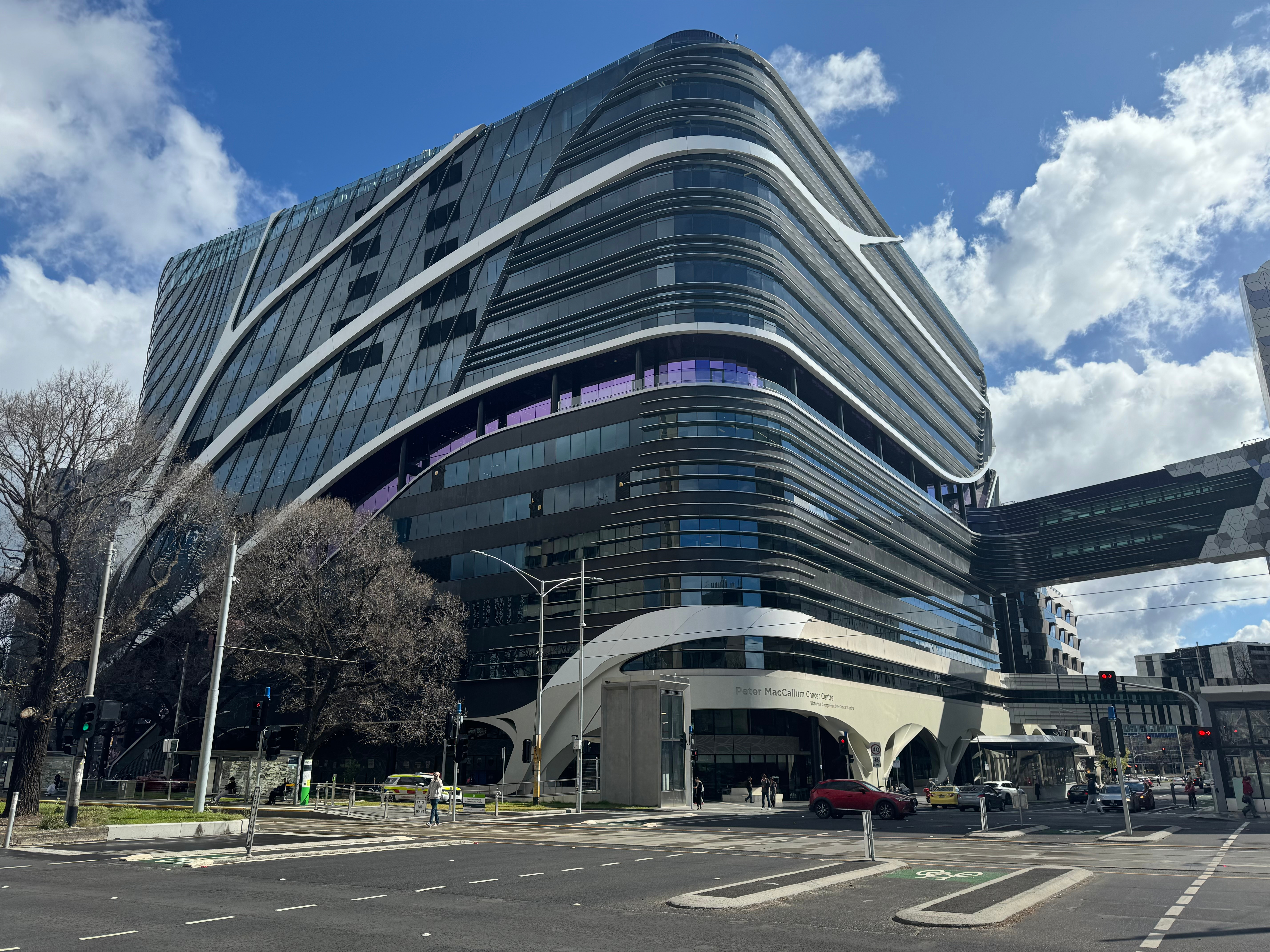
Peter MacCallum Cancer Centre, Melbourne, Australia. One of several world-class,
multimillion-dollar research institutes in Parkville, Melbourne, underscoring
the remarkable concentration of biomedical research within the Melbourne Biomedical Precinct
Photo by PEPSI697, via Wikimedia Commons. Licensed under CC BY-SA 4.0.
Australia's biomedical research sector is disproportionately reliant on government funding, primarily administered through the National Health and Medical Research Council (NHMRC). For instance, while NHMRC's Ideas Grant scheme is purportedly designed to be independent of a researcher’s track record, the lived experiences of countless ECRs tell another story. Success rates paint a grim picture. In 2024, the NHMRC Ideas Grant scheme had a success rate of just 10.1% 1, meaning that about 90% of applicants (2038 applicants), many with high quality, innovative proposals, walked away empty-handed.
For ECRs, grants aren’t just a mark of prestige, they’re survival. Yet, shockingly, there are institutions that actively block ECRs from applying for grants. Why? Because if the grant is successful, the institution would need to contribute to cover the salary gap and many simply refuse to take that responsibility. It’s like, “You work for us until your contract ends, and after that, you’re on your own.” It’s a brutal, inhumane reality that speaks volumes about the systemic disregard for the future of Australia’s research workforce. It sends a devastating message. Your success is a liability, not an asset. You are dispensable. It’s like being told to run a marathon with your shoelaces tied together. You put in the work, beat the odds, but they won’t let you cross the finish line.
Unlike many industries where consistent performance and effort naturally lead to career progression, academia is a field where hard work does not necessarily translate into meaningful outcomes, especially for regional ECRs. In corporate or industry settings, teamwork often underpins success, and achievements are shared and celebrated across teams. In academia, recognition often centres on one person, while the essential contributions of support teams, postdocs, and junior staff, whose work is integral to the research can sometimes go unacknowledged.
As one regional ECR puts it, "Despite getting glowing PDP reviews year after year, I’m still stuck on short fixed-term contracts. It doesn’t mean anything when institutions don’t commit to your future.
Moreover, while senior researchers might thrive in a regional context benefiting from the opportunity to be a "big fish in a small pond", ECRs experience the inverse. They become small fish in a small pond, swimming in circles without the visibility or resources to grow in most cases. The prestige and network that senior researchers have often accrued over years of work become even more potent in a smaller context, while ECRs are left struggling to build momentum.
One ECR explained what it’s like to work regionally: “Sometimes you feel like you’re in a place where barely anyone can hear you. You feel like you're departed.” Infrastructure is often underdeveloped, there’s limited administrative and grant writing support, and even basic logistics become hurdles, from delays in deliveries to inconsistent access to clinical samples. In cities, researchers can switch labs or collaborate widely. In the regions, that safety net often doesn’t exist.
Geographic isolation also erodes one of the most critical elements of academic growth, active collaboration. As one researcher put it, “In-person touch plays a major role in networking. Despite all the advances in online communication, it’s not the same.” When you’re thousands of kilometres from the nearest capital city, it’s not just a matter of dropping in for a seminar or grabbing coffee with a collaborator. Travel becomes a luxury, often unfunded, requiring days away from the lab, personal expense, and accommodation costs that many regional labs simply can’t afford to cover. The result is missed opportunities, slower momentum, and the growing sense that you’re shouting into the void while the rest of the field moves ahead without you.
Yet not all views are uniform. One colleague noted that being in a regional area has not negatively impacted her career, stating, "The progress of my career has not been dependent on being in a regional or remote area.”
She even highlighted benefits, “Heaps of space, friendly people, and no long waiting lists to use an area or equipment.”
For some, regional life can indeed be a positive experience, especially when backed by the stability of a financially secure family or a strong local support network. But this isn’t the reality for everyone. For young families, or those living by themselves or far from loved ones, the same setting can feel isolating and unsustainable, particularly in the absence of job security. Another ECR added that regional research environments are double-edged swords. On the one hand, the isolation and limited resources restrict opportunities. On the other, there’s less traffic, a closer-knit community, and a better work-life balance. "These aspects definitely contribute positively to quality of life and job satisfaction," he noted.

The Great Barrier Reef from Above. It may not have the latest urban facilities,
but regional Australia is overflowing with breathtaking natural beauty at every turn.
 Photo by Manny Moreno, via Unsplash. Used under Unsplash License
Despite these silver linings, the broader funding landscape casts a long shadow. When compared internationally, Australia’s investment in biomedical research is modest. It is estimated that Australia’s NHMRC spends roughly US$ ~605 million on health and medical research (HMR) 2, while the US National Institutes of Health (NIH) spends over US$40 billion annually on health research and countries like Germany and Switzerland invest slightly less but still significantly more. This disparity means fewer grant rounds, fewer fellowships, and limited career advancement opportunities for Australian ECRs, especially those in regional centres.
Many countries have built diverse, robust funding ecosystems. In the US, early-career researchers can access structured, multi-year support like the NIH K99/R00 Pathway to Independence Award, with research project grants including R01-equivalents seeing success rates around 22% in 2023. However, this statistic increases to >30% if the appropriate steps are taken to revise and resubmit the grant 3. In Europe, the European Research Council’s Starting Grants offer an annual lifeline to emerging researchers. In 2024, around 992 life science related proposals were submitted, with 146 funded, giving a success rate of about 14.8% 4. In the UK, agencies such as UKRI and the Wellcome Trust offer varied early-career schemes, with success rates generally around 20–25% for ECR-targeted funding opportunities according to publicly available analyses 5. Crucially, these schemes also typically offer multiple funding rounds each year, giving researchers more frequent opportunities to apply and succeed. In contrast, NHMRC’s single annual round places enormous pressure on Australian researchers, especially ECRs, and severely limits their windows for funding. These figures dwarf Australia's NHMRC grant success rates.
This matters because funding isn’t just money, it’s survival. In Australia, especially for regional ECRs, securing grants is the only viable pathway to staying in academia. At a time when innovation, public health, and global competitiveness rely on a thriving research workforce, Australia risks abandoning its brightest minds.
Most tragically, many ECRs describe a constant feeling of self-doubt. In other industries, if you fail to progress, it's usually because you're not good enough. In academia, that logic doesn’t apply. You can work yourself to the bone, produce top-tier publications, get outstanding reviews and still end up unemployed.
"You start to believe maybe it’s just you. Maybe I’m not good enough. Maybe I don’t belong here. But deep down, you know it’s not true. It’s just luck. It’s geography. It’s policy. It’s timing," said one ECR.
The role of luck in science is often understated. Getting the right reviewer. Having a colleague advocate for you. Having a supervisor who truly invests in your career growth. Being at the right institution when a funding round opens. These unpredictable variables shape careers more than merit ever will. When we begin a PhD, driven by passion and curiosity, we don’t imagine that years later, armed with one of the world’s most elite qualifications, we’d be scrambling just to stay employed, relying not on our talent, but on luck, privilege, or whether someone senior decides to back us.
There is no single fix to this complex landscape, but acknowledgment is a start. More equitable distribution of resources, higher investment in research, structural support for ECRs in regional areas, and institutional accountability are critical. Until then, many bright, dedicated researchers will continue walking a tightrope with little support, less recognition, and an uncertain future. If Australia wants to retain its talent, foster innovation, and ensure that science thrives not just in its cities but across its vast geography, then the conversation must change. Because talent is everywhere. Opportunity isn’t!
References
- NHMRC. Ideas Grants Factsheet 2024: National Health and Medical Research Council; 2025 [Available from: https://www.nhmrc.gov.au/sites/default/files/documents/attachments/grant%20documents/2024-Ideas-Grants-Snapshot.pdf.
- Stonestreet A. Australian H&MR Facts: Research Australia; 2024 [Available from: https://researchaustralia.org/australian-research-facts/.
- Hunter CJ, Leiva T, Dudeja V. The unfunded grant, now what? Advice, approach, and strategy. Surgery. 2024;175(2):317-22.
- ERC. Starting Grant 2024 European Research Council2024 [Available from: https://erc.europa.eu/sites/default/files/2024-09/erc-2024-stg-statistics.pdf.
- UKRI. Analysis of ESRC funding data: UK Research and Innovation; 2025 [Available from: https://www.ukri.org/what-we-do/what-we-have-funded/esrc/analysis-of-esrc-funding-data/research-organisation-performance-and-regional-outcomes-for-esrc-funding/.

Follow the Topic
What are SDG Topics?
An introduction to Sustainable Development Goals (SDGs) Topics and their role in highlighting sustainable development research.
Continue reading announcement