T cells in amyotrophic lateral sclerosis

The immune system’s role in amyotrophic lateral sclerosis (ALS) progression is increasingly recognized, but the impact of peripheral immune cells remains unclear. Using single-cell RNA sequencing, we analyzed blood immune cells to explore their link to disease progression in ALS patients.

Published in Biomedical Research

Like

Share this post

Choose a social network to share with, or copy the URL to share elsewhere

This is a representation of how your post may appear on social media. The actual post will vary between social networks

Amyotrophic lateral sclerosis (ALS) is a devastating disease that progresses differently for each patient. Scientists have long wondered why some cases worsen rapidly while others advance more slowly. Recent research suggests that the immune system may play a crucial role.

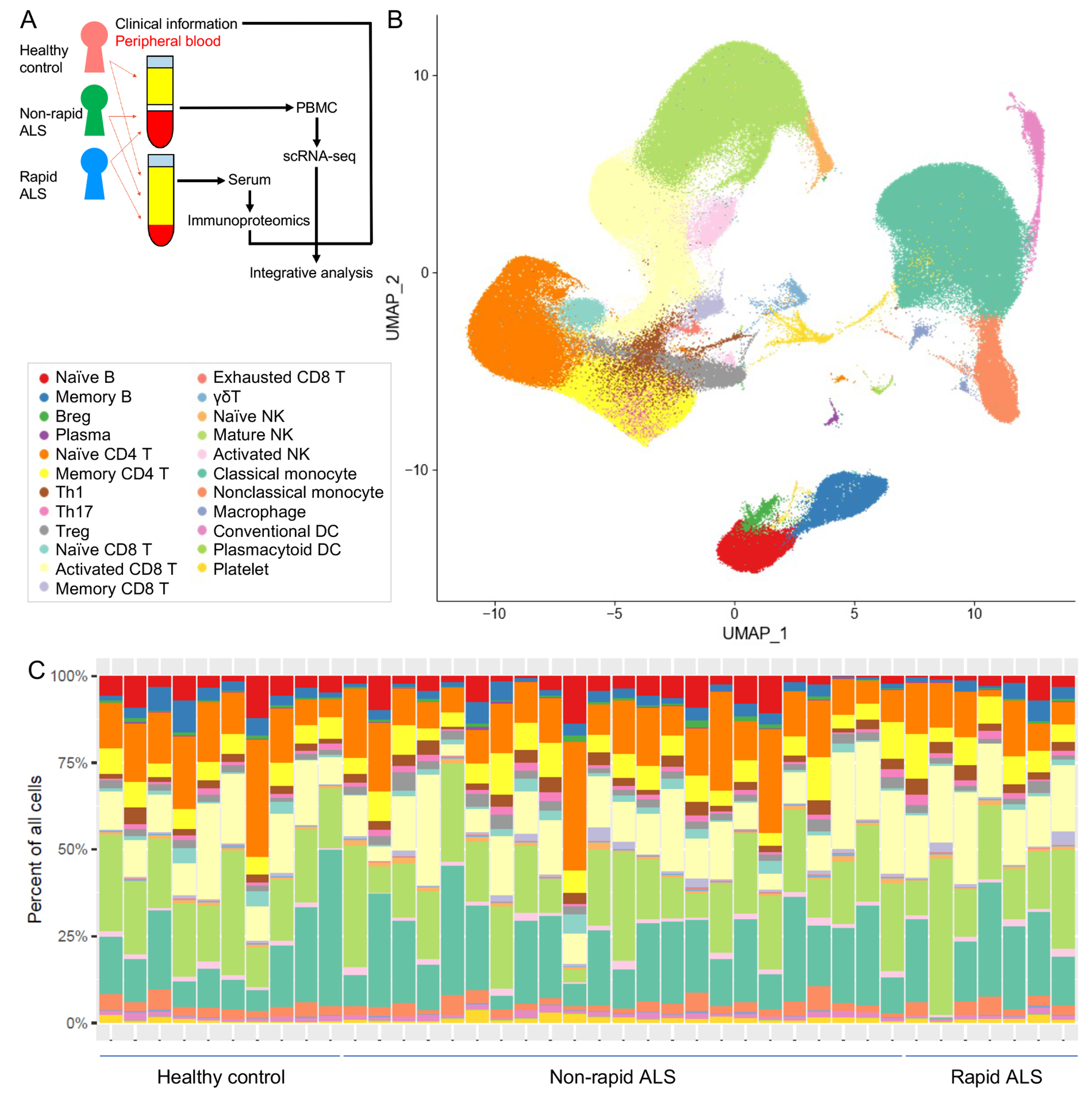
In this study, we analyzed blood samples from healthy individuals and ALS patients with slow and rapid disease progression. Using advanced techniques like single-cell RNA sequencing and proteomics, we discovered significant differences in immune cell types and inflammation-related proteins.

Patients with rapid progression showed a shift in immune cell balance. T helper 17 cells, which promote inflammation, outnumbered regulatory T cells, which typically keep the immune system in check. Effector CD8 T cells, which attack tissues, were more abundant than their naïve counterparts. Proteins like interleukin-17 and CD94 were also elevated and linked to these immune cell changes.

These findings suggest that immune system overactivation may accelerate ALS progression. While further research is needed, this study marks a hopeful step toward understanding ALS and improving patient outcomes.

Please sign in or register for FREE

If you are a registered user on Research Communities by Springer Nature, please sign in

Follow the Topic

Biomedical Research
Life Sciences > Health Sciences > Biomedical Research

Related Collections

With Collections, you can get published faster and increase your visibility.

Lung-Brain Axis: Influence of Pulmonary Disease and Airborne Environmental Exposures on Neurological Health

Epidemiological studies highlight the link between airborne environmental exposures and many aspects of brain health. Furthermore, many patients with chronic lung diseases exhibit comorbidities related to neurological and neuroinflammatory conditions. Submissions to this Collection should explore the scope, mechanisms and neuroinflammatory consequences underpinning this relationship. Studies detailing the nature of airborne environmental components that modulate homeostatic and/or provoke pathogenic lung-brain interactions and that explore the molecular mechanisms and/or molecular consequences of exposures for brain health are welcome.

All submissions in this collection undergo the journal’s standard peer review process. Similarly, all manuscripts authored by a Guest Editor(s) will be handled by the Editor-in-Chief. As an open access publication, this journal levies an article processing fee (details here). We recognize that many key stakeholders may not have access to such resources and are committed to supporting participation in this issue wherever resources are a barrier. For more information about what support may be available, please visit OA funding and support, or email OAfundingpolicy@springernature.com or the Editor-in-Chief.

Publishing Model: Open Access

Deadline: Jan 30, 2026