The benefits of intensive production: A case study on microgreen growth in a vertical farm
Published in Earth & Environment


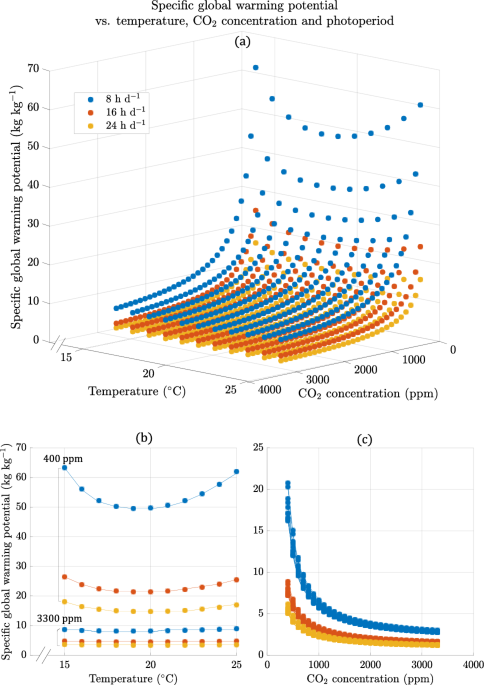



Photo by Devi Puspita Amartha Yahya on Unsplash
The crisis of land and water scarcity is driving the increasing popularity of urban farming as a modern solution to these issues. It provides environmental benefits but also addresses social, economic, and nutritional challenges faced by the conventional agricultural system.
Urban food systems are a potential policy tool to secure public access to nutritious food at lower prices due to the saving-costs, effect of avoiding transportation and packaging, and avoid pathogen sources from travelling long distances. In this way, community-building initiatives can be promoted allowing the creation of common spaces where healthy and affordable food can be ensured.
Urban Agriculture (UA) infrastructure often consists of a combination of ag-tech systems, which can contribute to reduce production waste through the utilization of technological advancements. These systems enable farmers to manage and enhance the growth environment of crops through the control of microclimate conditions within the enclosed space of an indoor vertical farm (IVF). Crops are grown, commonly through a hydroponic system, via a control unit that permits to manage the parameters related to the chamber environment, composed by Internet-of-Things (IoT) devices, LED lighting, HVAC (Heating Ventilation Air Conditioning) and automatic nutrient-dosing systems.
The multi-layered production of plants, allowed by IVFs can increase yield per footprint, preserving further land through intensified production. The integration between IVF and ag-tech technologies gives the chance to regulate every step of the production by changing all kinds of parameters and ensure the production to be carried out during all seasons, thus providing fresh food to consumers and, at the same time, be programmed on a request basis without overproducing and causing food loss and waste.
Then, what is preventing the spread of this technology? It is true that the investment cost, from infrastructure and resource consumption (mainly electricity) is high, and thus being the first relevant obstacle to have come across. It will, however, be paid off by the revenue from selling the final products. The operational management at the farm must then somehow ensure the entire system to be cost-efficient and financially self-sustaining.
Operational management entails manipulating the environment at the IVF to obtain the desired yield (preferably the largest). The question then becomes what the optimal combination of operational parameters is, either to ensure cost-efficiency, or, our focus, to discover the lowest and highest environmental impacts for growing kale microgreens.
We found that most studies that apply the life cycle assessment (LCA) methodology to estimate environmental impacts of crop production often carry it on under fixed sets of operational conditions, seldom repeating the study under different conditions. The specific global warming potential (GWP), measured in kilograms of CO2 equivalent (CO2e) emitted per kilogram of crop, for leafy greens, has been documented as varying between 0.01 and 54 kg CO2e kg-1. This variation of 3 orders of magnitude is explained by how farmers grow various crops under different operational management strategies and systems, making it impossible to draw definitive conclusions.
Amidst varying results, we were interested in finding out just how low the impacts of IVF could be. We wanted for our work to be based on the LCA methodology, while also being flexible enough that we could obtain a wide array of results for an option space of combinations of operational parameters in the chamber: air temperature, air CO2 concentration and photoperiod (daily hours of light). So, we used three models: (1) to calculate the environmental impacts of the IVF, (2) to model the mass and energy flows required to guarantee the desired conditions (3) and to tell the resulting yield for a given set of conditions.
The farm model was built after a 32-m2 microgreen IVF installed inside the technical area of a building on a university campus located in Lisbon, Portugal, with the purpose of supplying fresh leafy greens to one of the university’s food service and salad bars. We considered kale microgreen production across 2 weeks, where in the first week the seeds germinate into sprouts, growing into microgreens in the following 7 days, which would then be harvested, cleaned, and carried to the bar, ready for consumption. Aiming for continuous production, every day a batch of microgreens would be seeded, and an older batch would be harvested.
We found out that the conditions that led to the lowest environmental impacts assessed per kilogram of yield were those of intensive resource consumption. The lowest specific GWP of 3.34 kg of CO2e per kg of yield was obtained for a photoperiod of 24 hours and a CO2 concentration of 3 300 ppm, whereas the largest specific GWP of 63.34 kg of CO2e per kg of yield was obtained for a photoperiod of 8 hours and CO2 concentration of 400 ppm, thus emphasizing how impactful in the resulting yield the operational management the farmers set on the IVF is.
Despite the largest resource consumption (maximum photoperiod and CO2 concentration) leading to the largest absolute GWP, it also led to the largest yield. So much so that the increase in yield with increasing photoperiod and CO2 concentration resulted in a larger increase in yield than in GWP, hence reducing specific GWP, in kg of CO2 equivalent per kg of yield.
In essence, we found how urban farm management can have a big impact on the environmental performance. If farm operators and designers use the dynamic LCI research, planning and analysis of the whole systems performance to assess not only the operational conditions that lead to the largest yield it also to improve the environmental impacts tied to it. This serves as an example of how producers can assess the environmental impacts of their production systems and reduce them. The interaction found in this study could lead to other studies that explore the potential economic and social outcomes of UA through a LCA analysis, equipping urban farmers with essential tools to navigate a world that has moved beyond impact-blind resource expenditure.

Follow the Topic
-
Scientific Reports
An open access journal publishing original research from across all areas of the natural sciences, psychology, medicine and engineering.

Related Collections
With Collections, you can get published faster and increase your visibility.
Healthy Aging
Publishing Model: Open Access
Deadline: Dec 31, 2026
Kidney Disease and Health
Publishing Model: Open Access
Deadline: Oct 22, 2026



Please sign in or register for FREE
If you are a registered user on Research Communities by Springer Nature, please sign in