The Blue-Green Synergy: Discovering a Powerful Partnership for Cooler Cities
Published in Social Sciences, Earth & Environment, and Sustainability





Getting our paper, "Maximizing cooling benefits through urban green and blue spaces in Taipei city," accepted by *Discover Cities* was a moment of immense satisfaction. It felt like the culmination of a long journey that started not just with a research question but with a very palpable, personal experience: the increasingly sweltering summers in Taipei.
If you've ever walked through a dense city on a hot day, you've felt the Urban Heat Island (UHI) effect. The heat seems to radiate from the concrete, the asphalt, and the glass facades. Then, you step into a park or walk by a river, and you feel an immediate sense of relief. That visceral contrast was our starting point. We knew green and blue spaces cooled their surroundings, but as researchers, we had to move beyond feeling it to *measuring* it precisely. How much cooler? Does the size of a park matter? And what happens when you combine water and vegetation?
The Core Challenge: Pinpointing the Temperature
The foundation of any study on urban heat is accurate Land Surface Temperature (LST) data. While satellites provide this data, retrieving precise LST is notoriously tricky. Traditional methods are often constrained by atmospheric conditions and the complex interplay of land surface properties. We wanted a method that was not only accurate but also robust and reproducible.
This led us to our first major innovation: developing a *knowledge-driven deep learning model*. Instead of treating the AI as a black box, we "taught" it the physics. We fed our 1-Dimensional Convolutional Neural Network (1D-CNN) real LST data calculated from physical equations, alongside the satellite's spectral bands and vegetation indices. It was a marriage of domain expertise and cutting-edge AI. The "aha!" moment came when our model consistently outperformed other machine learning techniques. It wasn't just a statistical win; it felt like we had successfully encoded the complex reality of urban thermodynamics into a tool we could trust. This robust LST map became the bedrock upon which all our subsequent findings were built.
The Surprising Story of Shrinking Green Patches
With a reliable temperature map in hand, we turned to the green spaces. Using spectral mixture analysis, we meticulously mapped three decades of urban greenery in Taipei. The city-level trend showed positive efforts in greening, but the devil was in the details—or rather, in the sizes.
When we categorized green spaces by size, a concerning trend emerged. While the total number of small green patches (less than 0.1 hectares) was increasing—a testament to rooftop gardens, pocket parks, and roadside planting—the area covered by the largest green spaces (over 100 hectares) was significantly declining. This was a classic case of what we might call "green space fragmentation." The city was gaining many small, scattered cool spots but losing its large, powerful "cold islands."
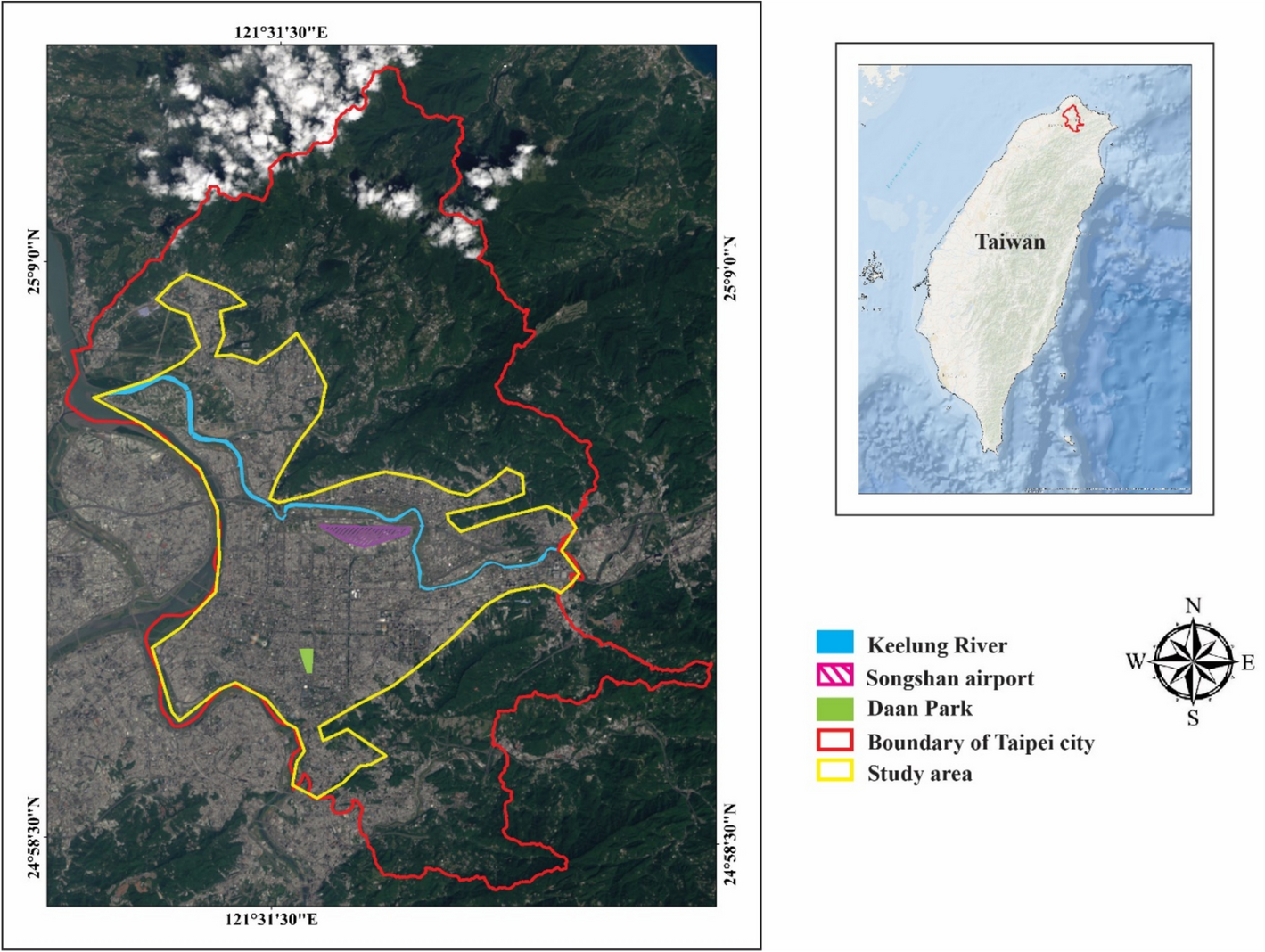
Our spatial regression analyses confirmed our suspicions. These large, contiguous green spaces—like Daan Forest Park, which we highlighted as a case study—had a profoundly stronger cooling effect than the sum of many small patches. A single large park acts as a cohesive cool air factory, while small, isolated patches struggle to influence their immediate surroundings against the overwhelming heat of the urban matrix. This finding was a crucial nuance for urban planners: it’s not just about *how much* green space you have, but *how it’s configured*.
The Blue-Green Synergy: A Cooler Partnership
Perhaps the most exciting part of our research was untangling the relationship between blue spaces (rivers, wetlands) and green spaces. It’s intuitive that a river cools the air, but we wanted to quantify it and see how vegetation enhanced this effect.
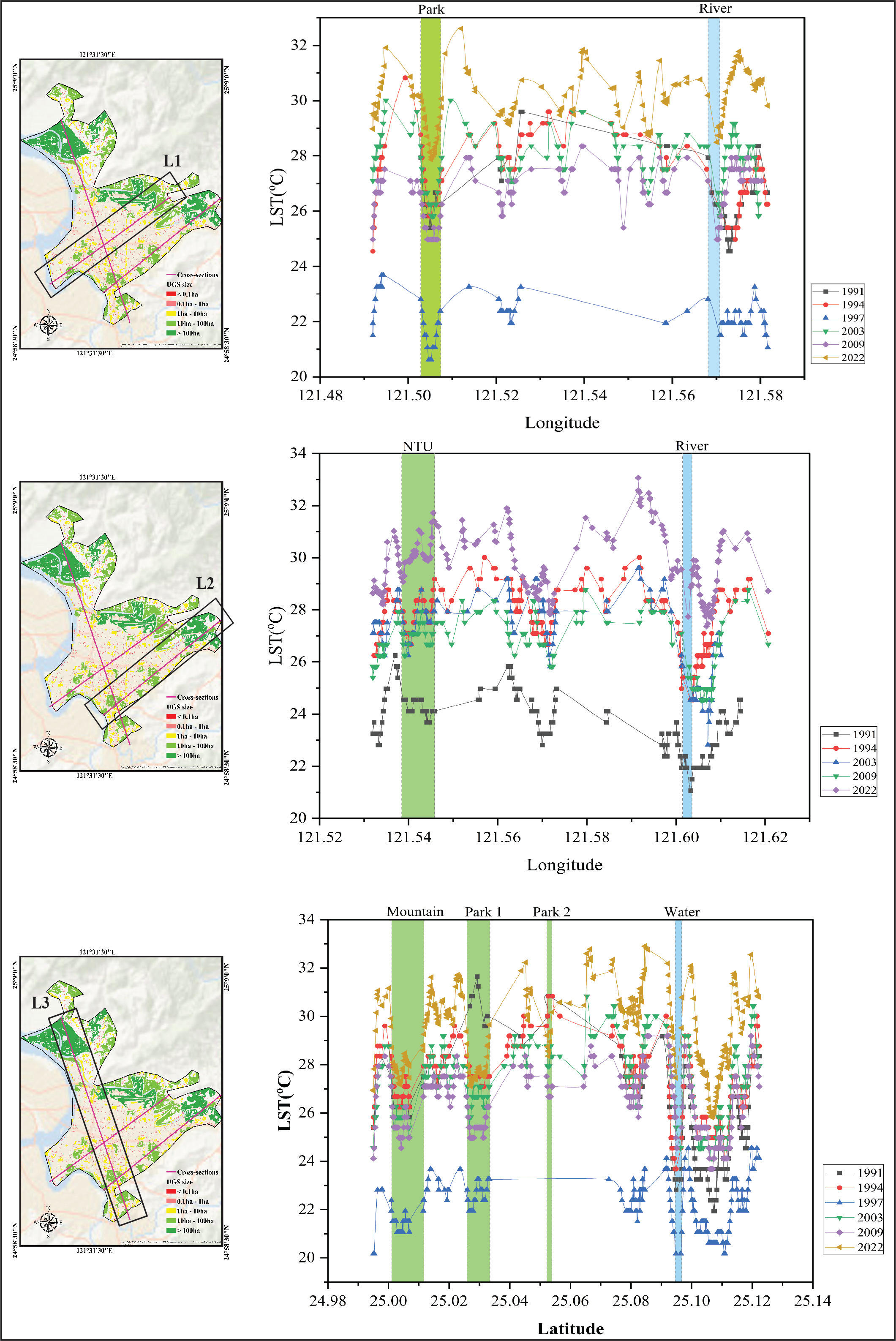
We developed a novel method to isolate the cooling effect of the Keelung River. By creating temperature profiles across the river and identifying the point where the cooling influence faded, we could calculate the "cooling temperature" attributable to the water itself. But the story didn't end there.
When we looked at the spatial patterns of "cold spots," we saw that the most potent cooling occurred where blue met green. A riverbank lined with vegetation was far more effective at reducing temperatures than a concrete canal. The combined cooling effect of blue and green infrastructure was greater than the sum of its parts. The vegetation, through shading and evapotranspiration, pre-cools the air before it interacts with the water, and the water body, in turn, helps sustain the moisture needed for the plants' cooling processes. It’s a beautiful, synergistic relationship that creates a much more resilient and extended cooling corridor.
This was a powerful insight. It argues against hard engineering solutions for waterways and champions the restoration of natural, vegetated riverbanks as a core climate adaptation strategy.
The Human Element and the Path Forward
This research was never just an academic exercise. It was driven by the real-world challenge of making cities more livable, especially for vulnerable populations like the elderly, who are disproportionately affected by heatwaves. Seeing the transformation of Daan Forest Park from barren land to a thriving urban forest—and correlating that directly with the emergence of a new "cold spot" on our maps—was incredibly rewarding. It was tangible proof that policy and planning decisions can, and do, alter the city's microclimate for the better.
Our journey, from feeling the heat to modeling it with AI, leads us to a clear set of messages for policymakers and planners:
**Prioritize Preservation:** Protect large, contiguous green spaces at all costs. They are non-negotiable assets for urban climate resilience.
- **Design for Connection:** When creating new green spaces, aim for size and connectivity. Cluster smaller patches and link them with green corridors to amplify their cooling power.
- **Embrace the Partnership:** Always integrate green spaces with blue infrastructure. Create "cooling corridors" along rivers and wetlands by preserving or restoring their natural vegetated buffers.
This paper is our contribution to the global effort to build more sustainable and climate-resilient cities. The methods we developed offer a replicable framework, and the findings provide actionable evidence. The summer heat in Taipei might have been our initial motivation, but we hope the cool logic of our findings will help cities everywhere breathe a little easier.

Follow the Topic
-
Discover Cities
This is a fully open access, peer-reviewed journal that supports multidisciplinary research and policy developments across the field of urban science.

Related Collections
With Collections, you can get published faster and increase your visibility.
Green Spaces and Sustainability in Cities
In recent decades, with the rapid development of urbanization, it has brought about rapid economic development and convenient life, while it has also brought a series of environmental problems, including global warming, air pollution, ecosystem chaos, biodiversity decline and other environmental problems, which will also lead to the physical and mental health of residents in cities. Green spaces in cities plays multiple roles in the city of ecological, social and economic services, is an integral part of the urban ecosystem, and plays an indispensable role in improving environmental problems and promoting sustainable development in cities.
This series aims to discuss the role of green spaces in alleviating environmental problems in cities, as well as research on the use and management of green spaces in sustainable urban development. Through this series of studies, we will explore how to better play the ecological and social service functions of green spaces in cities and promote the sustainable development of cities.
The research collected in this series includes, but is not limited to, the following topics:
• Evaluation of green spaces and ecological services value in cities;
• Evaluation the accessibility and equity of green spaces in cities;
• The impact of green spaces on microclimate in cities;
• Green spaces and health in cities;
• Green spaces and resilient cities;
• Green spaces and social justice;
• Green spaces and the well-being of residents in cities;
• Governing, planning and management of green spaces in cities.
• Green spaces in smart cities;
• Sustainable development in cities.
Keywords: Green space; Environmental sustainability; Climate change; Social justice; Resilient cities; Smart cities; Health; Urban planning; Urban service
Publishing Model: Open Access
Deadline: Jan 31, 2027
Improving Habitability in Informal Settlements: Challenges and Innovations
Rapid urbanization across the Global South has led to the proliferation of informal settlements, where over a billion people reside, often lacking adequate housing, basic infrastructure, and secure tenure. These communities are disproportionately vulnerable to multifaceted challenges, including the escalating impacts of climate change and significant health risks. While the scale of this issue is daunting, informal settlements are also sites of remarkable resilience and innovation. This Collection seeks to bring together cutting-edge research that explores both the persistent challenges and the novel strategies for improving habitability in these complex urban environments. We welcome original research articles, case studies, and review papers that address, but are not limited to, the following interconnected themes:
• Housing and Basic Infrastructure: Innovations in low-cost, sustainable housing materials and construction techniques; strategies for incremental upgrading of water, sanitation, and energy infrastructure.
• Climate Resilience and Adaptation: Community-based strategies for adapting to climate risks such as flooding and heat stress; the role of green infrastructure and nature-based solutions in enhancing resilience.
• Health and Well-being: Analysis of environmental health risks within settlements and interventions aimed at reducing exposure to pollutants and improving access to healthcare.
• Community and Planning: The role of participatory planning processes in slum upgrading projects; examining the effectiveness of community-led initiatives and institutional frameworks that support resident empowerment.
This Collection aims to foster a multidisciplinary dialogue, highlighting integrated approaches that bridge the gap between top-down policies and bottom-up community action. By showcasing evidence-based innovations and critically assessing existing challenges, we intend to provide a valuable resource for academics, policymakers, and practitioners dedicated to creating more equitable, resilient, and habitable cities for all.
Keywords: informal settlements; urban slums; global south; Sustainable Development; housing environment; infrastructure.
This Collection supports and amplifies research related to SDG 11.
Publishing Model: Open Access
Deadline: Mar 15, 2027