The Global "Natto" Connection: How a Bowl of Beans in Myanmar Sparked a Genomic Discovery
Published in Microbiology and Agricultural & Food Science


The story of scientific discovery often begins in the most unexpected places—not in a sterile laboratory, but perhaps over a shared meal in a distant land. On January 2, 2018, in the city of Myitkyina, Myanmar, I encountered a simple bowl of fermented soybeans that would change the course of our research. Looking at those beans—sticky, stringy, and deeply aromatic—they were a dead ringer for Japanese natto. In these foods, Bacillus subtilis is crucial for breaking down soy proteins and generating viscous substances like polyglutamic acid (PGA), which creates that signature "stringiness". This resemblance was not just a coincidence; it was a biological mystery waiting to be unraveled.
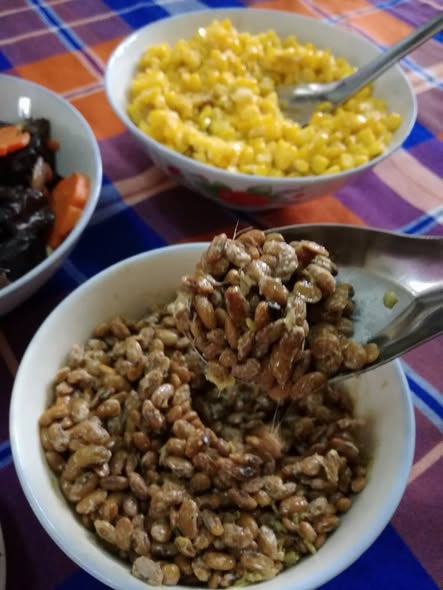
Photographed by me on January 2, 2018.
While political instability has made it difficult to conduct fieldwork directly in Myanmar , we turned to public genomic databases. There, we found a "twin" of that Myanmar dish in the neighboring Indian state of Mizoram: a strain isolated from a traditional food called bekang.
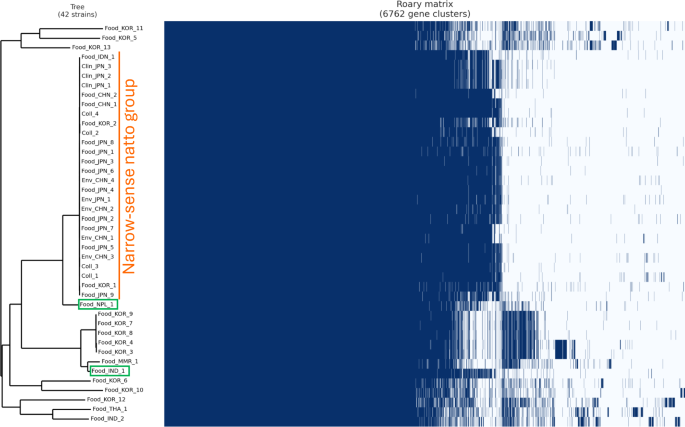
Our analysis of this bekang strain revealed a fascinating "genomic paradox". If we look at the bacteria’s "family tree" (ancestry), the bekang strain is actually a distant relative of the Japanese natto clade; a strain from Nepal is actually its closest systematic neighbor. However, when we looked at their "specialized toolkit"—the accessory genes used to adapt to soybean fermentation—the bekang strain was almost identical to the Japanese natto group.
This discovery defines a "broad-sense natto group" that shares a successful genetic strategy for making sticky soybeans, regardless of their family background. We believe this happened either through "horizontal gene transfer"—where bacteria swap genetic modules like a software update—or because these specific tools were so useful that both lineages kept them while others lost them. This research shows that the "natto-type" strategy is a powerful evolutionary program that has thrived across borders long before modern industrialization.
The next time you see a bowl of stringy, fermented beans, remember that you are looking at more than just a dish. You are witnessing a masterpiece of biological adaptation that has traveled across mountains and borders, hidden in the invisible DNA of a tiny bacterium.
Reference Seki, K., & Nagano, Y. (2025). Conserved accessory genes link a phylogenetically distinct Bacillus subtilis strain from Indian bekang to the Japanese natto clade. Scientific Reports, 15, 43097.

I study genomics. I am particularly interested in the genetic diversity of organisms used as food sources.
Follow the Topic
-
Scientific Reports
An open access journal publishing original research from across all areas of the natural sciences, psychology, medicine and engineering.

Related Collections
With Collections, you can get published faster and increase your visibility.
Cancer Prevention and Control
Publishing Model: Hybrid
Deadline: Feb 19, 2027
Healthy Aging
Publishing Model: Open Access
Deadline: Dec 31, 2026