The only amphibian ever to live in the sea full-time discovered from the age of dinosaurs
Published in Earth & Environment and Ecology & Evolution

Explore the Research
 nature.com
Page Not Found | nature.com
Page Not Found
New Species
The new species has a flat body about 75 centimeters long, covered by body armor. It is based on two specimens found in a single rock bed in Guanling County, Guizhou Province, China. It is from the early Late Triassic, about 237 million years ago.
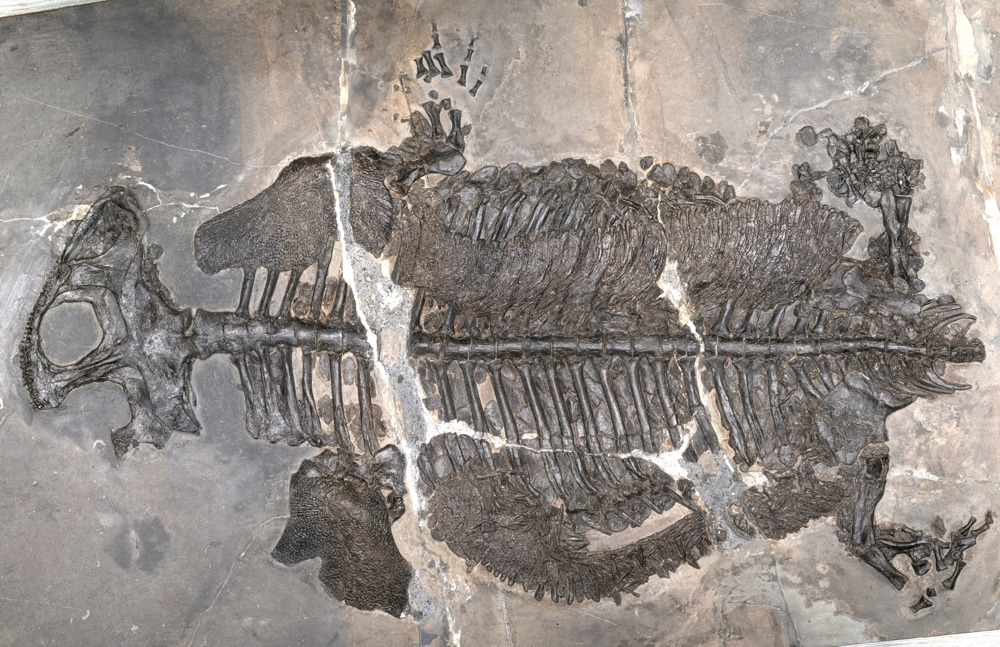
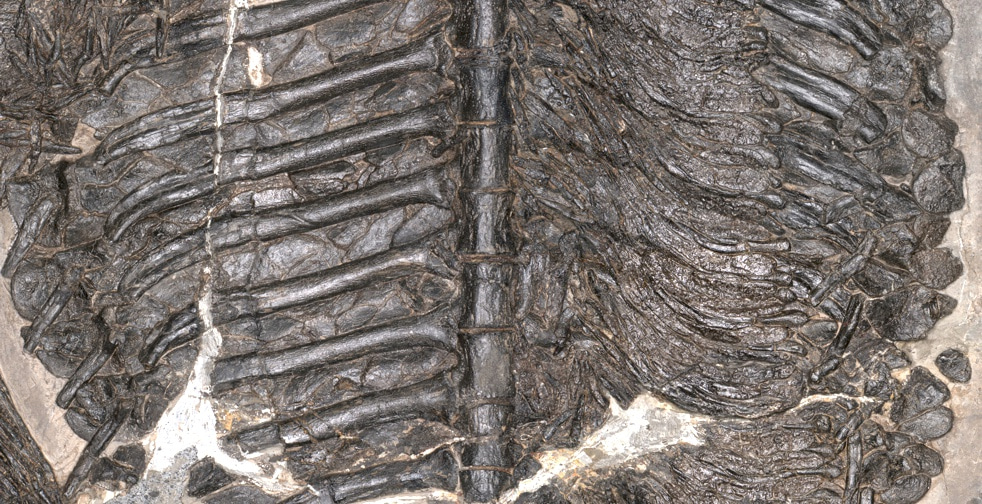
My colleagues and I named it Gerrothorax maritimus in the paper linked to this blog post. Gerrothorax was erected by Tage Nilsson in 1934 and means “chest like a wicker basket”, referring to the belly side of the chest where narrow gastral bones may appear like they are woven (scroll down to the skin section for a photograph), while maritimus means “of the sea”.
Not Too Soft a Skin
Living amphibians, like frogs and salamanders, are not known for their seawater tolerance. Most of them cannot withstand salty waters while some that are somewhat tolerant of salt are still far behind the other vertebrates—they could not survive in the oceanic salt water and live where seawater is diluted by freshwater to some extent. Even then, they need to recover in freshwater after bathing in sea water. This is mostly because of their soft and permeable skin.
The soft skins are wonderfully designed for the lifestyle of living amphibians. They do not have to open their mouth to drink water because they can absorb water through their skin efficiently. Likewise, they do not have to breathe through their mouth because their skin can exchange gases with the surrounding. However, these characteristics backfire when they try to do something unusual, like swimming in sea water. They would lose their body water through their skins because of the osmotic pressure from the sea water.
Nevertheless, Gerrothorax maritimus managed to live in the sea full-time. This was possible because it covered the body with bony body armor, which protected the body water from being sucked away by the sea water.
You must be wondering how this animal breathed if the skin was not usable for that purpose. The straight answer is that it had the gills. The living amphibians have lost such gills through evolution so it is difficult for them to do the same.
Ambushing at Depth
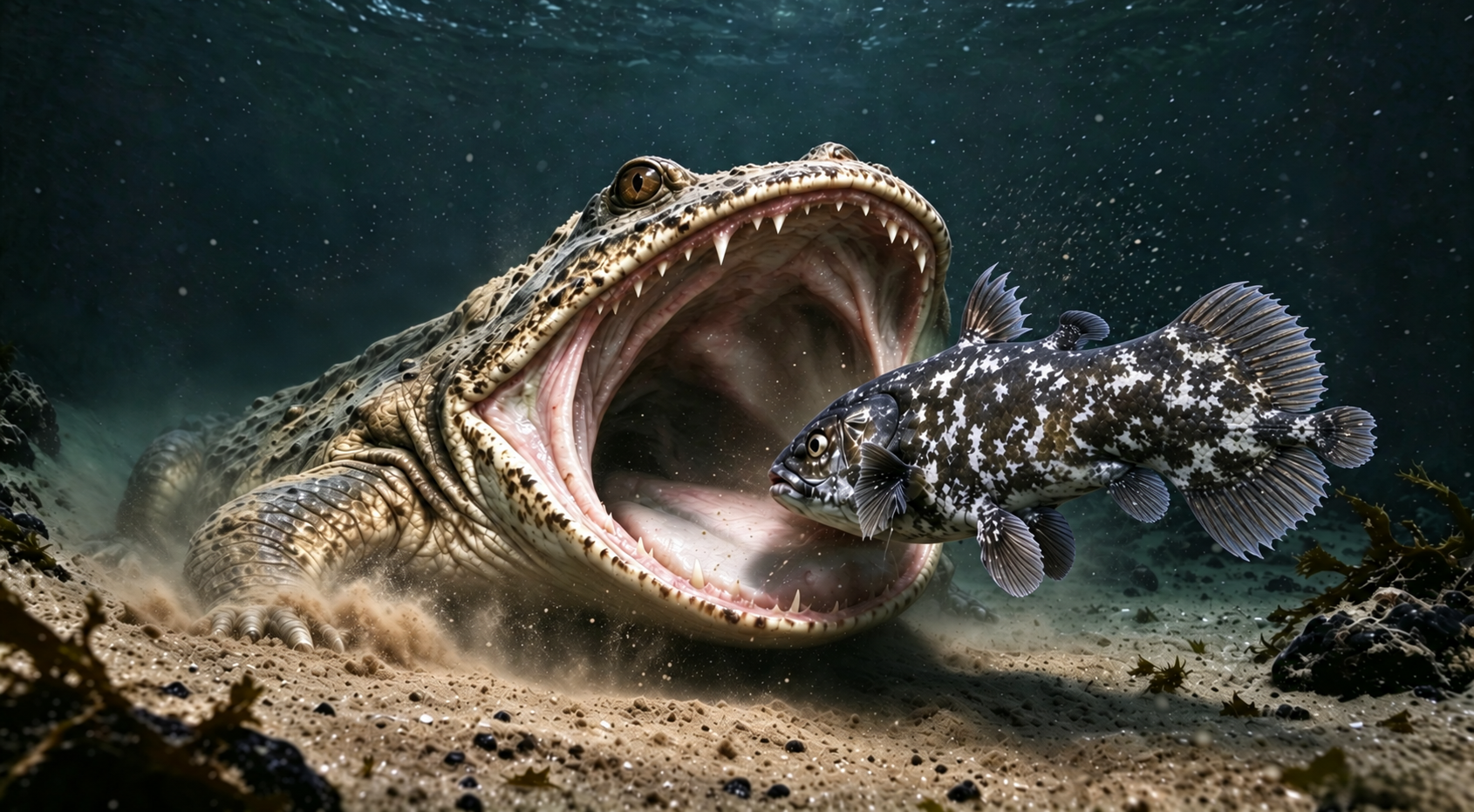
Gerrothorax maritimus was suited for living at the sea bottom. Its heavy body armor would help ballast itself at the bottom, while It did not have to come to the surface to breathe, thanks to the gills mentioned earlier. Its flat body would allow it to hide in the sediments at the bottom. It had a large mouth with a strongly built gill arch, which is a common equipment for predators that suck in the prey, called suction feeders.
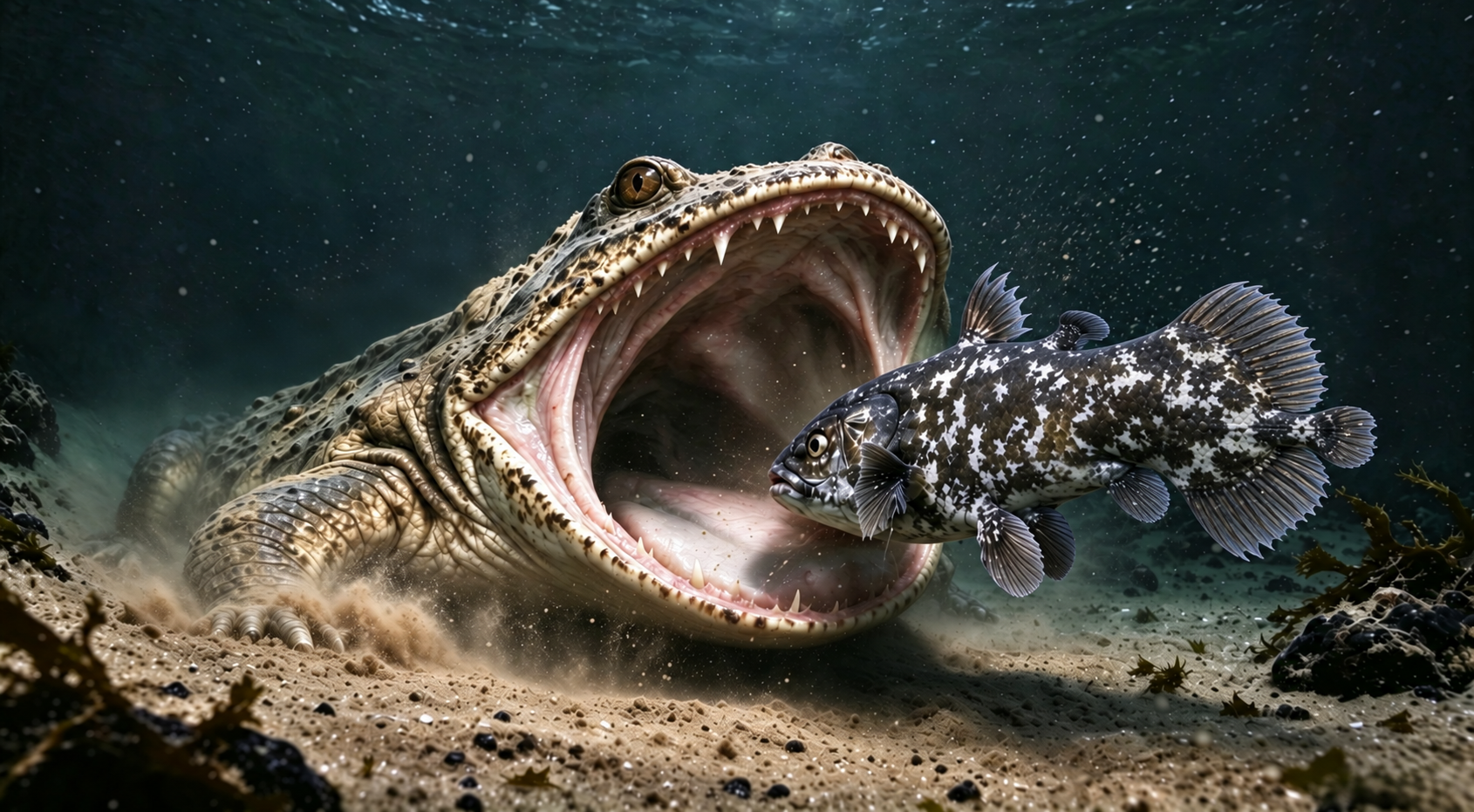
The best modern analog for the lifestyle of Gerrothorax maritimus would be a Wobbegong, a bottom dwelling shark that suction-feeds on ambushed prey. You can find nice online video clips of these animals feeding.
Moment of Truth
The largest challenge for this research was to establish that the species really lived in the sea, rather than its carcasses having been washed away from land to be deposited at the sea bottom. We managed to test it by multiple lines of evidence, which all supported the interpretation that it was a marine dweller.
Perhaps the most striking piece of evidence is the strontium isotope ratio. Strontium has nearly constant isotope ratios across the ocean of a given time period that only changes slowly over thousands of years. We measured the ratios and found that the fossil bones from the new species all had a signature of sea water, while the sediments around had values similar to the rocks underlying the sea bottom sediments. This suggests that the bones grew at sea, taking in the seawater signals, and were not contaminated badly by the sediments during preservation. You can only imagine how nervous we were as we waited for the test results to come out. It was the moment of truth for us.
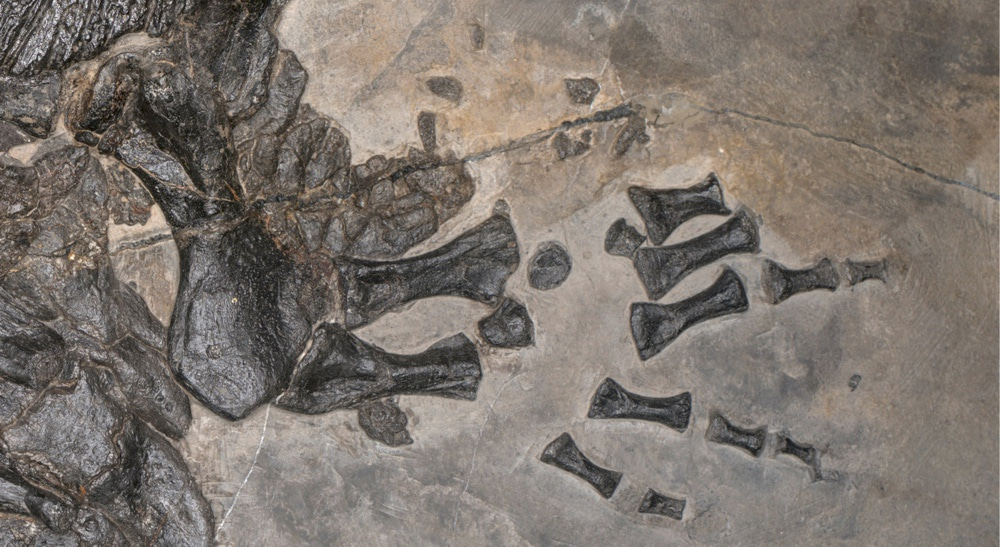
Separate pieces of evidence include the fact that the fossils co-occurred with a large ichthyosaur called Guizhouichthyosaurus, which would grow beyond 6 meters long. Also, the place of deposition was at least 30 km away from any island based on paleogeographic reconstructions. Lastly, the limbs of the specimens still have finger bones attached, when the limbs are the first to decay away when a carcass of a limbed vertebrate drifts in the sea. Finger bones are not known even in freshwater sister species of Gerrothorax but the new specimens both have them.
Where Are the Specimens?
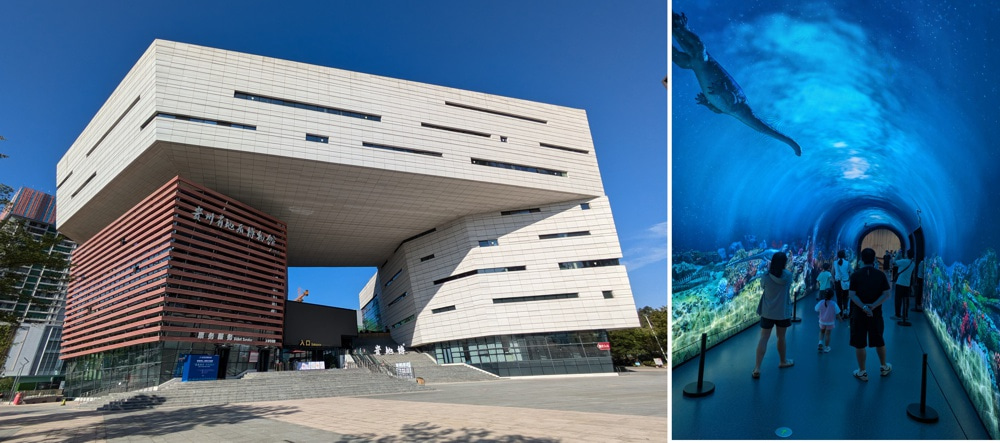
The specimens are in the Geological Museum of Guizhou in the provincial capital Guiyang city of Guizhou Province, China. It is a new museum and the official fossil repository for the province. The museum has three exhibition rooms devoted to Triassic marine vertebrates from Guizhou, including many holotypes of ichthyosaurs and thalattosaurs. It even has a tunnel with virtual marine reptiles swimming around you.
Unsung Heros
Lastly, I want to draw your attention to the people behind the scenes. I have been working in Guizhou Province over the last 22 years and came to realize that a lot of efforts by people there are enabling our scientific studies. The fossil collection that enabled this study would not have been there without generations of people who collected fossils in Guizhou Province, as well as all those people in Guizhou who worked hard to have the official museum built. Fossil preparators spent enormous amounts of time behind the scenes too. I refrain from listing names for the fear of forgetting one but just wanted you to know that 30 years of efforts by the people in Guizhou Province are behind the study.
Follow the Topic
-
Nature Ecology & Evolution
This journal is interested in the full spectrum of ecological and evolutionary biology, encompassing approaches at the molecular, organismal, population, community and ecosystem levels, as well as relevant parts of the social sciences.

Related Collections
With Collections, you can get published faster and increase your visibility.
Biodiversity and ecosystem functioning of global peatlands
Publishing Model: Hybrid
Deadline: Jan 31, 2027
Understanding species redistributions under global climate change
Publishing Model: Hybrid
Deadline: Dec 31, 2026