The paradox of the circular economy in the raw materials industry.
Published in Earth & Environment, Sustainability, and Economics
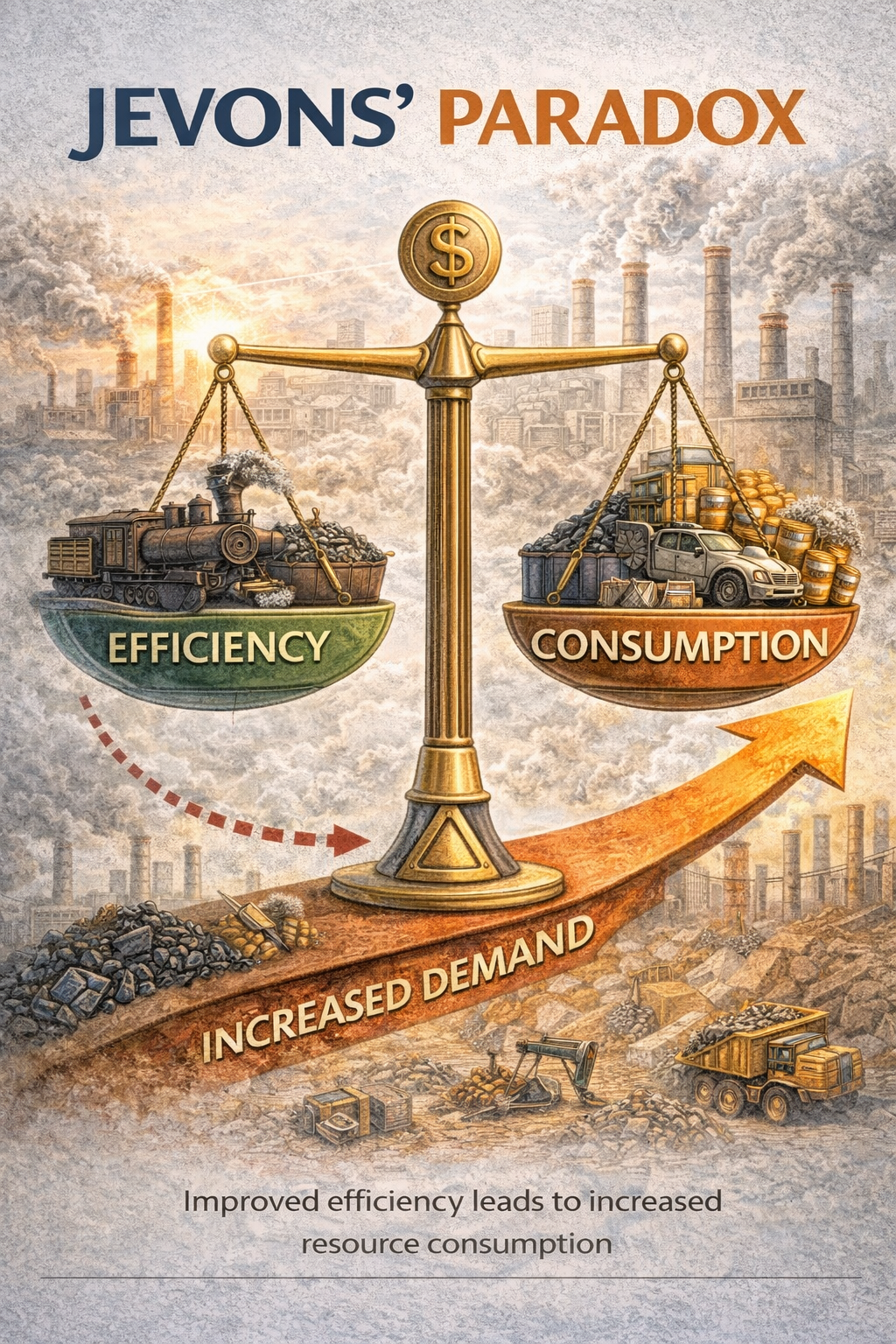


When closing loops can widen demand.
The idea of a circular economy has captured the imagination of policymakers, academics and industry alike. Promising a world in which waste is designed out of systems and materials circulate indefinitely, circularity resonates with intuitive notions of resource efficiency and sustainability. In principle, transforming waste into resource should reduce pressures on primary extraction and decouple economic growth from environmental impact.
However, when we examine how these dynamics play out in specific raw materials industries, a more complex picture emerges one in which recycling and reuse can paradoxically increase overall demand for the very resources we seek to conserve. This counterintuitive effect, sometimes anticipated by classical economic observations such as Jevons’ paradox, points to an inherent tension between technological efficiency and aggregate consumption that circular economy narratives often overlook. The work presented here, “The paradox of the circular economy in the raw materials industry,” developed with Manuel Regueiro y González-Barros, explores this tension in depth and situates it within broader debates about life cycle management and sustainability transitions.
DOI: https://doi.org/10.1051/e3sconf/202234901003
At its core, the circular economy promotes reuse as a means to reduce primary production. The more we recover and reutilize materials such as aluminium or steel, the less we would ostensibly need to extract from the ground. In a healthy circular system, recycled materials take the place of virgin inputs in supply chains. But when we examine long-term production and consumption patterns in raw materials sectors, the evidence tells a more nuanced story.
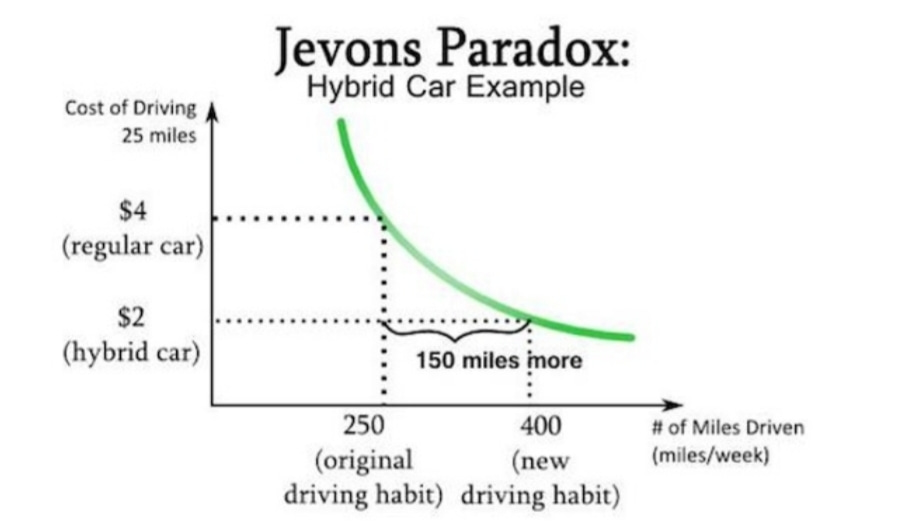
The paradox arises from a fundamental economic mechanism: improved efficiency tends to lower the effective price of a commodity. When recycling technologies become more effective and recycling rates increase, the immediate expectation is that primary extraction will decline proportionally. Yet because lower costs expand the range of applications and make products more accessible, demand can grow faster than the supply constraints loosen. The result is that total consumption of the resource may increase rather than decrease.
Historically, this mechanism was first articulated in the context of coal consumption in Britain in the nineteenth century and later became widely discussed as Jevons’ paradox. In modern raw materials, similar dynamics can be observed. Aluminium recycling in Europe provides an illustrative case. Between 1962 and 2018, the rate of aluminium recycling grew dramatically, yet primary production volumes also increased. Rather than substituting for primary extraction, the expanded availability of recycled aluminium coincided with sustained growth in overall demand. This divergence suggests that recycling alone cannot be relied upon to reduce pressures on primary raw materials unless broader demand dynamics are accounted for a reality that simple circular narratives often obscure .
The implications extend beyond statistics. When a material becomes easier and cheaper to source through secondary channels, manufacturers, designers and end-users may adopt it more widely in applications that were previously uneconomic. In other words, recycled materials can stimulate new demand and create larger markets. While this expansion can have positive effects in terms of product availability and economic activity, it complicates assumptions about resource conservation. Circular processes that were intended to reduce material throughput may inadvertently support greater total consumption.
This paradox underscores the importance of distinguishing between efficiency and sufficiency in sustainable resource management. Efficiency gains reduce the cost per unit of output but do not necessarily reduce total material extraction or environmental impact if consumption expands in response. In some contexts, an exclusive focus on closing loops and improving recycling rates may be insufficient or even counterproductive if it blinds stakeholders to underlying demand dynamics.
To make sense of these dynamics, it is useful to situate them within the broader framework of life cycle management. Life cycle thinking prompts analysts to consider not only how materials are used and reused, but how consumption patterns evolve over time in response to technological and economic changes. When efficiency gains lead to rebound effects, as in the paradox explored here, life cycle assessments and circular strategies must integrate considerations of market behaviour, supply elasticity and systemic feedbacks.
Another important dimension arises from the social and institutional infrastructure surrounding raw materials. In sectors where global supply chains are deeply embedded in economic development strategies, recycled materials may reinforce existing patterns of extraction and consumption rather than transform them. The capabilities required for collection, sorting and processing vary widely across regions, and these differences can shape how circular practices materialize in practice. In some cases, the environmental and social benefits of recycling may be concentrated in particular geographies, while the demand for primary raw materials continues unabated elsewhere. These systemic interactions challenge the assumption that recycling alone can drive a transition to sustainable resource use.
Recognizing the paradox does not mean rejecting circular economy principles outright. Rather, it highlights the necessity of combining circular strategies with policies and measures that address overall material demand. This might include promoting product longevity, sharing economy models, dematerialization of services and circular design principles that anticipate reuse from the outset. Crucially, it means acknowledging that recycling outcomes cannot be considered in isolation from broader economic contexts and consumption patterns.
The paradox of the circular economy in raw materials is not merely a theoretical curiosity. It has practical consequences for industry, policy and research. Life cycle management practitioners should be cautious about equating increased recycling rates with reduced material footprints. Policy frameworks that incentivize recycling must also consider potential rebound effects and support complementary actions that moderate demand growth. Researchers should integrate economic and behavioural models into assessments of circular interventions to capture these systemic dimensions.
The conversation around circular economy is young and evolving. Early enthusiasm focused on closing loops and recovering value from waste flows. As the concept matures, it must grapple with complex realities such as rebound effects, supply chain structure and social dynamics. Embracing these challenges will strengthen the analytical foundations of circular economy practice and make sustainability transitions more realistic and effective.
Ultimately, understanding the paradox invites a shift from simple narratives to nuanced, system-level thinking. It encourages us to look beyond individual technologies or processes and to ask how entire material economies change over time in response to innovation, cost structures and human behaviour. In doing so, we gain a deeper appreciation of what effective circular economy strategies require not only efficient recycling, but also thoughtful management of consumption and systemic feedbacks.
Further details and reflections are available in the conference paper published in E3S Web of Conferences

Follow the Topic
What are SDG Topics?
An introduction to Sustainable Development Goals (SDGs) Topics and their role in highlighting sustainable development research.
Continue reading announcement