The Relationship Between Processed Food Consumption and Periodontal Disease: Sex Disparities in the Majorcan Adolescent Population
Published in Biomedical Research




The World Health Organization defines adolescence as the period between ages 10 and 19, marked by rapid growth and social transitions. This stage is critical for forming lifestyle habits, including those related to oral health. Oral health is essential for overall well-being, but diseases like dental caries and periodontal disease remain highly prevalent worldwide. Dental caries is the most common non-communicable disease, affecting billions globally.
Frequent consumption of ultra-processed foods—such as sugary drinks and snacks—has been linked to poor oral health, including gingivitis and periodontitis. In Spain, data show a high prevalence of dental plaque and calculus among adolescents, with health disparities between sexes: females generally have better periodontal health than males.
Studies in the Balearic Islands reveal increasing rates of caries and calculus from age 12 to 15. High consumption of energy drinks and processed foods among youth contributes to inflammation of the gums and imbalances in the oral microbiota.
Sugar and carbohydrate intake are clearly associated with dental caries and periodontitis. Gender differences have also been observed: girls tend to consume more sweets, while boys consume more sugary drinks, which may influence their respective risks of developing periodontal disease.
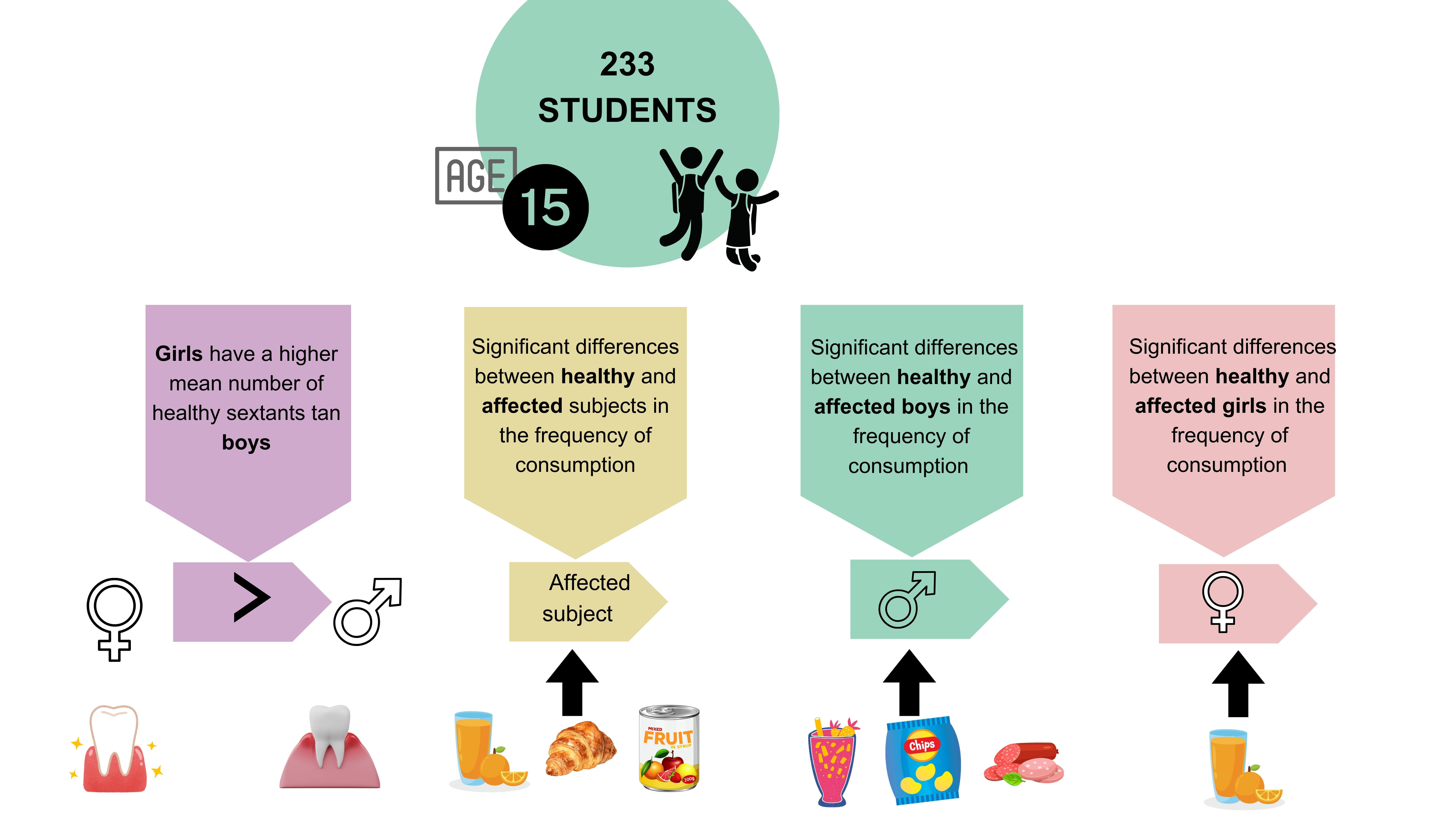
Results: It was observed that girls have a higher mean number of healthy sextants than boys (3.26 °æ 0.20 vs. 2.70 °æ 0.21; p = 0.029). A statistically significant difference was noted between healthy and affected subjects in the frequency of consumption of packaged milkshakes (p = 0.003), industrial juices (p = 0.009), industrial pastries (p = 0.018), and fruits in syrup (p = 0.022). When segmented by sex, a statistically significant difference was noted in boys between healthy and affected subjects in the frequency of consumption of packaged milkshakes (p = 0.044), salty snacks (p = 0.032), and cold cuts (p = 0.033); in girls, the difference was
detected in industrial juices (0.024)
This study suggests an association between dietary habits and oral health in 15-yearold students, with boys showing a lower mean number of healthy sextants and higher processed food consumption compared to girls. The processed food intake is higher in students with affected sextants. Our findings reinforce the need for public health efforts, interventions, and policies to reduce UPF consumption in order to improve the oral health of children and adolescents. This pattern suggests that educational interventions should consider gender differences to be more effective in promoting healthy eating habits.

I work in the Department of Preventive Dentistry at the Adema University School (University of the Balearic Islands). I conduct research in dentistry and nutrition, associated with lifestyles.