Toward a sustainable megalopolis by reconciling power system decarbonization and urban health resilience
Published in Healthcare & Nursing, Earth & Environment, and Electrical & Electronic Engineering



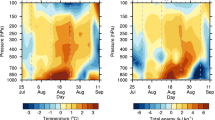

Thrilled to share our new paper published in Communications Earth & Environment (Nature Portfolio): “Toward a sustainable megalopolis by reconciling power system decarbonization and urban health resilience.” This work is a collaboration between the University of Macau and UC Berkeley, with Prof. Yonghua Song and Assoc. Prof. Hongcai Zhang as corresponding authors, and Zhixue Yang as first author.
Why this matters: Climate change is making extreme heatwaves more frequent and intense. During heatwaves, cooling demand surges, transmission lines are thermally derated, generator efficiency drops, and local congestion worsens—together pushing urban grids toward unexpected shortages and outages. While reliability has generally improved with technological and economic development, county-level outage data in China (2019–2021) show that, compared with non-heatwave days in the same counties, heatwave days are associated with about a 4% increase in outage frequency and an 8% increase in outage duration. These disruptions can be deadly because power outages interrupt cooling, exposing vulnerable residents to dangerous indoor temperatures.
Our approach: High renewable penetration is essential for deep decarbonization, but it can also compress system flexibility and amplify congestion, making cities more vulnerable during extremes. Using the Guangdong–Hong Kong–Macao (GBA) megacity cluster as a real-world testbed, we build a 2030–2050 decarbonization pathway and develop a coupled framework linking extreme heatwaves → power imbalance/outages → heat exposure → excess mortality. This allows us to quantify blackout-driven health losses under future decarbonization trajectories.
Key findings at the megacity scale: Severe heatwaves simultaneously raise regional load by roughly 10%–25% while reducing transmission capability by about 5%–15%, constraining the delivery of power from renewable-rich peripheries and interprovincial imports to dense urban cores. As decarbonization reduces the share of flexible thermal resources, outages not only intensify but also extend from nighttime into daytime. By 2050, the annual load-shedding rate is projected to increase from 0.52% (2030) to 2.48% (2050). Health impacts escalate accordingly: under an interval-average health-risk scenario, the average share of heatwave-related deaths in total annual mortality rises from 0.47% (2030) to 2.78% (2050), and the number of cities where excess deaths exceed 3% of annual mortality increases from 1 to 9 .
Actionable solutions with a city-scale case study (Zhuhai): Because grid congestion strongly shapes where and when outages occur—and thus who faces the greatest heat exposure—we further test health-aware planning using a high-resolution multi-voltage-level network in Zhuhai. We compare three resilience levels: R_Low (no heatwave consideration), R_Med (heatwave impacts on power only), and R_High (our proposed health-aware strategy). The health-aware plan cuts excess deaths by 63% (775 → 283) by combining (i) targeted generation siting near high-load areas, (ii) PV-enabled outage timing that reduces daytime load shedding by >90% (shifting most outages to night), and (iii) hydrogen storage that mitigates nighttime PV gaps and converts congestion-driven curtailment into backup supply—boosting renewable utilization by 10.06% and reducing heatwave load shedding by 40.93% . Over 2030–2050 under SSP2-4.5, health-aware strategies can reduce expected excess deaths by ~50% while becoming increasingly cost-effective, with expected total annual cost reductions growing from 8.71% (2030) to 13.63% (2050) .
If you’re interested in climate-resilient decarbonization, outage risk under extremes, or integrating public health into power system planning, I’d love to connect and discuss potential collaborations. [https://www.nature.com/articles/s43247-026-03198-4] #Power Systems #Decarbonization #Heatwaves #PublicHealth #Resilience

Follow the Topic
-
Communications Earth & Environment
An open access journal from Nature Portfolio that publishes high-quality research, reviews and commentary in the Earth, environmental and planetary sciences.

Related Collections
With Collections, you can get published faster and increase your visibility.
Ecological resistance and resilience under global change
Publishing Model: Open Access
Deadline: Apr 07, 2027
Hazards in Mountain Regions
Publishing Model: Open Access
Deadline: Nov 02, 2026