Towards Improving Single-Cell Segmentation in Heterogeneous Configurations of Cardiomyocyte Networks
Published in Physics and Computational Sciences



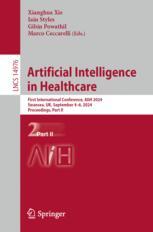

Understanding how cellular networks form, function, and deteriorate is a central challenge in biomedical research, particularly in the context of cardiovascular disease. In our recent proof-of-concept study, we developed and validated a suite of AI-powered segmentation pipelines to accurately identify and quantify individual cells within complex cardiac cell networks formed in vitro. This work represents a foundational step toward characterising the physical and functional architecture of cellular networks, with implications for understanding disease progression and tissue organisation.
Why Cardiac Cell Networks?
Cardiac cell networks, especially those formed by HL-1 cardiomyocytes in vitro, exhibit highly heterogeneous configurations. These networks consist of both discrete single cells and larger multicellular aggregates, which are physically and functionally coupled. The spatial arrangement of these cells influences key physiological processes such as calcium signalling, and disruptions in this organisation may underpin pathological changes in cardiac function.
However, segmenting these networks to identify individual cells is a non-trivial task. Conventional image processing techniques often fail to distinguish cell boundaries accurately, especially in dense or irregular regions. This limitation has prompted us to explore advanced AI-driven methods that can overcome these challenges.
The Challenge of Segmentation
Cell segmentation—the process of identifying and delineating individual cells in microscopy images—is a cornerstone of quantitative cellular analysis. Traditional methods such as thresholding (e.g., Otsu’s method) and active contours have been widely used but struggle with noisy data and complex backgrounds. Deep learning (DL) approaches, particularly convolutional neural networks (CNNs), have revolutionised segmentation tasks by enabling pixel-level classification and feature extraction.
Among DL-based tools, Cellpose has emerged as a versatile and generalist algorithm for cellular segmentation. Its U-Net-style architecture and residual blocks allow it to process diverse image types without extensive parameter tuning. However, Cellpose was primarily trained on images with clearly demarcated cell boundaries, which limits its performance in more complex configurations like those found in cardiac cell networks.
Our Approach: Eight Segmentation Pipelines
To address this, we designed eight segmentation pipelines combining two data preprocessing strategies with four segmentation models:
-
Preprocessing Pipelines:
- p1: Greyscale conversion and averaging.
- p2: Greyscale conversion followed by histogram equalisation.
-
Segmentation Models:
- Cellpose 1: Pre-trained Cyto2 model.
- Cellpose2: Cellpose retrained from scratch on our dataset.
- Cellpose 3: Fine-tuned Cellpose using transfer learning.
- StarDist: A CNN-based model using star-convex polygons for cell boundary detection.
Each pipeline was applied to a dataset of 92 HL-1 cardiac cell network images, acquired using fluorescent calcium dye (fluo-3) and processed to generate composite images for segmentation.
Training and Evaluation
We annotated all 92 images using the Cellpose GUI to create ground-truth masks for training. The dataset was split into 60% training and 40% testing sets. Each model was trained for 100 epochs with optimised hyperparameters (ReLU activation, learning rate of 10⁻³, batch size of 8).
To evaluate performance, we used five standard metrics: Accuracy, Precision, Recall, F1-Score (Dice similarity), and Intersection over Union (IoU). These metrics were calculated on a pixel-wise basis across the test set.
Key Findings
Our results show that Cellpose3, which uses transfer learning, consistently outperformed all other models across most metrics:
- F1-Score: 82.34%
- Precision: 88.52%
- Accuracy: 87.84%
- IoU: 71.98%
Interestingly, the simpler preprocessing method (p1) yielded better results than histogram equalisation (p2), despite the latter producing visually clearer images. This suggests that Cellpose 3 is capable of detecting subtle features that are not easily visible to the human eye and may be distorted by contrast enhancement.
StarDist, while effective in some contexts, performed poorly in our study. It frequently misidentified small bright elements as cells and was highly sensitive to the preprocessing mode, making it unsuitable for our application.
Beyond Segmentation: Quantifying Cellular Architecture
We extended our analysis to quantify three key metrics from the segmented images:
- Cell Number
- Cell Area
- Cell Eccentricity
Regression analysis across 30 networks revealed that Cellpose 3 was the most robust model, with minimal influence from preprocessing and high consistency across metrics (R² > 0.8). In contrast, StarDist showed poor correlation and identified numerous implausibly small elements (<100 pixels), further confirming its limitations.
Visual inspection revealed that Cellpose 1 tended to overestimate cell numbers by erroneously identifying nucleated structures within multicellular aggregates as discrete cells. Cellpose 2 and 3 avoided this error, providing more biologically plausible segmentation results.
Implications and Future Directions
This study demonstrates the feasibility of using AI-driven segmentation to accurately identify discrete cells within complex cardiac cell networks. Our transfer learning approach significantly enhances the performance of Cellpose, making it a powerful tool for studying cellular architecture in vitro.
The next step is to develop complementary methods to quantify multicellular aggregates, enabling a comprehensive description of networks in terms of both single cellularity and multicellularity. This dual characterisation could be pivotal in linking structural features to functional outcomes, such as synchronised calcium signalling or arrhythmogenic behaviour.
Ultimately, these insights could inform new strategies for diagnosing and treating cardiovascular diseases by revealing how network deterioration correlates with disease progression.
Article: https://doi.org/10.1007/978-3-031-67285-9_8
Preprint: https://cronfa.swan.ac.uk/Record/cronfa67383