Unlocking the Reservoir: A Practical Guide to Geological Core Analysis
Published in Earth & Environment

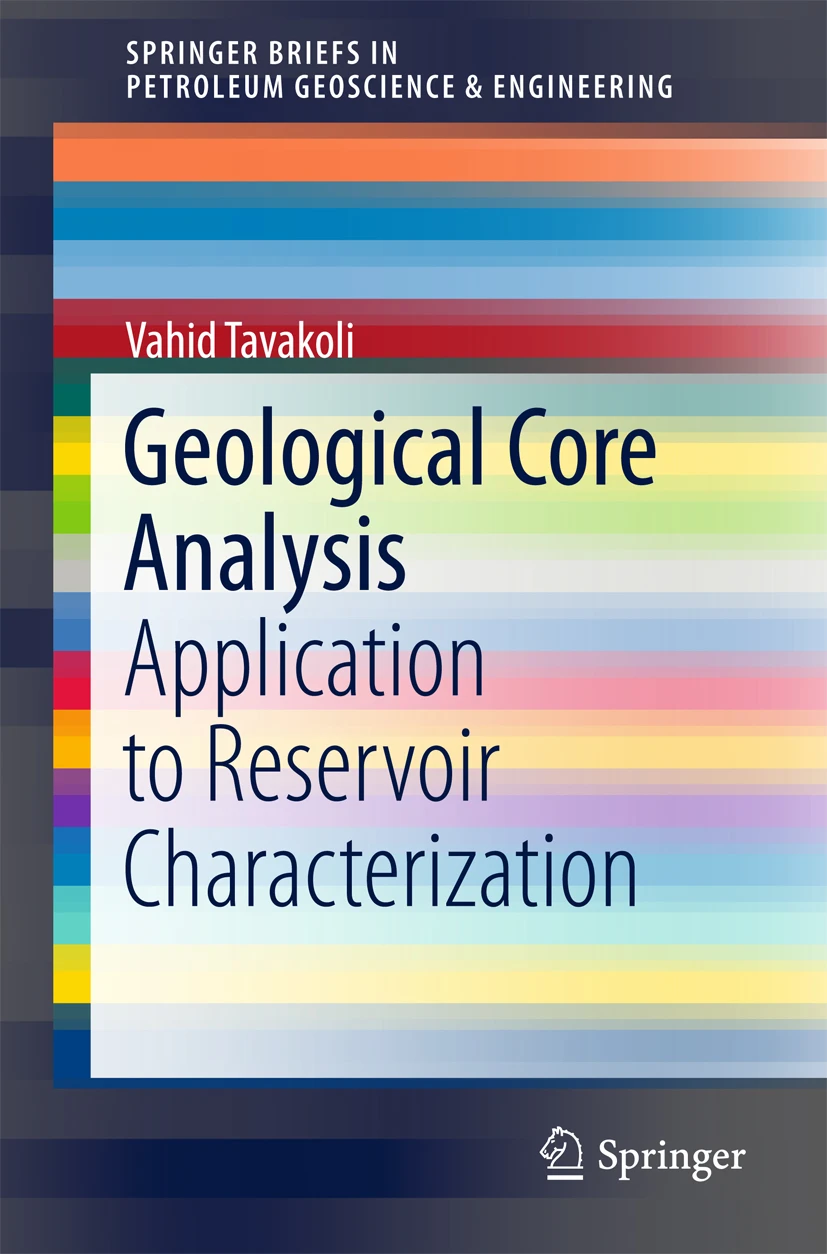
Exploring the Hidden World of Rocks: A Personal Journey into Core Analysis and Reservoir Characterization
By Dr. Vahid Tavakoli
I’m excited to introduce my book, Geological Core Analysis: Application to Reservoir Characterization. This is more than just a textbook—it’s a personal and professional journey through one of the most powerful tools we have to understand the subsurface: the geological core.
Over the years, I’ve worked in a variety of core laboratories, each one teaching me something new. From advanced research centers to more modest field setups, every environment contributed to how I understand rocks. Most of the material in this book is original, based directly on my own experiences and insights from countless hours spent handling, describing, and interpreting cores—particularly from hydrocarbon fields in the Persian Gulf Basin. This region, rich in geological complexity and energy potential, deserves focused attention, and this book is the first of its kind dedicated to core analysis in this specific context.
One thing that has always fascinated me is that no two cores are the same. Each core carries its own geological story. Sometimes, even just a meter of core holds a hidden world—a microcosm of ancient processes preserved in sedimentary textures, structures, and diagenetic imprints. These stories are not always visible on logs or seismic data; they require close observation, thoughtful interpretation, and hands-on interaction with the rock. That’s where core analysis comes in—not just as a technical procedure, but as a scientific art form.
Core analysis is the most direct and reliable method to study the subsurface. It provides insights into reservoir properties that indirect methods—no matter how advanced—simply cannot offer on their own. This book begins with the fundamentals, starting from how to design an effective coring plan. It walks readers through key decisions, like selecting appropriate coring intervals, tools, and operational strategies to ensure meaningful and high-quality core recovery.
From there, the process of core retrieval and sampling is examined in detail. I focus on what happens after the core reaches the surface—how samples are named, cut, described, and categorized. Emphasis is placed on clarity and consistency, especially in documenting lithology, textures, sedimentary structures, and diagenetic features. These early steps are essential, as they lay the foundation for accurate interpretation and later integration with petrophysical data.
One of the central themes in the book is bridging the gap between observation and interpretation. Once the core is described, we move toward understanding how geological features influence key reservoir properties, particularly porosity and permeability. I introduce readers to methods of integrating routine core analysis data—such as porosity, permeability, and grain density—with geological observations to define rock types. These rock types become building blocks for characterizing heterogeneity and simplifying the reservoir into more manageable, interpretable units.
This leads to a detailed discussion on the practical construction of core logs. We look at how to document vertical successions, identify facies, and interpret stacking patterns. Core logs are not just checklists of features—they're interpretive tools that help translate small-scale geological data into large-scale reservoir models. By reading the vertical organization of sedimentary features, we gain clues about depositional environments, stratigraphic sequences, and potential flow behavior.
The book also introduces the principles of sequence stratigraphy as a framework for reservoir zonation. I’ve found this approach particularly effective for organizing geological data both vertically and laterally. Sequence stratigraphy helps geoscientists identify flow units, compartmentalization, and trends that can be linked to reservoir performance. This framework is essential for moving from raw core data toward a predictive understanding of the subsurface.
Throughout the book, real-world case studies and examples—many drawn from the Persian Gulf Basin—are used to illustrate key concepts. These examples are not just illustrative; they reflect the challenges and decisions that geoscientists face in practice. Whether you're dealing with mixed carbonate-siliciclastic systems, complex diagenetic overprints, or subtle sedimentary transitions, the book offers workflows and strategies rooted in practical experience.
What sets this book apart is its focus on connecting the dots—connecting core-based observations with broader geological interpretations, connecting geological features to petrophysical behavior, and connecting lab-scale data to field-scale models. It’s written with the broader geoscience community in mind: students, researchers, consultants, and field geologists alike. My hope is that readers will not only find technical guidance, but also inspiration to look at core in a deeper, more integrated way.
This blog post is part of a wider effort to provide meaningful and engaging content to the geoscience community. It's not just about announcing a new publication; it's about sharing the background, motivation, and purpose behind it. The goal is to stimulate discussion, spark curiosity, and invite others to reflect on their own encounters with cores—whether in the lab or the field.
Sometimes, geoscience is about big models and big data—but just as often, it’s about small, quiet observations. A cross-bedded grainstone here, a tight mudstone there. A faint trace fossil or a thin stylolite. These details matter. They shape our understanding of reservoirs and influence decisions from exploration to production. They remind us that a reservoir is not just a container of hydrocarbons—it’s a product of deep time, depositional processes, and diagenetic histories.
Geological Core Analysis: Application to Reservoir Characterization is, in many ways, my attempt to honor that complexity. To give readers a practical guide, yes—but also to share the sense of wonder that comes with holding a piece of Earth’s history in your hands and unlocking its story.
So, whether you're starting your career in geoscience or have been working in the field for decades, I hope this book brings something valuable to your work. And I’d love to hear from you: What’s the most surprising thing you have seen in a core?
Let’s keep the conversation going.
Geological Core Analysis: Application to Reservoir Characterization | SpringerLink





Please sign in or register for FREE
If you are a registered user on Research Communities by Springer Nature, please sign in