Unmasking the Drivers of Africa’s Rising Heat Extremes
Published in Earth & Environment


https://link.springer.com/article/10.1007/s44292-025-00043-9
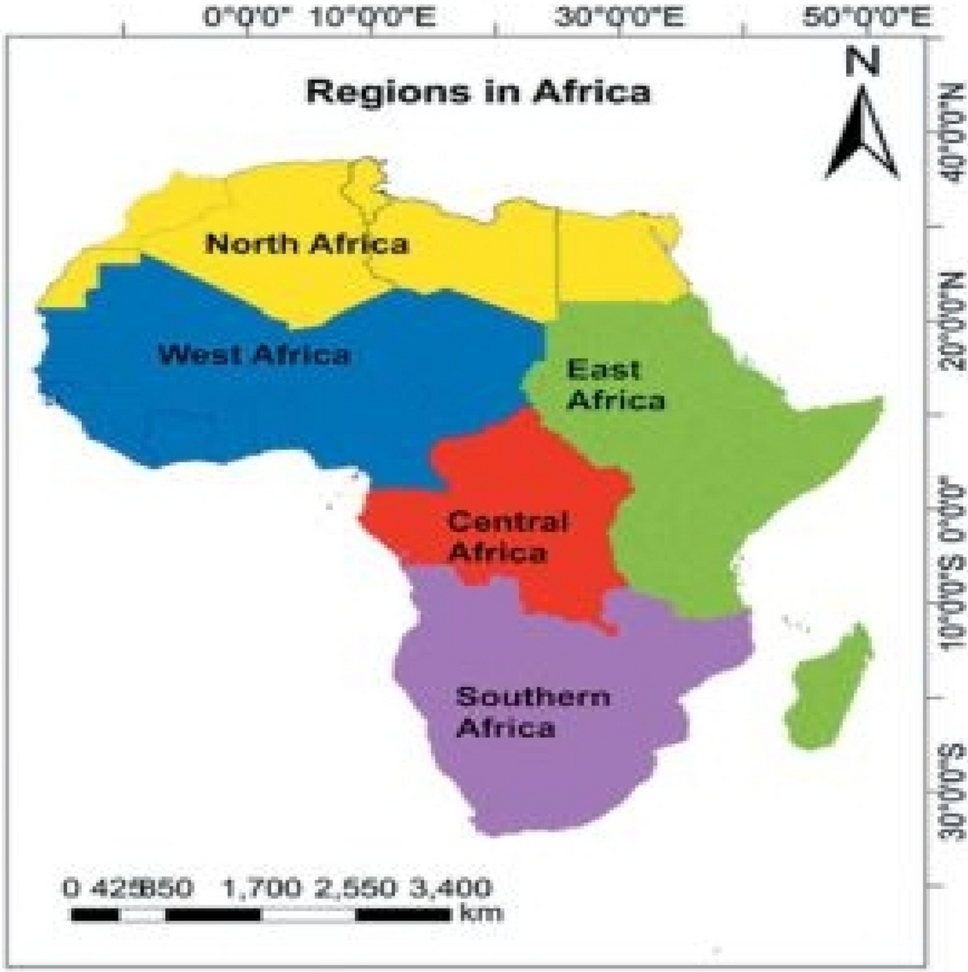
Our study investigates how multiple climate drivers greenhouse gases, aerosols, natural, and solar factors shape Africa’s rising temperature extremes from 1960 to 2100. Using CMIP6 climate models and reanalysis data, we found that greenhouse gases are the dominant cause of warming, contributing over 100% to extreme heat trends, while aerosols slightly offset this effect through regional cooling. North and West Africa are projected to experience the most severe increases in hot days and nights, with warm night frequency rising by up to 80% under high-emission scenarios. The findings highlight that even under low-emission pathways, Africa will still face significant warming impacts on agriculture, water, and health. Urgent mitigation and region-specific adaptation strategies are needed to reduce future heat risks and build resilience across the continent.

Follow the Topic
-
Discover Atmosphere
This is a fully open access, peer-reviewed journal that supports multidisciplinary research and policy developments across the fields of atmospheric and climate science.

Related Collections
With Collections, you can get published faster and increase your visibility.
Urban Air Quality: From Observation to Mitigation
This Collection, titled Urban Air Quality: From Observation to Mitigation, invites original research and reviews on:
• Advanced techniques in Air Pollution Monitoring
• City-specific case studies and the phenomenon of Pollution Islands
• Spatio-temporal trends of various Air Pollutants through monitoring and modelling
• Novel mitigation technologies, their effectiveness and assessment of their health and/or economic benefits
• Policy analysis and recommendations for effective Air Action Plans
Keywords: Urban Air Quality; Air Pollution Monitoring; Meteorology and Air Pollution; Low-Cost Sensors; Pollution Hotspots; Spatio-temporal Trends; Source Apportionment; Mitigation Technologies; Health Impact Assessment; Exposure Assessment; Air Quality Policy; Air Action Plans
Publishing Model: Open Access
Deadline: Dec 05, 2026
Aerosol–Cloud–Precipitation Interactions in a Changing Climate: Tropical and South Asian Observation, Modelling, and Feedback
Aerosols play a critical role in modulating the hydrological cycle by acting as cloud condensation nuclei (CCN) and ice nuclei (IN), thereby altering cloud microphysical structure, precipitation efficiency, and the spatial distribution of rainfall. Over South Asia - one of the world's most aerosol-laden and climate-sensitive regions rapidly increasing anthropogenic aerosol loading from industrial, agricultural, and urban sources has emerged as a major driver of changes in precipitation patterns, monsoon dynamics, and the frequency of extreme hydrometeorological events such as cloudbursts, droughts, and floods.
This Collection invites original research articles, review papers, and methodological contributions that advance our understanding of aerosol–cloud–precipitation interactions across tropical and South Asian environments. We particularly encourage studies that leverage:
Multi-source remote sensing observations (satellite platforms such as MODIS, CALIPSO, CloudSat, GPM, and TRMM; and ground-based radar and radiometry)
In-situ aerosol and cloud microphysical measurements from field campaigns
Numerical modelling approaches (WRF, WRF-Chem, GFS, regional and global climate models)
Machine learning and data-driven frameworks applied to large atmospheric datasets
Radiative transfer modelling to quantify aerosol direct and indirect radiative forcing
Topics of interest include - but are not limited to the aerosol indirect effect on cloud droplet size distributions, rain drop size distributions (DSD), lightning genesis, boundary layer dynamics, convective initiation, and monsoon variability. Studies addressing aerosol–climate feedback mechanisms against the backdrop of global warming are especially welcome. This Collection aims to bring together observational evidence, model-based diagnostics, and theoretical frameworks, thereby providing a comprehensive, multi-scale perspective on one of the most pressing problems in atmospheric science.
Keywords: Aerosol–cloud interactions; Aerosol indirect effect; Precipitation microphysics; South Asian monsoon; Convective precipitation; Rain drop size distribution; Radiative forcing; Cloud condensation nuclei; WRF-Chem modelling; Extreme rainfall events
Publishing Model: Open Access
Deadline: Feb 28, 2027





Please sign in or register for FREE
If you are a registered user on Research Communities by Springer Nature, please sign in