Unveiling the Potential of ASOCA Dataset: Advancing Cardiovascular Diagnostics and Treatment
Published in Bioengineering & Biotechnology
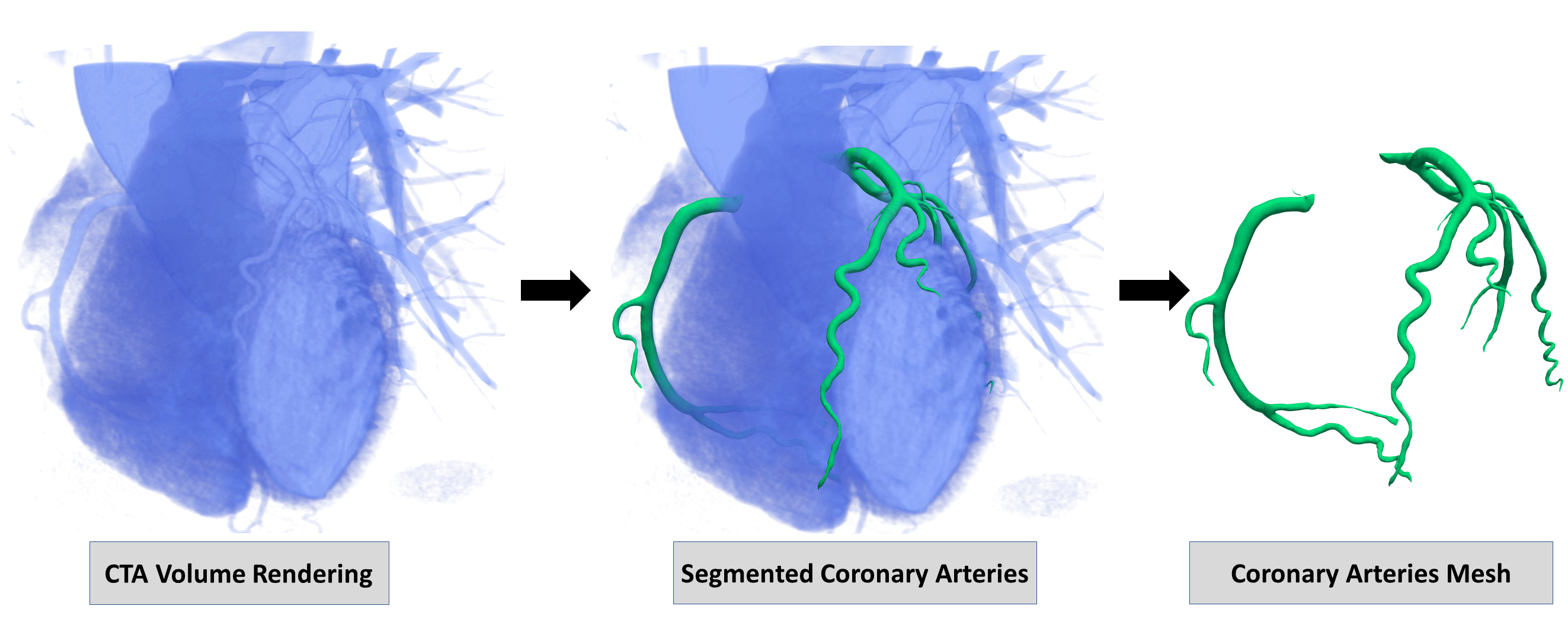
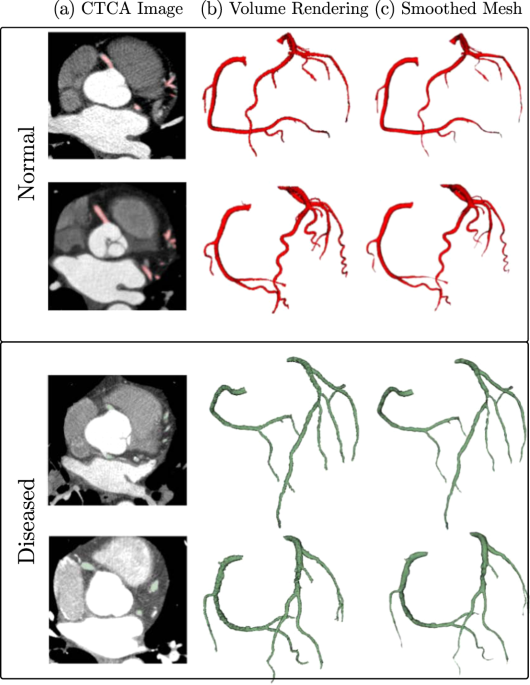

Cardiovascular disease is an alarming global concern responsible for numerous fatalities. To combat this devastating health issue, the development of precise diagnostic tools and effective treatments is paramount. Among the most commonly employed techniques in cardiovascular research and diagnosis is computed tomography coronary angiography (CTCA). This non-invasive imaging method allows medical professionals and researchers to visualize the structure of coronary arteries and identify any potential blockages or stenoses.
However, one challenge that arises during the analysis of coronary arteries is image segmentation. This process involves identifying and isolating the structures of interest from medical images. The segmentation of coronary arteries remains an arduous task due to factors such as complexity, small size, image artifacts, and their proximity to structures with similar intensity. Consequently, significant research and commercial interest have been directed towards overcoming these challenges.
Addressing these obstacles head-on, our team of researchers from the University of New South Wales (UNSW) introduced a groundbreaking solution—an annotated dataset of CTCA images accompanied by associated data pertaining to both normal and diseased arteries. To facilitate coronary artery segmentation, we have created the "Automated Segmentation of Coronary Arteries" (ASOCA) challenge, a research challenge [1] and a benchmark dataset [2].
Initially created for the Medical Image Computing and Computer-Assisted Intervention conference in 2020, the ASOCA challenge dataset is now available for researchers worldwide. This remarkable dataset comprises CTCA scans from 60 patients, encompassing around 13,000 2D slices. Each CTCA is annotated by three experts, resulting in one of the largest and most comprehensive datasets of its kind. A balanced class distribution is achieved through the inclusion of 30 cases with confirmed coronary artery disease and 30 normal cases exhibiting no signs of disease. Consequently, this dataset captures a wide range of anatomical variations representative of diverse populations while also presenting different image quality levels, thus offering a realistic portrayal of the challenges encountered by medical imaging practitioners in real-world scenarios.
To augment the dataset's value, we have also included calcium scores and the identification of the most severe blockage for each patient, thereby providing a measure of disease progression. Additionally, pre-processed meshes and centrelines, derived from the annotations, are incorporated to facilitate various other applications.
The availability of this dataset brings forth numerous advantages for researchers in the field of cardiovascular medicine. Firstly, the ASOCA dataset serves as a novel benchmark for evaluating the performance of coronary artery segmentation algorithms. Researchers can utilize this dataset to train and refine their segmentation algorithms, subsequently evaluating the results against the ground-truth provided by the test set through an automated online platform. Secondly, the gold-standard annotations and meshes offered within the dataset find application in other domains such as computational modelling, the creation of 3D printed models, development and testing of medical devices like stents, and even Virtual Reality (VR) applications for education and training.
The availability of this dataset represents a significant contribution to the field, harbouring the potential to improve patient outcomes and advance our understanding of cardiovascular disease. Given its substantial size, comprehensive annotations, and permissive licensing, our dataset stands as an invaluable resource for researchers involved in cardiovascular medicine. We anticipate that it will foster improved accuracy and efficiency of coronary artery segmentation algorithms, leading to an enhanced comprehension of the characteristics and progression of coronary artery disease, as well as the exploration of novel treatment options. Ultimately, this will directly translate into improved diagnostics and more effective treatment strategies for patients in the future.
Researchers and medical professionals alike can freely access the dataset, excluding the 20 ground truth annotations reserved for the test set. Both commercial and non-commercial use is permitted, and it is readily available through the UK Data Service platform (https://reshare.ukdataservice.ac.uk/855916/). In case of any issues with the UK Data Service, a temporary access form can be found at (https://forms.office.com/r/HK38BahFiM). Detailed instructions on utilizing the dataset, including information on file formats and software tools required, are provided within the article.
[1] R. Gharleghi et al., "Automated segmentation of normal and diseased coronary arteries–the asoca challenge," Computerized Medical Imaging and Graphics, vol. 97, p. 102049, 2022.
[2] R. Gharleghi et al., "Annotated computed tomography coronary angiogram images and associated data of normal and diseased arteries," Scientific Data, vol. 10, no. 1, p. 128, 2023.

Follow the Topic
-
Scientific Data
A peer-reviewed, open-access journal for descriptions of datasets, and research that advances the sharing and reuse of scientific data.

Related Collections
With Collections, you can get published faster and increase your visibility.
10 years of the FAIR principles
Publishing Model: Open Access
Deadline: Nov 14, 2026
Data to support cancer treatment, diagnosis, and disease understanding
Publishing Model: Open Access
Deadline: Jan 02, 2027