Vortex-Assisted Mechanochemical Extraction for Reliable CoQ10 Analysis in Meat
Published in Chemistry, Physics, and Protocols & Methods


Behind the scenes of developing a vortex-assisted mechanochemical extraction method for CoQ10 analysis in meat
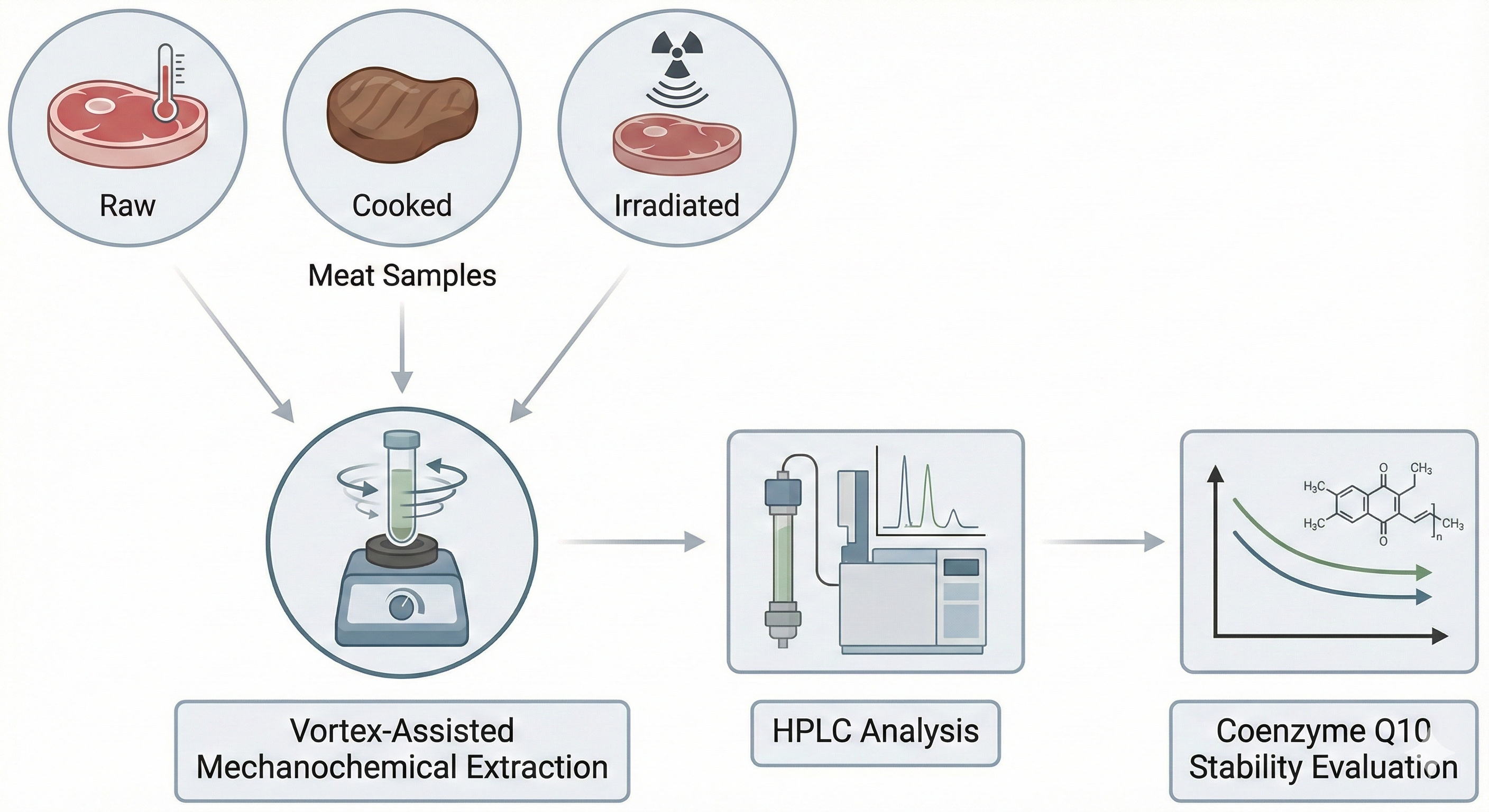
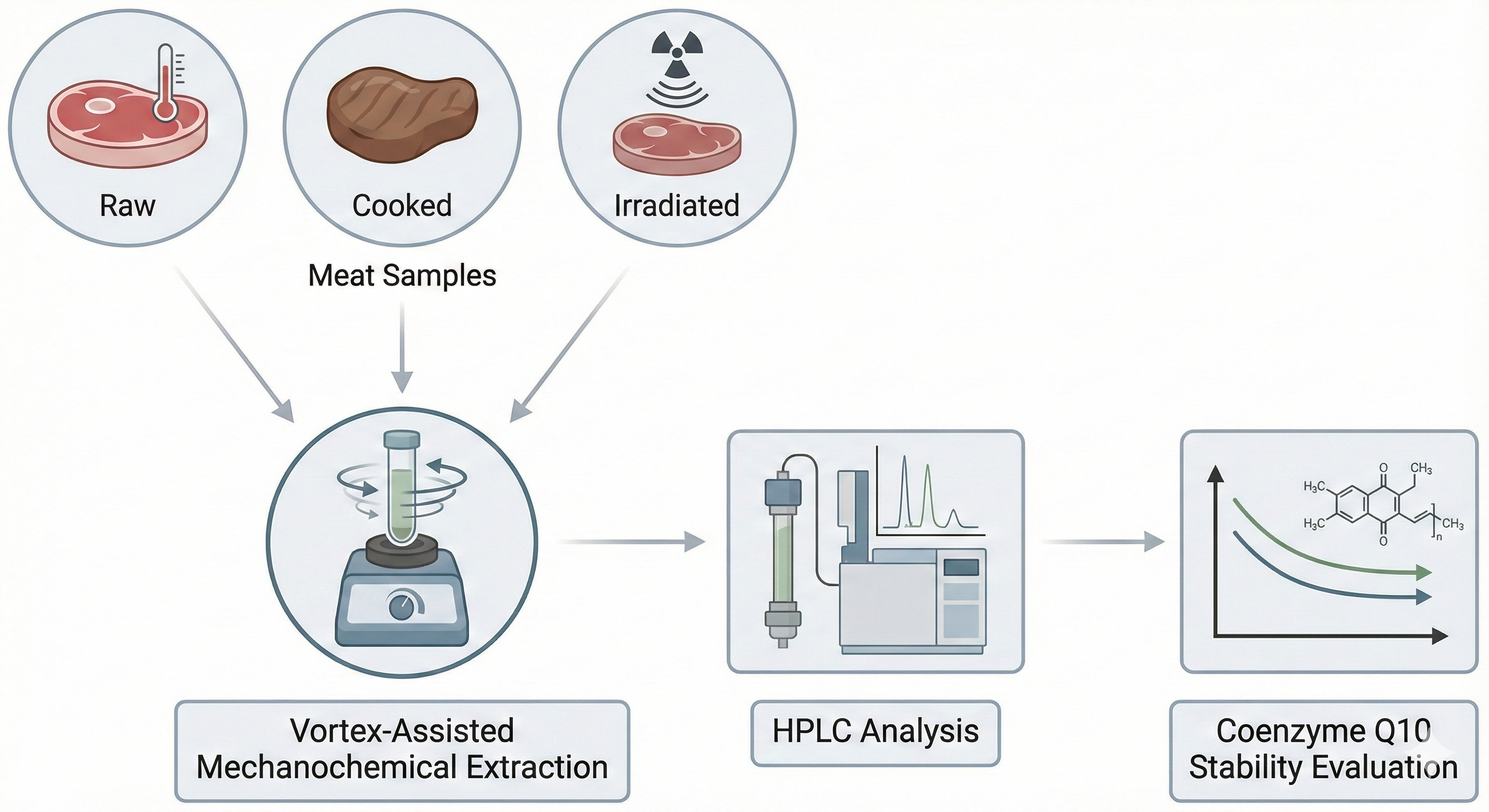
Understanding the stability of bioactive compounds in food is a persistent analytical challenge, particularly when dealing with complex matrices such as meat. Coenzyme Q10 (CoQ10) is one such compound: nutritionally important, chemically sensitive, and analytically demanding. Our recently published study in Food Analytical Methods grew out of a practical analytical problem rather than a purely theoretical question—how can we reliably extract and quantify CoQ10 from meat while accounting for the effects of common processing conditions?
Why CoQ10?
CoQ10 plays a crucial role in mitochondrial energy production and acts as an antioxidant. While it is widely studied in supplements and pharmaceutical formulations, its behavior in food matrices—especially meat—has received comparatively less analytical attention. Meat presents a challenging matrix due to its high lipid content, protein complexity, and the presence of compounds that may interfere with extraction and chromatographic analysis.
From a food safety and quality perspective, understanding how processing methods such as cooking and irradiation influence CoQ10 stability is important for both nutritional evaluation and regulatory compliance. However, before any meaningful conclusions can be drawn, the analytical method itself must be robust, reproducible, and practical for routine laboratory use.
The analytical challenge
Traditional extraction methods for lipophilic compounds often rely on lengthy procedures, large solvent volumes, or sophisticated equipment. In teaching and supervising food analysis laboratories, I repeatedly observed a gap between methods reported in the literature and what can realistically be implemented in many routine or teaching laboratories. This gap became one of the driving motivations behind the study.
We aimed to develop an extraction approach that would be:
-
Efficient and reproducible
-
Time-saving
-
Compatible with standard HPLC systems
-
Suitable for complex meat matrices
This led us to explore vortex-assisted mechanochemical extraction as a practical alternative.
Behind the method development
One of the most time-consuming stages of the work was method optimization. Several C18 columns with different dimensions and particle sizes were evaluated to ensure chromatographic reliability. What may appear in the final paper as a straightforward comparison actually involved numerous trial runs, adjustments to mobile phase composition, and careful assessment of peak symmetry, resolution, and reproducibility.
Similarly, optimizing the vortex-assisted extraction required balancing mechanical energy input with compound stability. Excessive mechanical stress could risk degradation, while insufficient mixing compromised extraction efficiency. The final conditions represent a compromise informed by repeated experimentation rather than a single optimization step.
Processing effects: cooking and irradiation
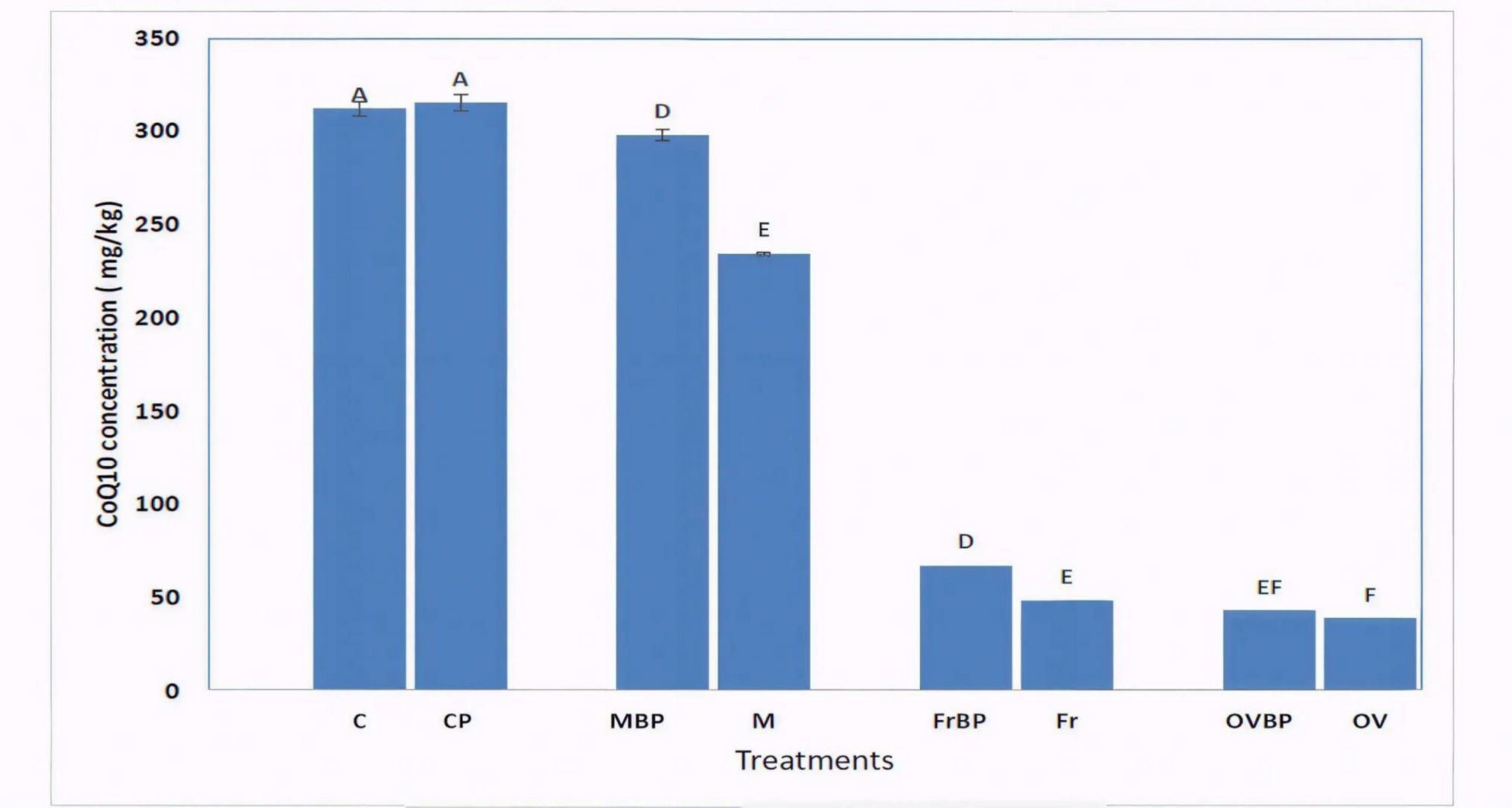
Once the analytical method was validated, we applied it to assess the impact of cooking and irradiation on CoQ10 stability. These processes are common in meat handling and preservation, yet their effects on sensitive bioactive compounds are not always analytically straightforward.
What became clear is that CoQ10 stability is strongly influenced by processing conditions. The results underscore the importance of using validated analytical methods when interpreting nutritional changes in processed foods. Without reliable extraction and quantification, such effects could easily be under- or overestimated.
Why this work matters
From my perspective, the value of this study lies not only in the reported results but also in the analytical approach itself. The proposed method offers a balance between scientific rigor and practical feasibility. This is particularly relevant for laboratories working under resource constraints or for educational settings where students must learn methods that are both sound and realistic.
Moreover, the study highlights the necessity of considering analytical methodology when discussing food processing effects. Conclusions about nutrient stability are only as reliable as the methods used to generate the data.
Looking forward
This work opens the door for applying vortex-assisted mechanochemical extraction to other lipophilic bioactive compounds and food matrices. It also reinforces the importance of method transparency—sharing not only what worked, but why certain choices were made during development.
I hope that sharing the background and motivation behind this study helps foster discussion within the Research Community, particularly among those working at the interface of food chemistry, analytical method development, and food quality evaluation.
📄 Food Analytical Methods
🔗 Article link: https://rdcu.be/eSSNo
Follow the Topic

What are SDG Topics?
An introduction to Sustainable Development Goals (SDGs) Topics and their role in highlighting sustainable development research.
Continue reading announcementRelated Collections
With Collections, you can get published faster and increase your visibility.
Metal–organic Framework (MOF)-based Materials for Food Analysis
Publishing Model: Hybrid
Deadline: Ongoing
Advances in Chemometrics and Data Science for Food Analysis – Selected Contributions from the 16th Workshop of Chemometrics
The 16th Workshop of Chemometrics – Food Analysis and Data Science will bring together researchers, analysts, and data scientists working at the interface of analytical chemistry, food science, statistics, and artificial intelligence. The workshop is focused on innovative methodologies and practical applications of chemometrics and data-driven approaches in modern food analysis.
The increasing use of spectroscopic, chromatographic, mass spectrometric, and sensor-based techniques has led to the generation of large and complex datasets. Extracting reliable, interpretable, and reproducible information from these data requires advanced multivariate analysis, machine learning models, and robust validation strategies. As a result, chemometrics and data science have become central pillars in food authenticity assessment, safety monitoring, quality control, and traceability systems.
The collection devoted to this workshop would provide a focused platform to disseminate recent advances presented at the meeting, while also inviting contributions from the broader scientific community working in this rapidly evolving field.
The collection aims to:
- Highlight recent methodological advances in chemometrics applied to food analysis;
- Showcase innovative applications of machine learning and artificial intelligence in food systems;
- Promote reproducibility, transparency, and robust validation practices;
- Strengthen interdisciplinary collaboration between analytical chemists and data scientists;
- Provide a reference collection of state-of-the-art research in food analytical data science.
The collection will include high-quality contributions in areas such as:
- Multivariate calibration and regression methods (e.g., PLS, multiway analysis)
- Variable selection, feature extraction, and data fusion strategies
- Machine learning and explainable AI in food analysis
- Spectroscopic and hyperspectral imaging applications
- Non-targeted fingerprinting and metabolomics approaches
- Food authenticity, origin determination, and fraud detection
- Predictive modeling for food safety and shelf-life assessment
- Standardization, validation, and data practices in analytical workflows
Both methodological developments and applied case studies are welcome.
Type of article includes: Original research articles and Review papers.
All manuscripts will follow the journal's standard peer-review process to ensure scientific rigor and quality.
Publishing Model: Hybrid
Deadline: Jan 02, 2027