“We Went Through It Together”: Reflections on Community Strength in Green Social Prescribing
Published in Earth & Environment and Behavioural Sciences & Psychology

When we began our study on Green Social Prescribing (GSP) for ethnically diverse communities in Hull and York, our intention was to better understand how nature‑based activities might support wellbeing, address barriers to engagement, and strengthen pathways into community‑led support. What unfolded was a profound illustration of the relational, cultural and contextual factors that shape participation in GSP.
This project was co‑led by myself, a Clinical Psychologist and Researcher at Humber Teaching NHS Foundation Trust, and Anthony Hurd from HEY Smile Foundation, with academic leadership and supervision from Dr Maureen Twiddy at Hull University (Health Sciences). Together with six community organisations in Hull and York (Welcome House, Bora Shabaa, BAMEEN, HACA, York St John Community allotments, Solidarity CiC) we carried out a mixed‑methods evaluation exploring how GSP was accessed, experienced, and understood by people from ethnically diverse, migrant, refugee and asylum‑seeking backgrounds.
Building Safety Through Community Leadership
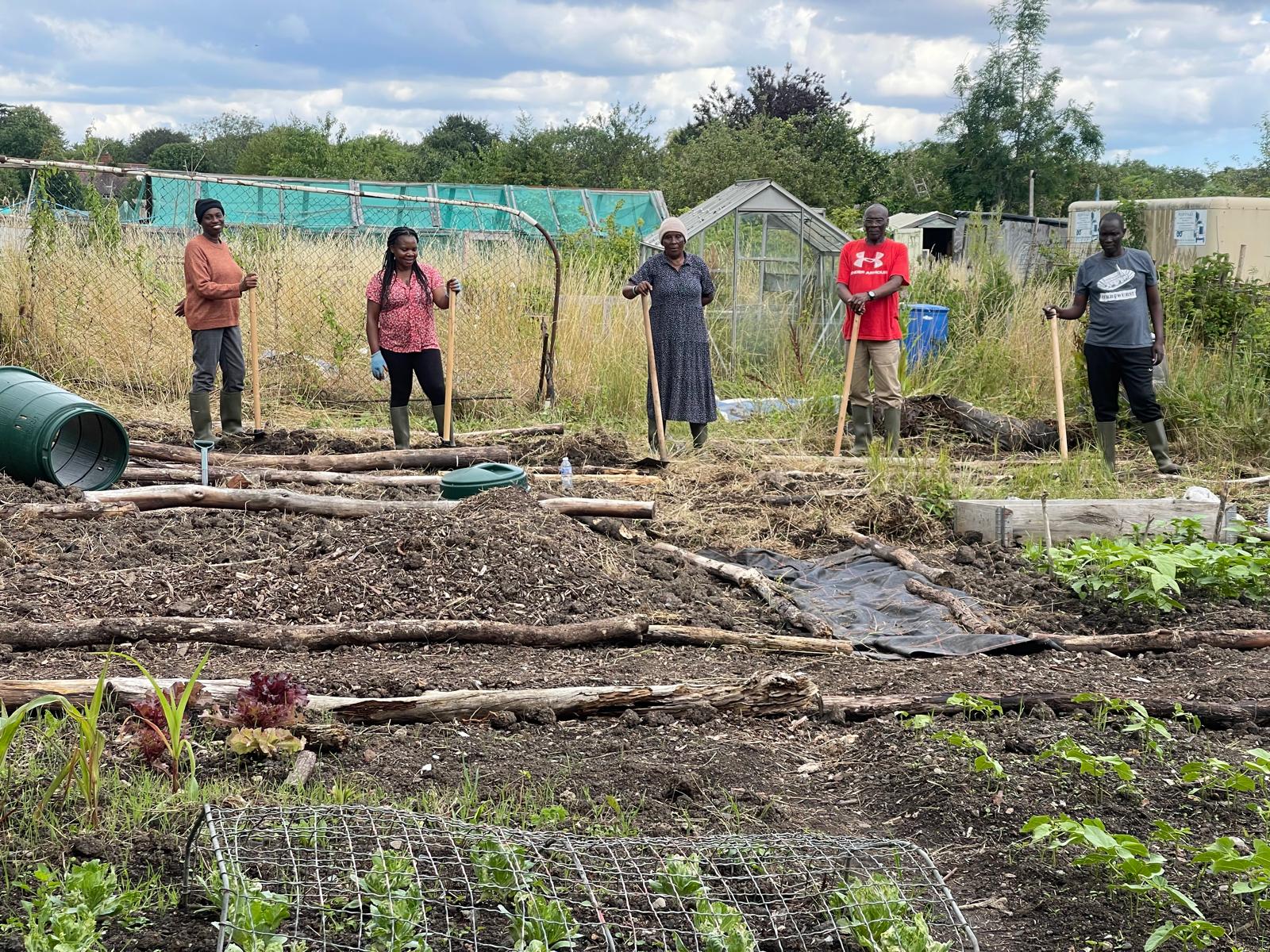
The GSP activities delivered, gardening, walking groups and outdoor exercise, were facilitated by organisations embedded within the local communities. These groups were trusted not only because they provided practical access to nature, but because they understood the cultural, social and emotional contexts shaping people's lives.
Participants consistently reported that they learned about GSP through informal networks, such as WhatsApp groups, friends, family and local community events. This stood in contrast to traditional healthcare‑led referral pathways, which played no meaningful role in connecting people to activities.
The community organisations offered more than structured programmes; they created safe, culturally familiar and socially cohesive spaces. As Severine, one of the activity leads from Bora Shabaa Hull, expressed:
“Delivering the GSP has been one of the most meaningful experiences of my work… As someone who came to the UK as a refugee, I bring lived experience to this role, and the programme supported me personally as much as it supported the people I work with.”
The development of trust and connection formed a crucial foundation for engagement. Participants described feeling welcomed, understood and able to take part without fear of judgement, an essential condition for wellbeing interventions involving people who may have faced discrimination, displacement or trauma.
Collective Response to Grief and Loss
During the course of the programme, one of the GSP groups experienced the sudden death of a young mother who had previously participated in their activities. While I was not personally involved in this specific group context, our community partners and members of the wider research team reflected deeply on its impact.
Severine described the community’s response:
“Her passing deeply affected her family, her friends, and many of the women in the programme. In that difficult moment, I witnessed the strength and compassion of our community as people came together to comfort one another, share memories, and offer emotional and practical support.”
Lauren Beadle (Bora Shabaa), who worked to support the data collection, noted:
“Grief entered a space that had been one of comfort and growth. Yet what followed was a powerful reminder of the strength within this community… The support was instinctive and genuine.”
The nature‑based setting appeared to support this collective process. People described how being outdoors offered a quieter, gentler environment in which to reflect, sit alongside others, and navigate emotion without the pressure to verbalise it.
This incident highlighted an aspect of GSP that goes beyond conventional wellbeing frameworks: the capacity of community‑led nature-based activities to hold both celebration and sorrow, and to function as a locus for shared care during times of acute stress.
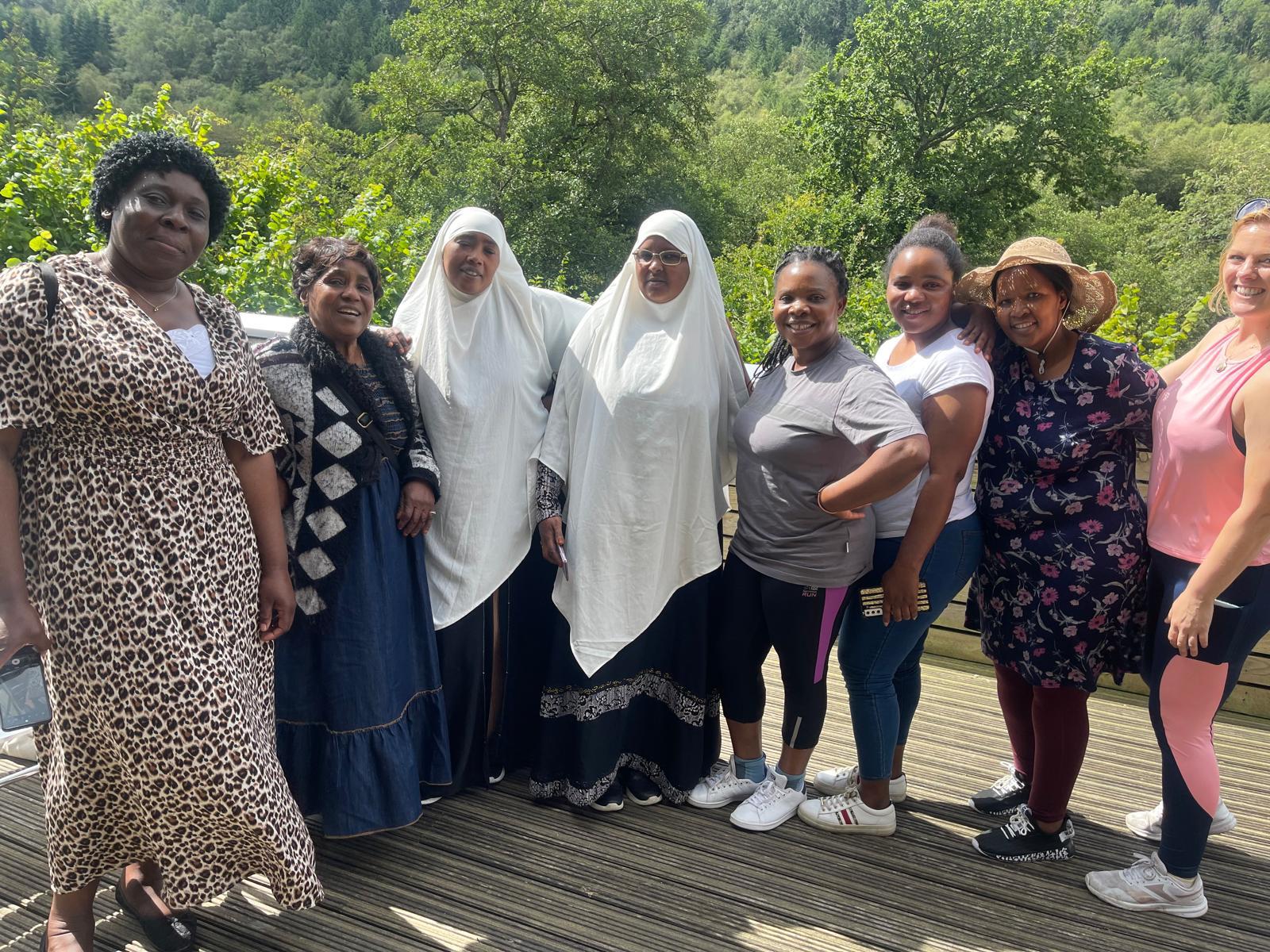
.jpg "Wellness walks Credit Bora Shabaa")
Understanding Wellbeing Beyond Standard Measures
Although the quantitative findings showed modest changes on standard measures such as the ONS4, the qualitative data revealed much richer narratives about the lived experience of wellbeing.
Participants described:
- Relief from the confinement of hotel or shared accommodation
- Reconnection with cultural heritage through food growing and outdoor activity
- Opportunities for children and families to spend time together safely
- Meaningful social contact that reduced isolation
- Experiences of calm, sensory engagement and psychological release in natural settings
These reflections indicate that the wellbeing benefits of GSP extend far beyond traditional metrics. For many, GSP provided moments of autonomy, cultural affirmation, emotional regulation and relational belonging factors which may not map neatly onto numerical scales but are central to lived wellbeing.
Reflections on Learning and Collaboration
This project reinforced the importance of community‑led, culturally attuned approaches to health and wellbeing. It also highlighted the critical role of cross-sector collaboration: the expertise of community leaders, the practical experience of delivery partners like HEY Smile Foundation, and the academic guidance and methodological rigour provided by Dr Maureen Twiddy.
Working alongside these partners underscored the value of:
- listening closely to lived experience
- recognising multiple forms of expertise
- adapting research approaches to cultural and linguistic needs
- embedding trust and collaboration at every stage
The study demonstrated that effective GSP is not simply about providing access to nature it is about providing access through relationships that are safe, trusted and grounded in community knowledge.
Closing Reflection
Academic outputs distil complex experiences into structured findings, but behind each statistic in this study stood a person, a family, and a community navigating both adversity and resilience. This work showed that nature is not a passive backdrop to wellbeing it is an active, meaningful resource that helps people connect, reflect, and support one another.
The insights gained through our collaborative research illuminate the profound ways that GSP can shape wellbeing, belonging and collective strength.

Follow the Topic
-
Discover Public Health
This is an open access journal publishing research from all fields relevant to public health.

📢 Introducing: # Mental Health
Mental Health is a Topic created to increase visibility and impact of research in this area and facilitate exchange amongst researchers.
Continue reading announcementRelated Collections
With Collections, you can get published faster and increase your visibility.
The Economics of Longevity: Health Expenditure and Societal Implications for Public Health Systems
The relationship between health investment and life expectancy has long been a focal point in public health research and policy. As nations grapple with rising healthcare costs and varying health outcomes, understanding how financial allocations influence population health becomes increasingly critical. Numerous studies have illustrated that increased spending on health services often correlates with improvements in life expectancy; however, the complexities of this relationship are not fully understood. Factors such as socioeconomic status, healthcare accessibility, and the efficiency of health systems play significant roles in determining how investments translate into health outcomes.
At the national level, health investments primarily encompass government expenditure on healthcare systems, public health initiatives, and health infrastructure. Nations that allocate substantial resources toward healthcare often experience better health outcomes and increased life expectancy among their populations. For instance, countries with robust healthcare funding tend to provide more comprehensive services, including preventive care, chronic disease management, and health promotion programs, all of which contribute to enhanced population health. However, it is crucial to consider how these investments are distributed across different segments of the population. Inequities in health spending can exacerbate existing disparities, leading to significant differences in life expectancy among various demographic groups. Effective health investment strategies must address these disparities to ensure that improvements in life expectancy are equitable and inclusive.
The motivation for this Collection arises from the urgent need to bridge the gap between health expenditures and tangible improvements in life expectancy. Recent global health crises and ongoing disparities in health outcomes across different populations have underscored the necessity for a deeper exploration of how resource allocation affects health dynamics. This Collection seeks to provide a platform for researchers and practitioners to discuss empirical evidence, theoretical frameworks, and innovative approaches to understanding these critical interactions. By fostering dialogue around effective health investment strategies, we aim to contribute to the development of more equitable and efficient health systems worldwide.
The purpose of this Collection is to gather comprehensive research that elucidates the dynamics between health investment and life expectancy across diverse contexts. We welcome contributions that analyze historical trends, comparative studies, and policy evaluations, as well as those that explore the implications of financial investments on health equity. By highlighting interdisciplinary perspectives and fostering collaboration, this Collection aspires to advance the discourse on optimizing health investments for improved population health outcomes.
Topics of interest include, but are not limited to:
- Economic evaluations of health interventions
- Policy impacts on health spending and life expectancy
- Health equity and investment disparities
- Longitudinal studies on health expenditures and population health
This Collection supports and amplifies research related to SDG 3.
Keywords: health expenditure; healthcare economics; life expectancy; economic evaluation; population health; health investment; health policy
Publishing Model: Open Access
Deadline: Dec 31, 2026
Improving Maternal and Infant Health: The Key for Future Wellness
Optimizing health across the life course begins with ensuring equitable, high-quality care during pregnancy, childbirth, and early infancy. Evidence increasingly demonstrates that early-life exposures and experiences are critical determinants of long-term health, shaping risks for chronic disease, developmental outcomes, and overall well-being. Despite progress, disparities in maternal and infant health outcomes persist globally, underscoring the need for innovative, scalable, and evidence-based public health interventions.
This Collection aims to highlight interdisciplinary research and practice-based efforts that advance maternal and infant health from a public health perspective. We welcome contributions that examine population-level strategies, health systems strengthening, community-based interventions, and policy approaches designed to improve care during pregnancy, the birth hospitalization, and early infancy.
Submissions may include original research, implementation studies, and quality improvement initiatives that address prevention, access, equity, and health outcomes across diverse settings. By emphasizing early prevention and system-level improvements, this Collection seeks to contribute to reducing the burden of chronic disease and improving health trajectories across the lifespan.
Topics of interest include, but are not limited to:
--Public health initiatives to improve maternal and pregnancy outcomes
--Community- and population-level strategies to enhance infant health and early development
--Health system and quality improvement interventions in maternal and neonatal care
--Educational and behavioral interventions targeting pregnant individuals, families, and caregivers
--Policies and programs addressing disparities in maternal and infant health
--Preventive approaches to improve early-life health and long-term outcomes
This Collection supports and amplifies research related to SDG 3: Good health and Well-Being.
Keywords: Maternal health; Infant health; Safer motherhood; Early-life health; Health services; Healthcare system; Public health
Publishing Model: Open Access
Deadline: Mar 17, 2027