What nine grant reviews taught me about the word ‘however’
Published in Social Sciences, Education, and Mechanical Engineering
In 2024, the reviews of my application to the National Natural Science Foundation of China (NSFC) arrived. The first reviewer supported it; the second recommended priority funding; the third agreed that my methods had practical value and some novelty. Then came one word: “however”. The research approach was not well set out, the reviewer wrote, and the feasibility analysis was weak. Funding was not recommended.
That “however” was not a one-off. Over three years, I submitted three applications to the NSFC and three to the China Postdoctoral Science Foundation (CPSF). When I read the nine written reviews and three rounds of scores side by side, I saw different people asking the same five questions. I work on wave energy, but the questions apply in any field.
Five questions, five lessons
Across the nine reviews, the same five questions kept returning, and each one taught me a lesson. Can this work really be done? Show a step-by-step roadmap with a fallback for each difficult stage; confidence and past results are not enough. Are you focusing on a single piece of work? Add a new element only if you can answer its obvious questions with numbers. Where could this method fail in difficult conditions? Name the weaknesses and say how you will handle them. What is new about it? Novelty carries 60 of the 100 points, so state one concrete advance, ideally in theory. Where are you heading? Show a research path that extends beyond the current proposal. Two further lessons concerned presentation: make the title match the content, and choose the review panel with care. Below, I describe what each reviewer asked, how my next proposal responded and what I would now tell any early-career researcher preparing a major application.
Can this work really be done?
The real message of a review comes after the “however”. Most reports opened by praising my training; the next draft had to start where the praise stopped. I used to think “I am confident I can do this” was enough. Reviewers want a roadmap: what will be done, with what equipment, in what order, and what happens if a step fails. Earlier results support that roadmap but cannot replace it. They can even backfire. In 2026, a reviewer called my previous work a strong foundation, then noted that four of the project’s six stages were already complete. If most of the work is done, what is the money for?
Are you focusing on a single piece of work?
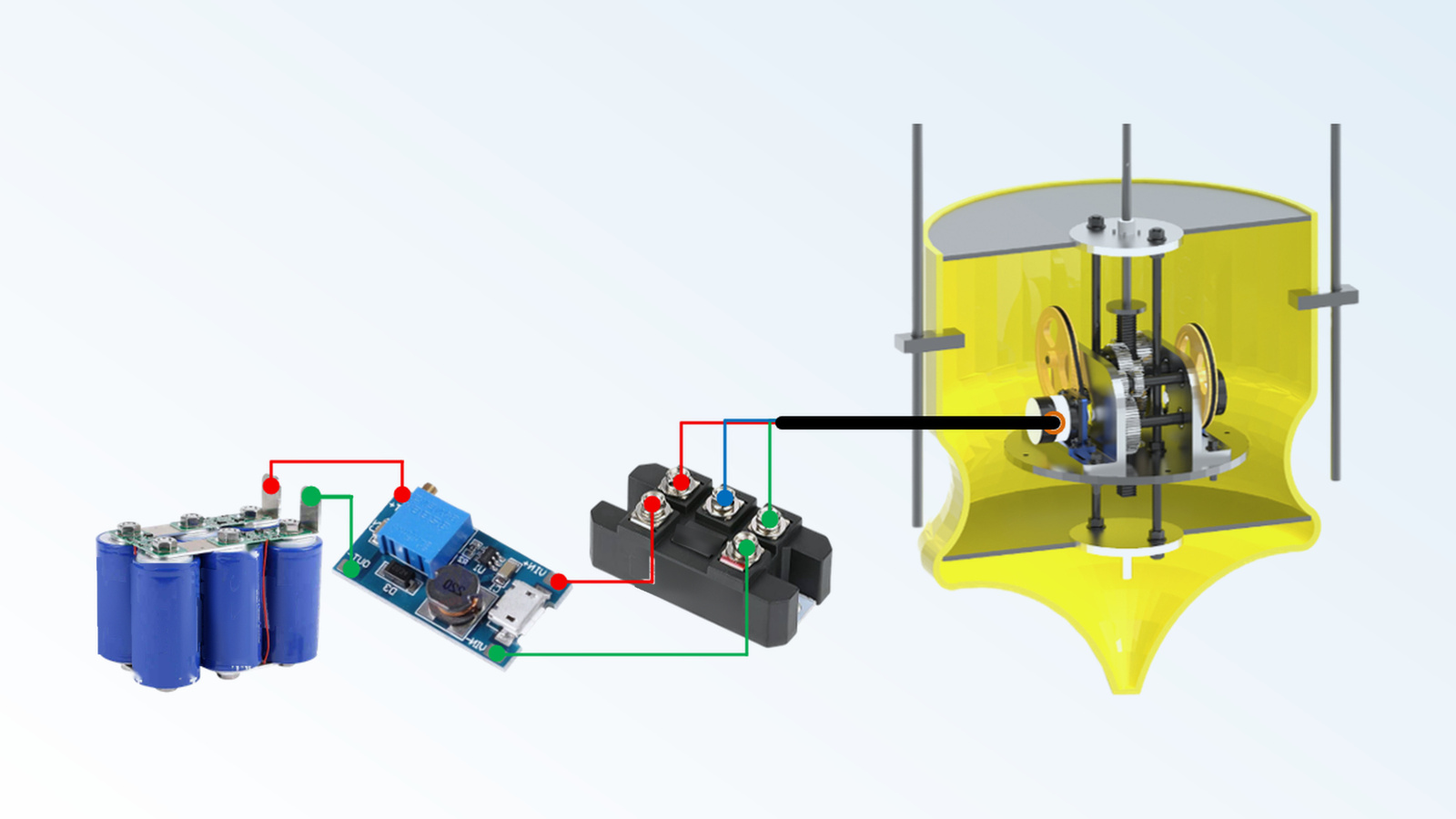
In 2025, I added what I thought would make my project more attractive: using wave power to make hydrogen. One reviewer found it interesting but warned that it risked spreading the effort too thin, then asked direct questions. How would the fluctuating power be made usable? How much hydrogen would be produced? Were there any preliminary calculations? The same reviewer asked for a backup plan for the hardest milestones. A second reviewer said my proposal focused on the floating buoy when the real challenge lay in the power take-off system that turns its motion into electricity, and advised a more concentrated direction. It was a short comment, but the most useful one I received.
So, I took the advice. My 2026 application focused only on how those two parts work together, and all three reviewers judged it both new and feasible. My lessons: add a new element only if you can answer its obvious questions with numbers; write a fallback for every difficult stage; and if your work crosses disciplines, say so before the reviewer does.
Where could this method fail in difficult conditions?
This question came up again and again. The sea is not always calm: reviewers asked how my system would survive typhoons and years of continuous operation. Every field has its version of this: the patients a trial leaves out, the season a survey misses, the long road from cells in a dish to people. No reviewer asked for a perfect method. They wanted me to name the weaknesses and say how I would handle them. So, write that section first, and be concrete. My 2026 reviewers asked how viscous effects would be corrected when scaling up from a 1:25 model, what the stability criteria were under irregular waves, how large the uncertainty was, how the buoy’s geometry as well as its up-and-down motion would affect the forces, and how so many coupled parts would be calibrated. Define your test conditions, put numbers on your uncertainty and explain anything you leave out.
What is new about it?
The CPSF scores showed where effort pays off. Novelty carries 60 of the 100 points. Over my three rounds, my track-record score barely moved, from 25 to 27, but my novelty score ranged from 42 to 50. A record changes slowly; how you present what is new can change with every draft. When I added a fashionable machine-learning section to an earlier proposal, my novelty score fell from 50 to 42. A different panel assessed that round, so I cannot be sure why, but it is a caution. What does count? In 2026, a reviewer wanted to know what was new in theory, not just in combining existing parts. In 2025, another singled out one concrete mechanism as a clear advancement beyond conventional designs. Name one concrete difference and show it.
Where are you heading?
Reviewers also judge where you are going. In 2026, one saw promising research potential but suggested testing the work at sea and broadening its theory: a comment on my path, not on one proposal. And, reassuringly for anyone writing in a second language, none of the nine reports criticised my English.
Two lessons on presentation
In 2026, a reviewer noticed that my title promised prototype-scale testing while my abstract described mechanism exploration and modelling, so reread your title last. And the panel matters: across three CPSF rounds, in three different subject groups, I ranked 49th of 199, 176th of 190 and 6th of 14, against funding cut-offs of 29th, 26th and 2nd. The proposals changed too, so the ranks are not directly comparable, but choosing the panel deserves as much thought as choosing the topic.
What I have learnt and considerations for the future
Looking back, the reviews did not ask me to become a different researcher. They asked me to make my answers to five questions visible on the page, before anyone had to ask. Each round contained advice that shaped the next proposal, but I saw the pattern only when I read the reports together rather than one at a time.
Some questions are still open for me. My next applications need to show how the system performs under realistic offshore conditions, to put numbers on uncertainty and to explain what is new in theory. For other early-career researchers, I would suggest three habits. First, ask a colleague outside your field to read your proposal and list the questions it raises; if they ask about feasibility, a reviewer will too. Second, read the scoring criteria before you write: if novelty carries most of the points, it deserves most of your effort. Third, choose the review panel as carefully as you choose your methods, because where a proposal is reviewed can matter as much as what it says.
My most useful habit now is simple: I keep every reviewer comment in one file and reread it before each new application. Reviewers will ask these five questions anyway. The goal is to answer them first, so that nothing is left to write after “however”.
Dr. Ali Azam
Postdoctoral Research Fellow
South China University of Technology, Guangzhou, China
ORCID iD: https://orcid.org/0000-0002-0175-3966
Google Scholar: Ali Azam - Google Scholar
LinkedIn: Ali Azam, PhD | LinkedIn
Competing interests
The author declares no competing interests.