When Coal Dims Solar
Published in Earth & Environment

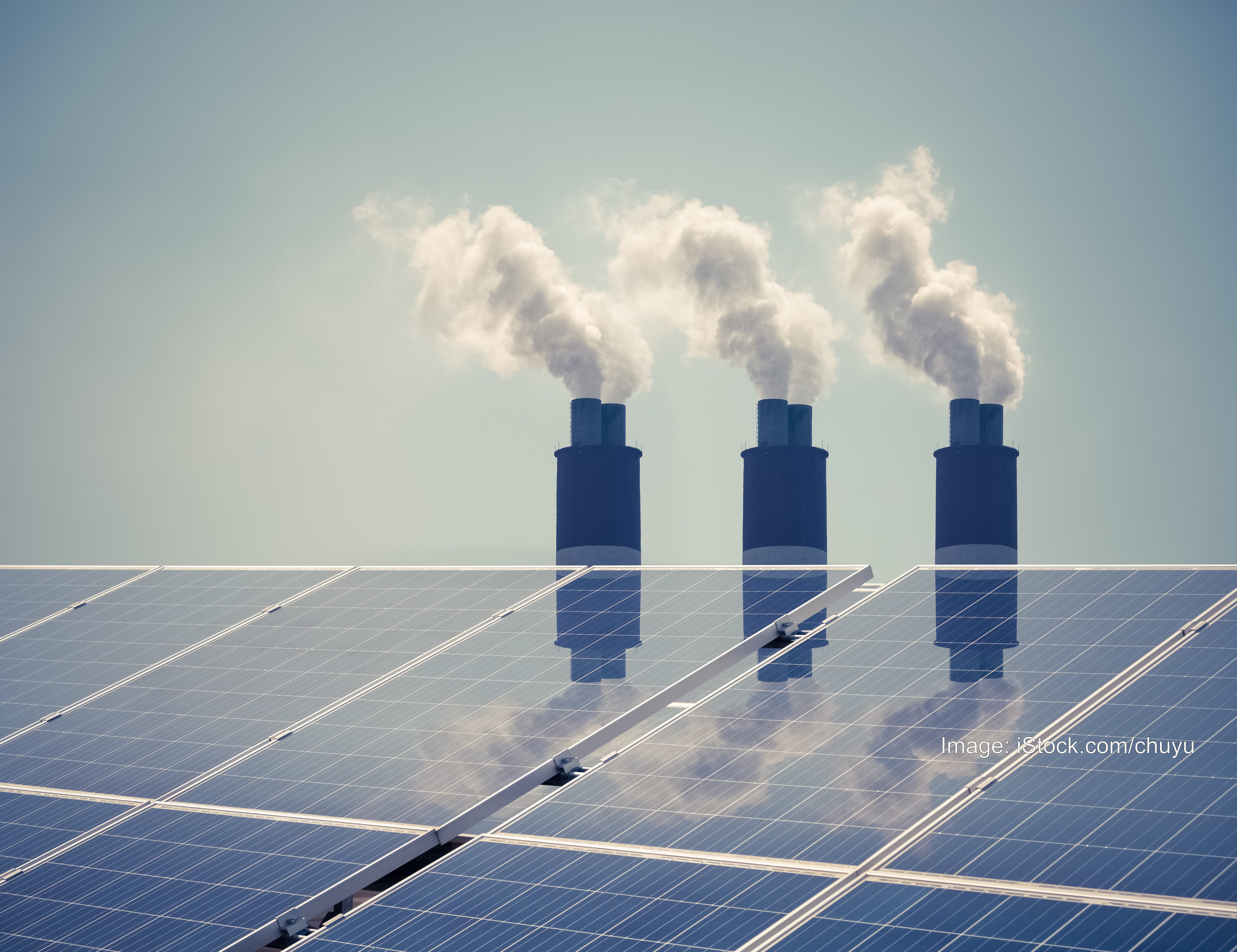


The transition to solar energy rests on a physical assumption we rarely state out loud: that the atmosphere above a solar panel will let sunlight through.
For most of the world, most of the time, that assumption is valid. But in some of the fastest-growing solar regions, the air itself is becoming part of the problem.
Coal-fired power plants emit two kinds of pollutants that matter for the climate. The first is long-lived greenhouse gases, primarily CO2, which warm the planet and define the net-zero challenge. The second is short-lived aerosols: tiny particles that scatter and absorb sunlight before it reaches the ground. As coal and solar expand side by side, particularly in regions driving global solar growth, those aerosols begin to reduce how much electricity solar panels can generate. This reveals a hidden contradiction: the renewable technologies meant to replace coal are being constrained by the emissions coal still produces.
This paper is an attempt to measure that effect.
- What the atmosphere does to a solar panel
The mechanism is well established. Atmospheric aerosols interact with incoming solar radiation in three main ways. They scatter light, redirecting some of it away from the surface. They absorb light, dissipating energy within the atmosphere. They also modify clouds, producing droplets that are more numerous and reflective, sending more sunlight back to space. The first two are known as the direct aerosol effect; the third is the indirect effect.
From the perspective of a solar panel, any sunlight scattered or absorbed in the atmosphere is energy lost.
The physics has been understood for decades. What has been missing is a way to quantify how much this matters for the systems now expected to drive the energy transition. To do that, we need to know not only what solar installations should produce under ideal conditions, but also what they actually generate under real atmospheric conditions.
- Tracking solar in the real atmosphere
So we set out to measure solar performance under the atmosphere solar panels actually operate in, rather than the idealised conditions we often assume.
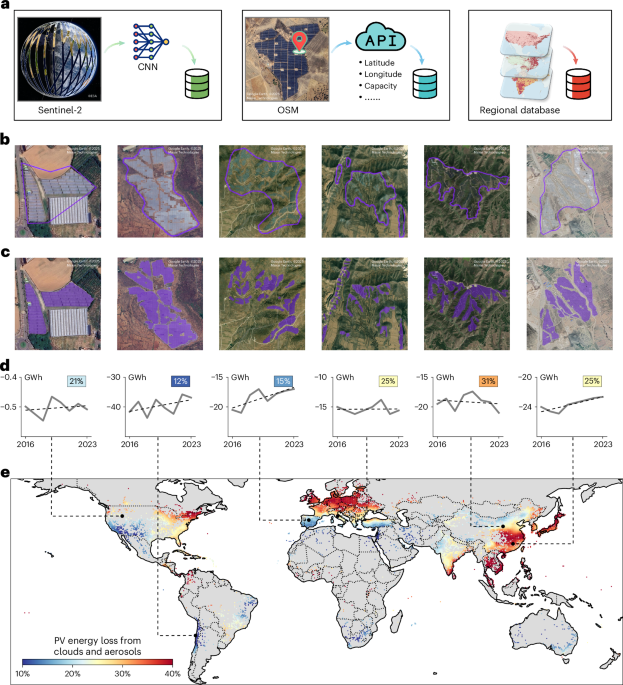
Using Sentinel-2 imagery, machine learning, atmospheric reanalysis data, and a solar energy model, we estimated hourly electricity generation for more than 140,000 solar PV installations worldwide from 2017 to 2023. We then quantified how much of that electricity generation was lost to aerosols. (https://pvfacilitymap.uk/)
The dataset and code are open. The tools themselves are not the main story. What they make visible is the gap between expected and realised solar generation. Until that comparison becomes possible, the effect of the atmosphere remains implicit: assumed rather than measured.
- What the atmosphere takes
In 2023, aerosols reduced global solar PV generation by 5.8%, about 111 TWh of electricity. That is roughly the annual output of 18 medium-sized coal-fired power plants. But the longer-term pattern is even more revealing. Each year, aerosol-related losses from existing solar systems amounted to roughly one third of the energy added by new installations.
The geography of this effect is clear. Aerosols are often concentrated around coal-fired power plants, meaning PV systems installed nearby experience the largest reductions in output. In China, where coal and solar have expanded rapidly and are often co-located within tens of kilometres of each other, aerosol-related losses reduced PV output by 7.7% in 2023. Over the full period, the ratio of losses to new generation frequently exceeded 50%. In the United States, where solar and coal infrastructure are less co-located, the loss was 3.1%.
The physics is the same in both places. The difference lies in how the energy systems are arranged.
- From polluted skies to a coal signal
At first, the results appeared to tell a general story about polluted skies. The gap between expected and actual generation, which we came to think of as a residual map, seemed to reflect air pollution in broad terms. But one pattern stood out. China showed a sustained decline in aerosol-related losses unlike any other major region, despite continued coal expansion. That pattern demanded an explanation.
Tracing it required several independent lines of evidence: aerosol composition, chemical transport modelling, and the spatial distribution of coal-fired power plants. Together, they pointed to the same conclusion. In China, about 29% of aerosol-related PV losses can be attributed specifically to coal-fired power generation.
Overlaying the maps of coal capacity and solar losses became one of the striking moments in the analysis.
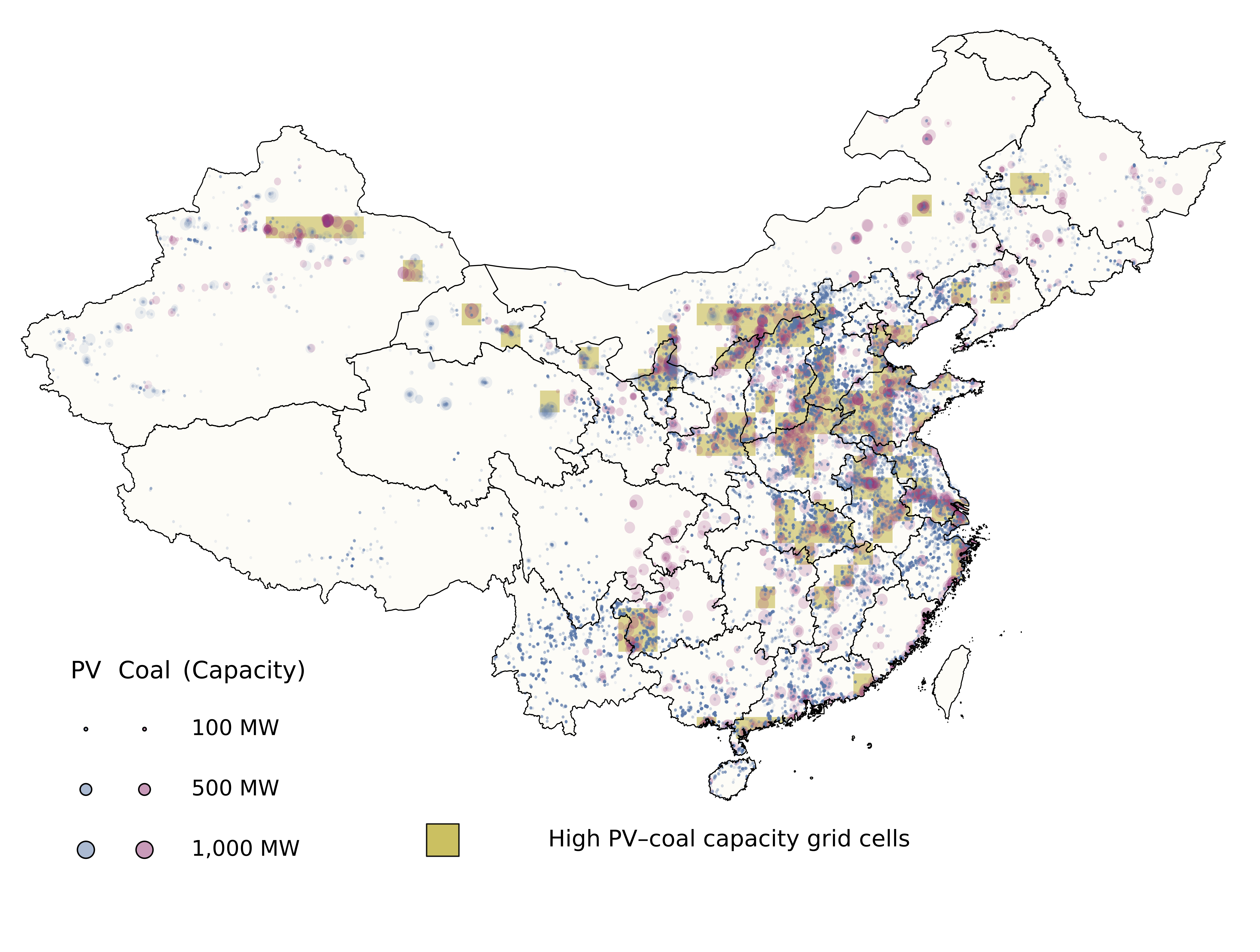
Widespread co-location of coal power and solar PV capacity in China.
- One piece of cautious good news
There is, however, a more nuanced story within those results.
China is also the only major region in our dataset where aerosol-related losses have declined since 2013, by about 1.4% per year, even as coal capacity continues to grow. This is not the result of a coal phase-out. Instead, it reflects the rapid deployment of ultra-low-emission technologies across the existing fleet, which have reduced pollution per unit of generation faster than total capacity has expanded.
It is a reminder that pollution controls can have measurable effects, even within systems that remain structurally dependent on fossil fuels. Whether this improvement persists as other regions scale their own coal capacity is an open question.
One reason solar plants are often built near coal-fired power stations is because the grid infrastructure already exists there. Existing substations and transmission infrastructure allow new solar facilities to connect to the grid far more easily. In many regions, access to grid connections remains one of the largest barriers to new solar deployment.
- The energy we count, and the energy we get
Much of how we describe the energy transition is based on installed capacity: gigawatts added, shares of generation, rates of growth. These are important metrics. But they are not the same as electricity delivered.
Our results suggest that, in some of the world’s most polluted regions, capacity-based metrics can overstate delivered solar energy by a substantial margin. The fossil fuel system that renewables are meant to replace is still present in the atmosphere, shaping how much energy those renewables actually produce.
This drag is not an unavoidable law of physics. It is the result of choices: where coal plants are built, how they are regulated, and how quickly they are retired. By making these interactions visible at the level of individual facilities, we hope the dataset can help track how those choices evolve over the coming decade.
The transition we count in gigawatts is still shaped by the atmosphere the solar panels operate under.
Follow the Topic
-
Nature Sustainability
This journal publishes significant original research from a broad range of natural, social and engineering fields about sustainability, its policy dimensions and possible solutions.


Please sign in or register for FREE
If you are a registered user on Research Communities by Springer Nature, please sign in