Why Ibn Khaldun Still Matters for Urban Sustainability
Published in Earth & Environment and Philosophy & Religion
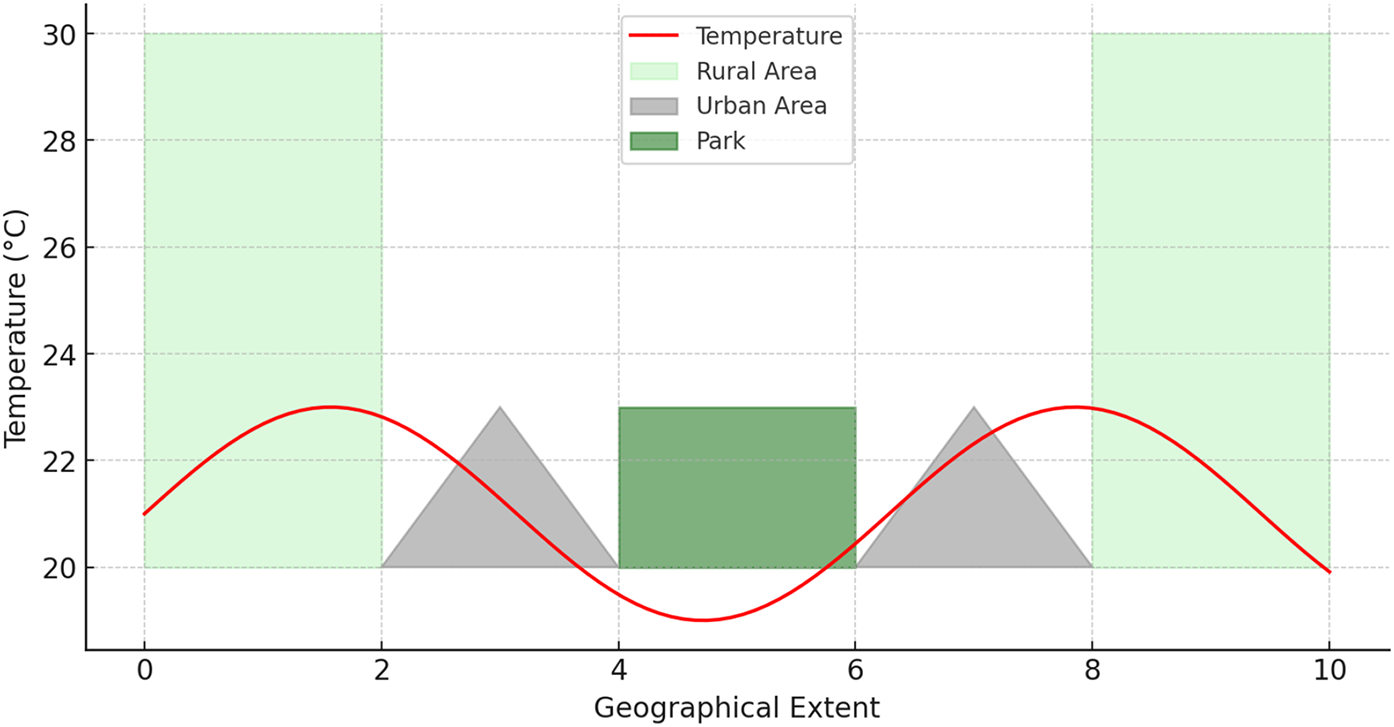

Our paper began with a deceptively simple question: What if the future of sustainable cities lies in the past?
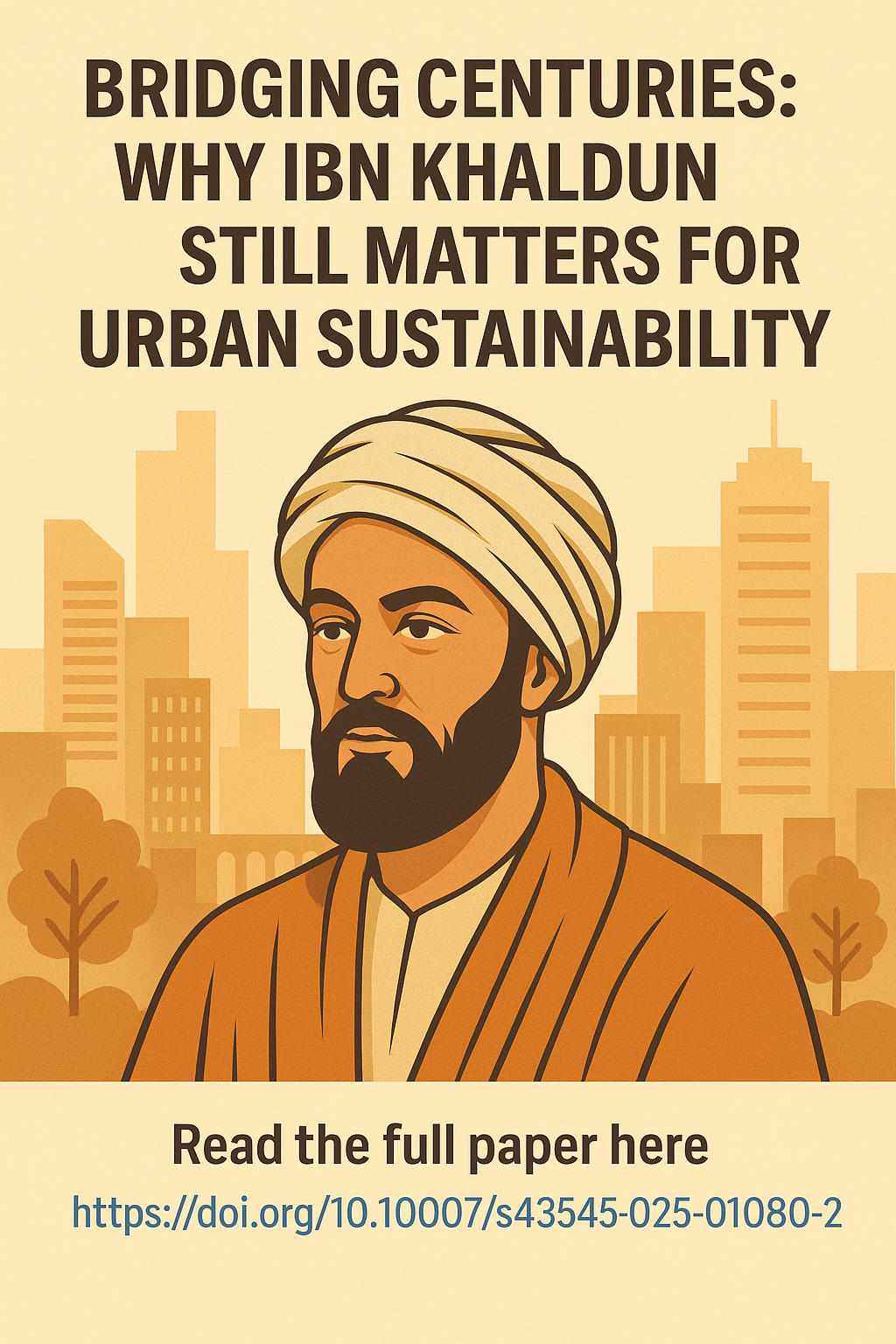
In late 2022, amid a seminar on urban resilience and climate adaptation, we found ourselves returning—not to the latest climate report or city dashboard—but to a 14th-century polymath: Ibn Khaldun. Best known for The Muqaddimah, his writings explored how civilizations rise and fall not only through material strength, but through climate sensitivity, governance foresight, and what he called ‘asabiyyah—social cohesion.
At first, this felt like an intellectual detour. But as climate risks mount and many modern cities rely on increasingly energy-intensive interventions, Khaldun’s warning felt eerily timely: no civilization can endure if it loses its moral and ecological compass.
This paper was not easy to write. Interpreting a medieval framework through contemporary lenses required months of comparative reading and debate. We wrestled with balancing historical fidelity and modern relevance, resisting both romanticization and reduction. The breakthrough came when we juxtaposed three cities—Stockholm, Dubai, and Phoenix—as case studies to test Khaldun’s theory of climate zones and civilizational dynamics in real-world contexts.
We found that while technological innovation can buffer climate extremes, true resilience is rooted in governance models that align with nature and people. Stockholm’s participatory urbanism stands in contrast to Dubai’s engineered defiance of desert heat and Phoenix’s mixed strategies. Each illustrates, in its own way, the risks and rewards of trying to “build against” versus “build with” nature.
Beyond the cities themselves, this work is also about disciplines meeting each other halfway. A geographer, a cultural theorist, and a scholar of Muslim diasporas might seem like unlikely collaborators. But it’s this convergence that allowed us to see Ibn Khaldun not just as a historian of his time, but as a theorist for our time.
We hope this paper opens a dialogue—not only on how to plan more sustainable cities, but on whose knowledge counts in sustainability science. History, especially non-Western intellectual traditions, has much to offer if we are willing to listen.
If we’ve learned anything, it’s this: The sustainability of cities may hinge less on how smart their buildings are, and more on how wisely they are governed—and how deeply they are rooted in shared values. Ibn Khaldun understood that. The question is: do we?
Follow the Topic
-
SN Social Sciences
This is a multi- and interdisciplinary journal serving the Social Sciences community.

Related Collections
With Collections, you can get published faster and increase your visibility.
- SDG 10 - Reduce inequality within and among countries
We are calling for articles to our new Collection on Reduced inequalities, in support of the UN Sustainable Development Goal: SDG 10. This collection creates a cross-disciplinary space for researchers and stakeholders working across various disciplines to address this significant global issue. We bring together scholarship and policy that makes a difference to reducing inequalities for a sustainable future. SDG 10 aims to reduce inequality within and among countries. Inequality threatens long-term social and economic development, harms poverty reduction and destroys people’s sense of fulfillment and self-worth. The pandemic has caused the largest rise in between-country inequality in three decades. Reducing both within- and between-country inequality requires equitable resource distribution, investing in education and skills development, implementing social protection measures, combating discrimination, supporting marginalized groups and fostering international cooperation for fair trade and financial systems.
We are welcoming a range of perspectives including theoretical, methodological, quantitative and qualitative studies. Original Research and Review Papers are accepted. We are particularly interested in research that centers on the following topics:
- By 2030, progressively achieve and sustain income growth of the bottom 40 per cent of the population at a rate higher than the national average
- By 2030, empower and promote the social, economic and political inclusion of all, irrespective of age, sex, disability, race, ethnicity, origin, religion or economic or other status
- Ensure equal opportunity and reduce inequalities of outcome, including by eliminating discriminatory laws, policies and practices and promoting appropriate legislation, policies and action in this regard
- Adopt policies, especially fiscal, wage and social protection policies, and progressively achieve greater equality
- Improve the regulation and monitoring of global financial markets and institutions and strengthen the implementation of such regulations
- Ensure enhanced representation and voice for developing countries in decision-making in global international economic and financial institutions in order to deliver more effective, credible, accountable and legitimate institutions
- Facilitate orderly, safe, regular and responsible migration and mobility of people, including through the implementation of planned and well-managed migration policies
- Implement the principle of special and differential treatment for developing countries, in particular least developed countries, in accordance with World Trade Organization agreements
- Encourage official development assistance and financial flows, including foreign direct investment, to States where the need is greatest, in particular least developed countries, African countries, small island developing States and landlocked developing countries, in accordance with their national plans and programmes
- By 2030, reduce to less than 3 per cent the transaction costs of migrant remittances and eliminate remittance corridors with costs higher than 5 per cent
We are interested to hear your ideas for short commentary or a collection of articles, please contact the journal of your choice directly to discuss this before submitting.
Submission Procedure:
Submission is possible to one of the participating journals on the right, please select TC: SDG10 - Reduced Inequalities in the electronic submission portal. Accepted articles will be published in the respective journal, as well as highlighted on the Collection page.
Publishing Model: Hybrid
Deadline: Dec 31, 2030
- SDG 16 - Promote peaceful and inclusive societies for sustainable development, provide access to justice for all and build effective, accountable and inclusive institutions at all levels
We are calling for articles to our new Collection on Peace, Justice and Strong Institutions, in support of the UN Sustainable Development Goal: SDG 16. This collection creates a cross-disciplinary space for researchers and stakeholders working across various disciplines to address this significant global issue. We bring together scholarship and policy that focuses on the integral role of peace, justice and strong institutions in society.
Goal 16 is about promoting peaceful and inclusive societies, providing access to justice for all and building effective, accountable and inclusive institutions at all levels. People everywhere should be free of fear from all forms of violence and feel safe as they go about their lives whatever their ethnicity, faith or sexual orientation. Governments, civil society and communities need to work together to find lasting solutions to conflict and insecurity. Strengthening the rule of law and promoting human rights is key to this process, as is reducing the flow of illicit arms, combating corruption, and ensuring inclusive participation at all times.
We are welcoming a range of perspectives including theoretical, methodological, quantitative and qualitative studies. Original Research and Review Papers are accepted. We are specifically interested in research that advances understanding on:
- Significantly reducing all forms of violence and related death rates everywhere
- Ending abuse, exploitation, trafficking and all forms of violence against and torture of children
- Promoting the rule of law at the national and international levels and ensure equal access to justice for all
- By 2030, the significant reduction of illicit financial and arms flows, strengthening the recovery and return of stolen assets and combatting all forms of organized crime
- The substantial reduction of corruption and bribery in all their forms
- Developing effective, accountable and transparent institutions at all levels
- Ensuring responsive, inclusive, participatory and representative decision-making at all levels
- Broadening and strengthening the participation of developing countries in the institutions of global governance
- By 2030, the provision of legal identity for all, including birth registration
- Ensuring public access to information and protect fundamental freedoms, in accordance with national legislation and international agreements
- Strengthening relevant national institutions, including through international cooperation, for building capacity at all levels, in particular in developing countries, to prevent violence and combat terrorism and crime
- The promotion and enforcement of non-discriminatory laws and policies for sustainable development
We are interested to hear your ideas for short commentary or a collection of articles, please contact the journal of your choice directly to discuss this before submitting.
Submission Procedure:
Submission is possible to one of the participating journals on the right, please select TC: SDG16 - Peace, justice and strong institutions in the electronic submission portal. Accepted articles will be published in the respective journal, as well as highlighted on the Collection page.
Publishing Model: Hybrid
Deadline: Dec 31, 2030