Why is Singapore Identified in Global Research as Number One? How Physical Activity and Education Excellence Created a Global Leader
Published in Social Sciences, Sustainability, and Biomedical Research
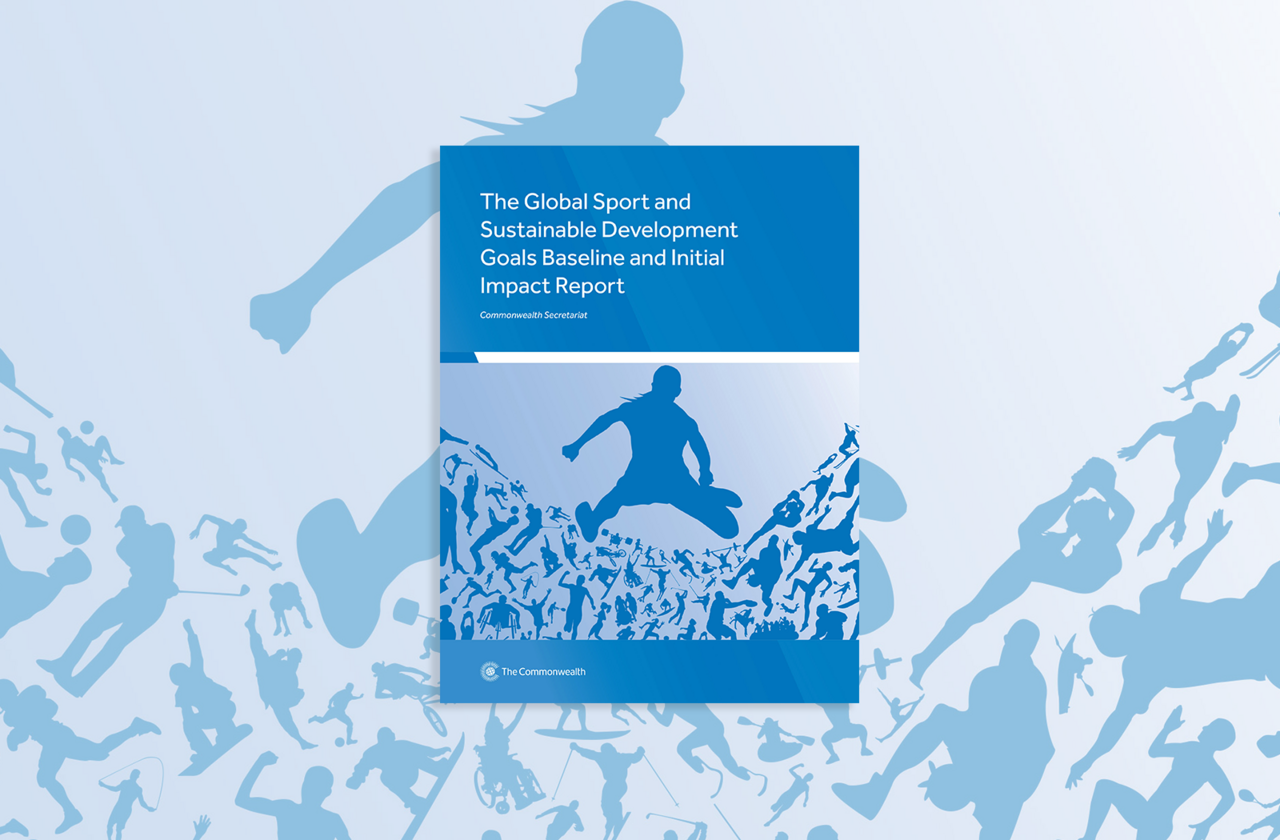

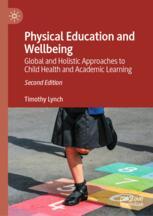

When the Commonwealth Secretariat released its groundbreaking Global Sport and Sustainable Development Goals (SDGs) Baseline and Initial Impact Report in February 2026, one finding stood out: Singapore ranks highest across the Commonwealth for sport’s contribution to health, wellbeing, and sustainable cities and communities. Drawing on data from 210 countries, this recognition wasn’t accidental—it reflects decades of deliberate policy integration that positions physical education and wellbeing at the heart of national development.
But what makes Singapore’s approach so distinctive? The answer lies in a sophisticated model that refuses to treat physical activity as separate from academic excellence, instead weaving them together into a unified framework for lifelong learning and holistic development. The research book authored by Timothy Lynch, Physical Education and Wellbeing and specifically Chapter 9, The Power of Life-Long Wellbeing for Academic Learning: The Singapore Model offers a comprehensive explanation for the distinct qualities Singapore offers.
The Foundation: Valuing Physical Education as Core Learning
Unlike many education systems where physical education exists at the margins, Singapore has deliberately prioritized PE as a specialist learning area fundamental to children’s development. This isn’t merely about fitness - it’s about recognizing PE as the only curriculum subject that combines physical competence with values-based learning and communication, providing a gateway to developing twenty-first-century skills.
The Singapore Model operates on a powerful cycle: quality physical education (QPE) serves as the foundation for lifelong engagement in physical activity and sport, which enhances children’s lifelong wellbeing and holistic health, which in turn optimizes academic learning. Physical education provides a platform for wellbeing, which then provides a platform for children’s learning and development. This integrated approach explains why Singapore consistently ranks among top performers in the Programme for International Student Assessment (PISA) across Mathematics, Reading, and Science, while simultaneously achieving the Commonwealth’s highest ranking for sport’s contribution to health outcomes.
Teacher Quality: The Critical Differentiator
Singapore’s success begins with a fundamental recognition: excellent education requires excellent teachers. The nation recruits teachers from the top one-third of students and provides rigorous training at the National Institute of Education. Prospective teachers are paid during their study and guaranteed three years of teaching - a policy that attracts high-caliber candidates and signals the profession’s value.
But recruitment is only the beginning. Singapore’s Ministry of Education supports continuous professional development, offering 100 hours of professional development time annually for every teacher. Since 2009, Professional Learning Communities (PLCs) have provided forums for teachers to share, learn, and enhance student learning, with 271 schools creating PLCs that improve classroom skills and keep teachers updated with professional practices.
This investment in teacher quality directly impacts PE delivery. When physical education is taught by well-trained, continuously supported specialists who understand its role in holistic development, it becomes transformative rather than perfunctory.
Values-Based Integration: Beyond Physical Fitness
Singapore’s approach transcends traditional notions of physical education as merely building fitness or motor skills. Instead, PE promotes core values - respect, responsibility, resilience, integrity, care, and harmony - that are central to the Ministry of Education’s Framework for 21st Century Competencies and Student Outcomes.
This values-based education recognizes that holistic learning is the goal, and that education goes beyond academic achievement to develop non-quantifiable qualities and character essential for future success. By embedding values and attitudes into the PE curriculum, Singapore creates positive impacts on both wellbeing and academic development, supporting children’s personal, social, and emotional development, which is fundamental to their cognitive development.
From Developing Nation to Global Leader
The results speak for themselves. A strong education system, built on well-trained and motivated teachers and integrated approaches to physical activity and wellbeing, has enabled Singapore to transform from a developing country to a modern, vibrant economy. The Commonwealth report’s recognition of Singapore’s leadership in health and wellbeing outcomes (SDG 3 and SDG 11) validates this comprehensive strategy.
While the report reveals that physical inactivity remains a major global challenge—with over 31% of adults and 82.8% of adolescents insufficiently active worldwide, contributing to 3.2 million premature deaths annually - Singapore’s model offers a proven alternative. By making physical education a priority from the earliest stages of schooling and maintaining that emphasis through continuous teacher development and values integration, Singapore creates lifelong patterns of physical activity that protect population health.
Lessons for the Global Community
Singapore’s number-one ranking isn’t about superior resources or unique cultural factors- it’s about strategic choices. The nation chose to value teachers, prioritize physical education as specialist learning, involve researchers and policymakers passionately in children’s development, and identify all school community members as lifelong learners.
For research communities and sport-for-development practitioners worldwide, Singapore demonstrates that physical activity and academic excellence aren’t competing priorities - they’re mutually reinforcing elements of human development. When nations integrate physical education into their core educational mission, support it with excellent teachers, and connect it to broader values and wellbeing outcomes, they create systems that produce not just academic achievement, but healthy, engaged, resilient citizens prepared for lifelong success.
Singapore’s global leadership position, confirmed by comprehensive Commonwealth data spanning 210 countries, proves that this integrated approach works. The question for other nations isn’t whether to follow Singapore’s example, but how quickly they can adapt these principles to their own contexts.
References
Commonwealth Secretariat. (2026, February 5). Commonwealth unveils first global baseline report measuring sport’s role in achieving the SDGs. Retrieved from https://thecommonwealth.org/news/first-global-baseline-report-measuring-sports-role-achieving-SDGs
Lynch, T. (2024). The Power of Life-Long Wellbeing for Academic Learning: The Singapore Model. In: Physical Education and Wellbeing. Palgrave Macmillan, Cham. https://doi.org/10.1007/978-3-031-72874-7_9

Dr. Timothy Lynch, the most cited school practitioner on Google Scholar, is the Western Co-Head of ECE and Primary at Yew Chung International School of Chongqing (China) and Adjunct Professor at Yew Chung College of Early Childhood Education (YCCECE), Hong Kong (China). Timothy is acknowledged by UNESCO as an Inclusive Policy Lab (IPL) expert for education and wellbeing, by the International Alliance for Health, Physical Education, Dance and Sport (IAHPEDS) as Governor for Oceania and accredited as a Senior Fellow of the Higher Education Academy (UK Professional Standards Framework). An active teacher, school leader and researcher, he has published widely in the field of education, having taught and researched across the Middle East, Africa, Asia, Europe and Australia. Timothy has 23 years' teaching and school leadership experience and eight years' working full time as a teacher/researcher in higher education.
Previous experiences include:
- Deputy Principal at The Joseph Varga School
- Deputy Head of Junior School at the British International School of Cairo
- Assistant Headteacher/ Deputy Headteacher at Hornbill School, Brunei - Ofsted outstanding (Ministry of Defence, UK)
- Adjunct Professor at the Universiti of Brunei Darussalam (UBD) in the Sultan Hassanal Bolkiah Institute of Education (SHBIE)
- Plymouth University - Subject Lead in the Institute of Education - Ofsted outstanding (UK) 2015-2017
- Senior Lecturer in the Faculty of Education at Monash University - no. 1 in world QS rankings (Australia) (2011-2015).
- Assistant Professor at University of Canberra
Research interests include; Wellbeing, Special Education, Health and Physical Education, pedagogy and quality teaching practices, curriculum reform, and enhancing learning through the physical. An active teacher, school leader and researcher, he has published widely in the field of education for Swinburne University of Technology, Universiti of Brunei Darussalam, University of Plymouth, Monash University, University of Canberra, Federation University and Australian Catholic University.
Follow the Topic
-
BMC Global and Public Health

An open access, transparent peer review journal publishing outstanding and influential research and opinion of broad interest to all professional communities involved in global and public health research, policy-making, implementation and delivery worldwide.
-
Communications Medicine

A selective open access journal from Nature Portfolio publishing high-quality research, reviews and commentary across all clinical, translational, and public health research fields.
-
npj Mental Health Research

This journal invites and publishes research that endeavors to understand, diagnose and treat mental health disorders and improve wellbeing, along with developing resilience and optimal functioning at individual and population-levels.
-
Nature Medicine

This journal encompasses original research ranging from new concepts in human biology and disease pathogenesis to new therapeutic modalities and drug development, to all phases of clinical work, as well as innovative technologies aimed at improving human health.
-
Research in Health Services & Regions

Introducing: Social Science Matters
Social Science Matters is a campaign from the team at Palgrave Macmillan that aims to increase the visibility and impact of the social sciences
Continue reading announcementRelated Collections
With Collections, you can get published faster and increase your visibility.
Stem cell-derived therapies
Publishing Model: Hybrid
Deadline: Mar 26, 2026
Digital Medicine for Infectious Diseases
Publishing Model: Hybrid
Deadline: Nov 09, 2026

Please sign in or register for FREE
If you are a registered user on Research Communities by Springer Nature, please sign in