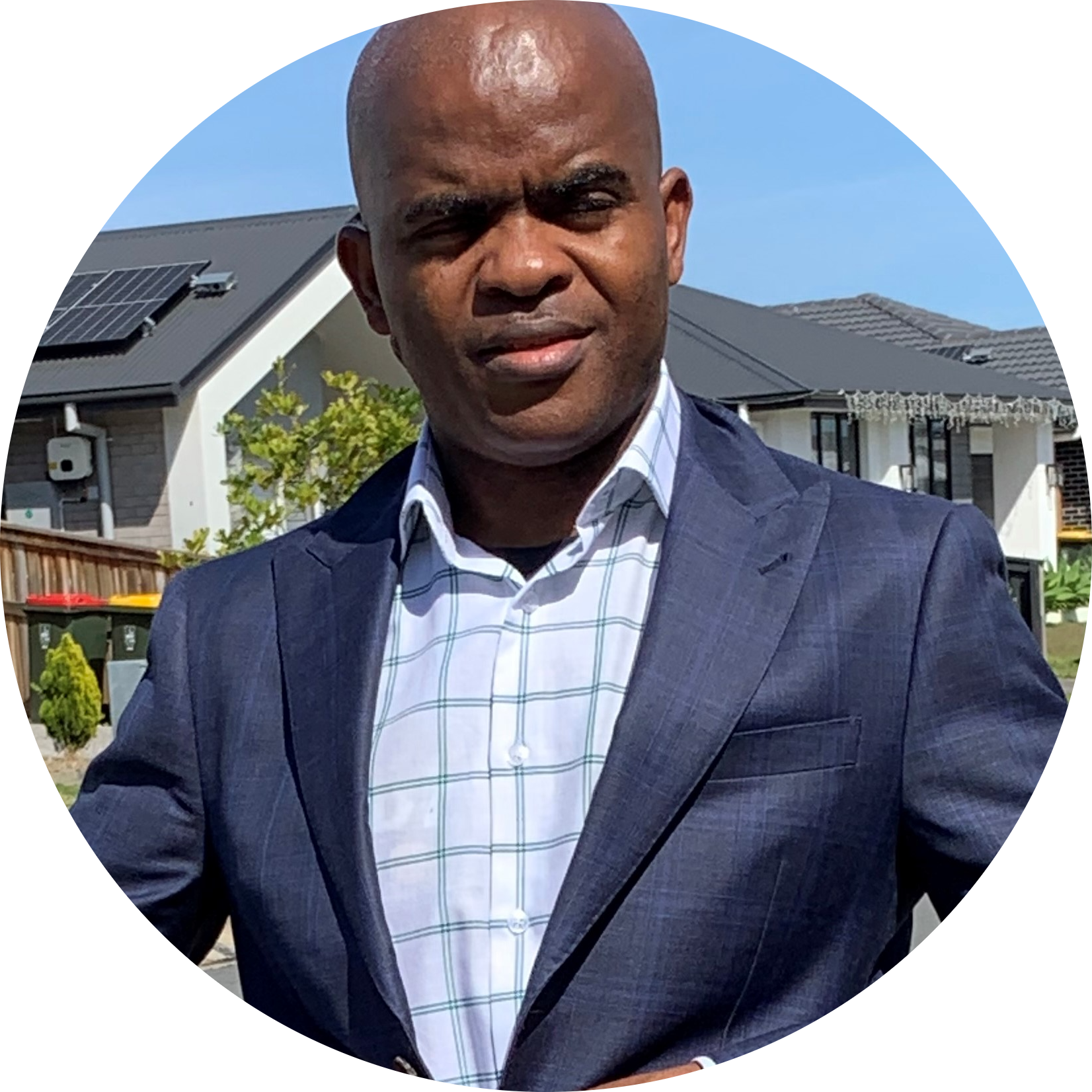
About Christopher E. Ndehedehe
Dr Christopher Ndehedehe is a Senior Lecturer and an Australian Research Council (ARC) DECRA (Discovery Early Career Researcher Award) Fellow at the School of Environment & Science, Griffith University. He joined Griffith University’s Australian Rivers Institute in mid-2018 under Griffith’s Areas of Strategic Investment as a Research Fellow. This was after the completion of an outstanding PhD thesis, which received the Vice Chancellor’s commendation in early 2018 at Curtin University. Christopher is a leading expert in satellite hydrology and environmental geo-informatics with a strong international reputation and experience. This is exemplified in his pioneering cutting-edge cross-disciplinary research in environmental remote sensing and satellite hydrology that connects climate, freshwater resources, and the environment. He enjoys and embraces inter-disciplinary collaborative research that cuts across climate science, terrestrial hydrology (e.g., surface water, soil moisture, and groundwater), machine learning, computational geoscience, natural hazards, geomatic engineering, and Earth system science. Christopher has published widely in these areas including, 2 sole-authored Springer books, 4 book chapters, and more than 110 peer-reviewed articles in leading and high-impact factor (IF) English journals. Some of these journals include, Nature (IF=69.50), Nature Sustainability (IF=27.70), The Lancet Planetary Health (IF=24.10), One Earth (IF=16.2), Remote Sensing of the Environment (IF=13.85), Journal of Cleaner Production (IF=11.07), Pattern Recognition (IF=8.51), Scientific Data (IF=8.501), Journal of Advances in Modeling Earth Systems (IF=8.47), Water Resources Research (IF= 4.61), etc. His first Springer monograph is a leading and widely accessed book in the field of satellite hydrology with more than 20,000 downloads since 2022 (https://link.springer.com/book/10.1007/978-3-030-99577-5).
Christopher is ranked in the top 0.5% of all scholars worldwide by ScholarGPS in the field of Geomatic Engineering & Earth sciences based on impact and the notable quality research outputs. He has been included on the Standford University's list of Top 2% of leading scientists in his field for three consecutive years (2023-2025). He won the 2023 Griffith Sciences Pro Vice Chancellor's Excellence in Early Career Researcher Award for outstanding research performance. He is a recipient of prestigious international grants and awards, including the 2018 D. B. Johnston Award for Excellence in the Spatial Sciences. Christopher is a member of the American Geophysical Union (AGU) and has been funded as a keynote speaker at the prestigious AGU Chapman conference. He leads the Satellite Earth Observation and Geomatic Group within Australian Rivers Institute at Griffith University, pioneering several strategic research in remote sensing hydrology, including ARC funded projects (e.g., DE230101327, LP230100228) and CCR grants. Christopher has provided leadership on several large consultancies and government projects, including those funded by the Australian Government and research agencies. He has engaged and collaborated with international and local agencies, including the Earth Commission (https://earthcommission.org/) where he contributed to quantifying safe and just boundaries for the Earth system. This research was published in Nature and has attracted increasing attention around the world, including more than 350 news outlets. His other engagements have received media attention and publicity. He has also served as water expert informing on water planning and regulation through non-governmental agencies (https://www.ecnt.org.au/currell_report) working with local communities to bring environmental justice and hold government to account for key decisions and governance on environmental issues. Christopher is an Associate Editor in Resources, Environment and Sustainability (Elsevier) and Frontiers in Water and sits on the editorial board of Sustainable Horizons (Elsevier). He has also Guest Edited three special issues on remote sensing and climate related subjects and continues to serve as a key grant assessor for international and government agencies across the world, including the ARC.