Education for Sustainability
Published in Social Sciences, Earth & Environment, and Ecology & Evolution


How can Brazilian universities lead the transition toward a sustainable future? 🌍
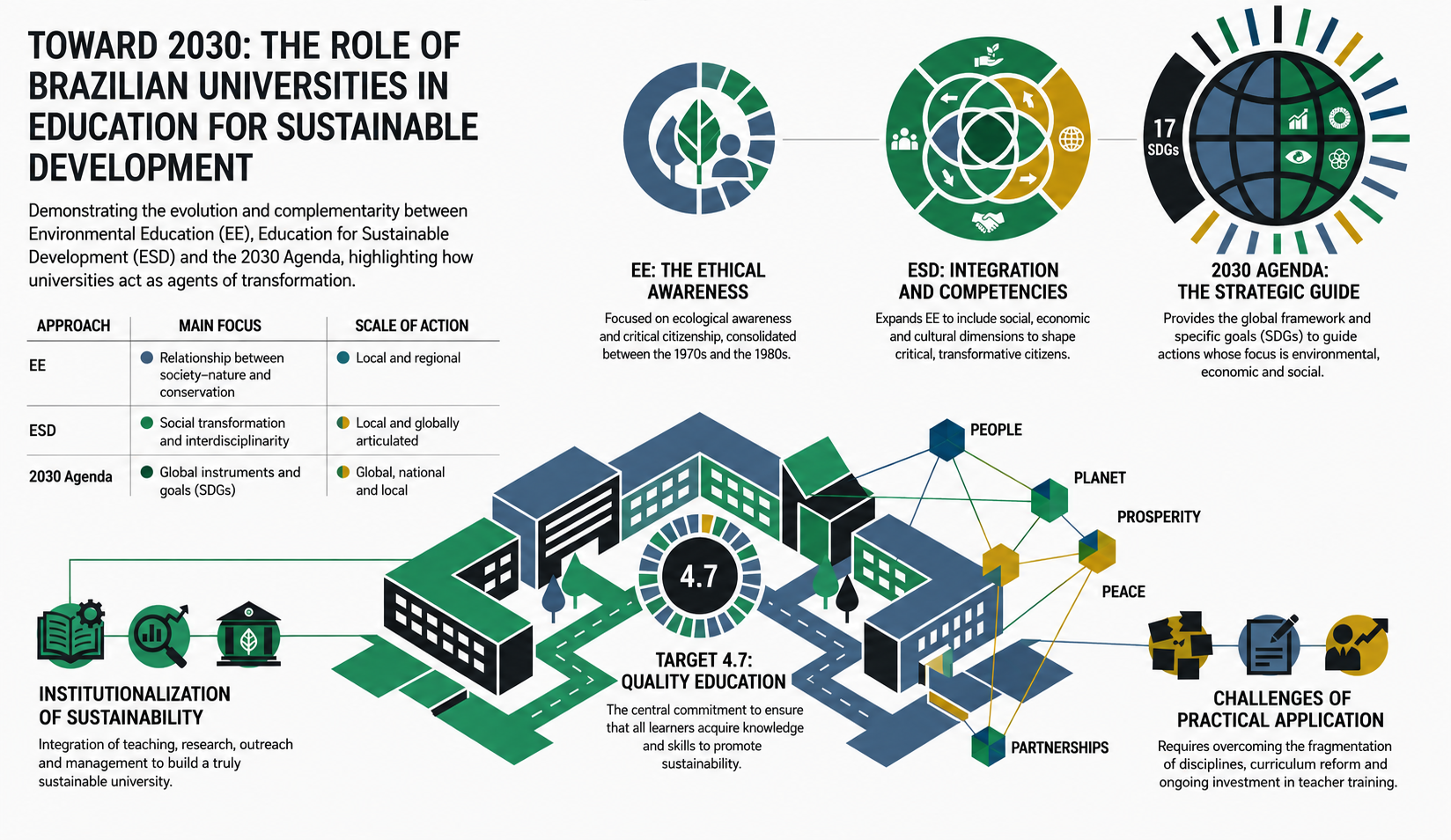
- 🤝 Synergy and Complementarity: Environmental Education (EE) provides the ethical and ecological foundations necessary for developing active citizenship. ESD expands this foundation by integrating the environmental, social, economic, cultural, and institutional dimensions of sustainability transversally. Together, they gain a strategic direction and global targets through the Sustainable Development Goals (SDGs) of the 2030 Agenda, particularly SDG 4 Target 4.7.
- 🏫 The Role of Universities: Higher education institutions are fundamental agents in the transition toward sustainability, serving as hubs for innovation, knowledge production, and the formation of critical and responsible citizens.
- 🚧 Real Challenges: Although sustainability commitments are increasingly incorporated into the institutional policies and strategic planning of Brazilian universities, their effective implementation remains a gradual process. To move forward, we must overcome disciplinary fragmentation through deep curricular reforms, continuous investment in teacher professional development, and the adoption of sustainable institutional management practices.
Follow the Topic
-
Discover Sustainability
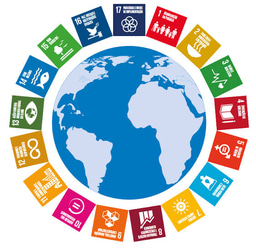
A multi-disciplinary, open access, community-focussed journal publishing results from across all fields relevant to sustainability research whilst supporting policy developments that address all 17 of the United Nations Sustainable Development Goals (SDGs).

What are SDG Topics?
An introduction to Sustainable Development Goals (SDGs) Topics and their role in highlighting sustainable development research.
Continue reading announcementRelated Collections
With Collections, you can get published faster and increase your visibility.
5th Anniversary of Discover Sustainability: Accelerating the Implementation of the UN SDGs
Adopted in 2015, the United Nations Sustainable Development Goals (SDGs) provides a universal framework for ending poverty, protecting the planet, and ensuring prosperity for all by 2030. Yet, with the target year rapidly approaching, progress remains off track. The COVID-19 pandemic, climate change, geopolitical conflicts, and resource constraints have reversed gains in areas such as food security, health, and gender equality. Achieving the SDGs requires not only political will but also accelerated, interdisciplinary, and scalable solutions that integrate technology, policy innovation, finance, and community engagement.
This collection responds to that urgent need by showcasing cutting-edge research, case studies, and practical frameworks that drive measurable progress toward the SDGs. It seeks to bridge gaps between theory and implementation, highlighting successes, failures, and replicable lessons. Marking the 5th anniversary of Discover Sustainability, this collection celebrates the journal’s ongoing commitment to advancing impactful research and practical solutions for global sustainability challenges.
This collection aims to accelerate evidence-based progress toward the UN SDGs by bridging research, policy, and practice. Its specific objectives are:
- to showcase innovative, scalable solutions that have demonstrated measurable SDG impacts;
- to identify barriers to implementation and propose actionable pathways to overcome them;
- to foster interdisciplinary collaboration across technology, social sciences, finance, and governance;
- to highlight replicable case studies from diverse geographical and socio-economic contexts; and
- to inform decision-makers of local, national, and global levels.
Ultimately, the collection seeks to transform the SDG framework from aspirational goals into tangible, time-bound achievements by 2030 and beyond.
This Collection supports and amplifies research related to SDG 1, SDG 2, SDG 3, SDG 4, SDG 5, SDG 6, SDG 7, SDG 8, SDG 9, SDG 10, SDG 11, SDG12, SDG 13, SDG 14, and SDG 15
Keywords: Sustainable Development Goals (SDGs), Interdisciplinary Solutions, Policy Innovation, Scalable Impact, Climate Resilience, Renewable Energy Transition, Circular Economy, Data-driven Development, Social Equity and Inclusion, Global Partnerships
Publishing Model: Open Access
Deadline: Dec 31, 2026
Food, Societies and Sustainability: Contemporary Concerns around Local Food Production and Consumption
Food goes far beyond nutrition. It reflects sociocultural identities and territorial heritage, consumption dynamics, economic development, public policies, sustainability concerns, food production, distribution and consumption. Understanding food production and food products, practices and strategies offers key insights into both historical traditions and contemporary lifestyles. Around the world, food and drink serve as powerful symbols of identity and attract interest through diverse value chains, economic interests and cultural expressions. On the other hand, traditional and local food systems contribute to cultural heritage, biodiversity conservation and sustainability matters from environmental, sociocultural and economic concerns.
The Collection "Food, societies and sustainability: Contemporary concerns around local food production and consumption" explores how food is locally produced, promoted and protected through public and private initiatives, food-based experiences, media platforms, and sustainable dietary and productive practices. It encourages contributions that examine how food concerns are shaped in contemporary societies, how globalization is affecting local food cultures, emphasizing the role of food as both tangible and intangible cultural heritage. Food preferences, food stereotypes, and attitudes towards food sustainability, analysed through the lenses of generational gaps and gender differences are also welcomed. This Collection seeks original research and case studies using both qualitative and quantitative methods.
Keywords: Food Systems, Food culture, Food Production, Locality, Heritage, Tourism, Gastronomy, Agricultural Biodiversity, Livestock Biodiversity, Food Sustainability, Regenerative Tourism.
This Collection supports and amplifies research related to SDG 2, SDG 3, SDG 4, SDG 5, SDG 10, SDG 12, and SDG 17.
Publishing Model: Open Access
Deadline: Sep 30, 2026
Please sign in or register for FREE
If you are a registered user on Research Communities by Springer Nature, please sign in