Grossbeak mound animation
Published in Earth & Environment
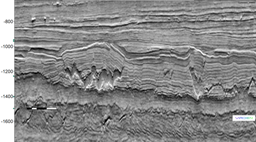
This video (short version) summarizes observations from the Miocene mounds over the Grossbeak discovery in the NE North Sea (Figure 7 in Rudjord and Huuse, 2025), supporting that a younger parent sand formed the intrusions by buoyancy-driven stratigraphic inversion with heavier sand sinking below low-density, early consolidated and fractured biosilicious ooze.

I have been working with oil and gas exploration in Norway and Egypt after completing my geology and computer science studies at University of Oslo in 1990, most of the time in support functions in the border zone between geology/geophysics and IT but the last 10-12 years as explorations geoscientist, currently in Aker BP. My interest in the enigmatic re-mobilized Paleogene to lowermost Neogene strata of the northern North Sea was triggered through license work in Lundin and culminated with the publication of a novel genetic model for the large mounds and jack-ups in Communications Earth&Environment in 2025, together with Professor Mads Huuse.
Please sign in or register for FREE
If you are a registered user on Research Communities by Springer Nature, please sign in