Machine Intelligence in Healthcare – Setting the Stage for an Optimal Future
Published in Healthcare & Nursing

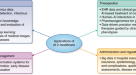

Across many domains and industries, artificial or machine intelligence (MI) is rapidly becoming part of everyday function. However, the potential of such approaches has not yet been realized in healthcare settings. Unique challenges have impeded such progress – from specific data sharing barriers to effective implementation in clinical care workflows to transparency and ethical issues. And several recent examples illustrate the urgent need for new paradigms for approaching the application of these innovative tools before and as they are deployed into clinical care settings – there have been multiple instances of systems misdiagnosing patients in situations where a misdiagnosis could be the difference between life and death.
It is essential for our community as a whole to address these barriers at this point in time – prior to wide-scale implementation – to take advantage of lessons learned from other sectors and avoid the pitfalls, which can be easily intensified due to the inherently intimate nature of health. Without such best practices and paradigms in place, unintended consequences detrimental to the progress of the field could occur, including endangering lives or eroding the community’s trust in results obtained through such methods/tools. What are these current impediments and potential challenges? What are proposed solutions? What areas are poised for key interventions that could accelerate progress in the field? How can we do so in an effective, transparent, and ethical manner? Such questions were the driving force behind a workshop held at the NIH in July 2019.
Experts from academia, industry, regulatory agencies, patient advocacy organizations, and non-profits convened to opine on these questions. They addressed a number of key issues, including: data quality and quantity; access and use of electronic health records (EHRs); transparency and explainability of the system in contrast to the entire clinical workflow; and the impact of bias on system outputs, among other topics.
Discussions fostered at the workshop, coalesced in the publication Machine intelligence in healthcare—perspectives on trustworthiness, explainability, usability, and transparency, are integral to our ultimate, shared goals of more efficient and effective provision of care. The many scientific, operational, cultural, and ethical issues must be resolved for that potential to be realized. Our hope is that this paper illustrates the imperative for us all – the many stakeholders of the healthcare ecosystem – to work together to translate MI tools for clinical and healthcare applications.

Follow the Topic
-
npj Digital Medicine
An online open-access journal dedicated to publishing research in all aspects of digital medicine, including the clinical application and implementation of digital and mobile technologies, virtual healthcare, and novel applications of artificial intelligence and informatics.

Related Collections
With Collections, you can get published faster and increase your visibility.
Synthetic Clinical Data and Privacy-Preserving Frameworks for Trustworthy Health AI
Publishing Model: Open Access
Deadline: Jun 03, 2027
Digital Biomarkers for Enabling Proactive Clinical Decisions
Publishing Model: Open Access
Deadline: May 18, 2027