A first approach to unravel the jellyfish diversity and ecology from Kribi coastal region (Cameroon, Gulf of Guinea)
Published in Earth & Environment, Ecology & Evolution, and Sustainability

Why is this research valuable?
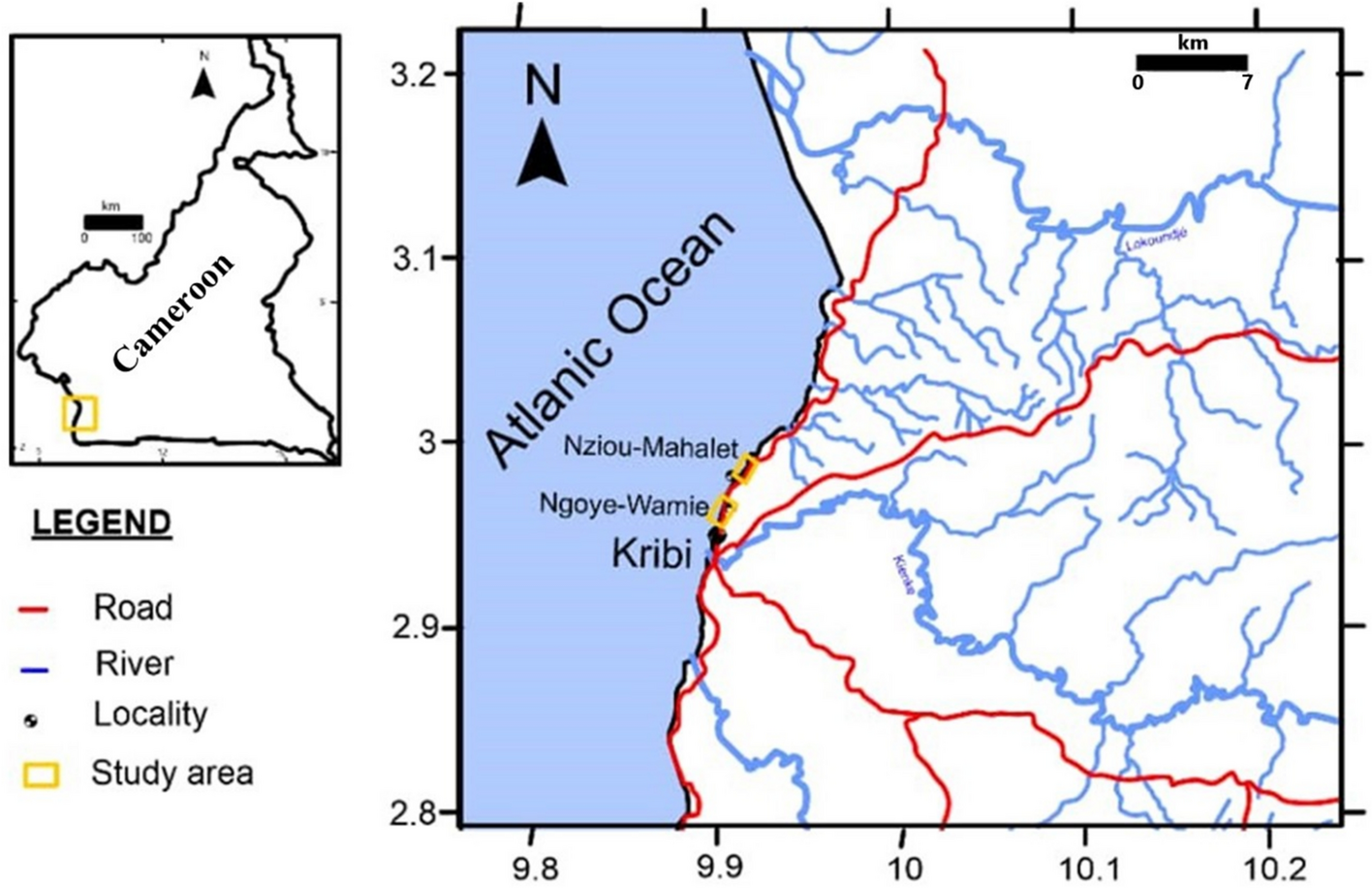
Our sampling zone is recognized as a critically under-sampled region, though jellyfish blooms and their impacts are witnessed by fishermen and tourists. Given jellyfish blooms associated huge socio-economic, environmental and health issues, sufficient information regarding their taxonomy, population dynamics, food web roles, and composition, are relevant to design sustainable conservation measures. We undertook this research to raise awareness of the scientific community, policymakers and other sea users about jellyfish proliferations in the region, as well as their potential impact to foster sustainable conservation measures. The first step to that direction was to set up an inventory of available species and preliminary information on their ecology.
How did it all start?
This research started with a dream about one important courier I was receiving about an international opportunity during the night of the 11th to the 12th of February 2017. On Monday, 13th February 2017, I received a call from the Ministry of Environment, of nature protection and sustainable development in Cameroon inviting me to attend a Training workshop on “Pest Risks analysis”. After that training workshop organized at the Ministry Conference Hall the week that followed, participants were called to attend another training workshop the week after on “Commodity audit system”. I noticed that there was scanty information regarding invasive species of the marine environment. On the last slide of the last talk, it was written “Ballast water management”. I had heard about ballast water, but not knowing how destructive they could be for marine ecosystems if regulations were not well applied. At the time of the workshop, the regulation on Ballast water management was not yet adopted.
Once back at the research station, I started online research both on invasive species of the marine realm and ballast water management. As my computer could not yield good results due to its low performance, I used a new android telephone. The results obtained made me realize that jellyfish research was an unexplored boulevard in the region.
I made a survey among fishermen at Kribi beaches to assess the presence of jellyfish in our waters. People I met directed me to beach seine fishing where jellyfish samples in good condition could be found.
What was the research process like?
I remembered that I would go for sampling and once in the laboratory, I would not know exactly what to do, which features to check. It was difficult to rely only on scientific literature without additional guidance. As I could not find any jellyfish specialist within the national scientific community, I sent emails to every jellyfish specialist found on research papers, calling for help, calling for collaboration. Fortunately, there were two positive responses to my calls. The first one agreed to review a proposal I developed, but her time was to be compensated. The second jellyfish specialist was Prof. Andre Carrara Morandini. I really do not know how to talk about him, because what he did and is still doing is amazing. Prof. Andre Carrara Morandini would respond to all my emails, he would also send me jellyfish blooms symposium papers, sending me all the scientific literature I would not have access to, sometimes apologizing for delay, and I was like “you do not have to apologize”. That is when I decided to adopt that research topic as my PhD research work. This was the third time I was changing my PhD research topic due to several constraints including a shift in my research career direction, the publication of a paper closely aligned with my second topic, and a conflict of interest.
I shared with Prof. Andre the first results about our sole cubozoan species which I thought was a new species. Prof. Andre connected me to Dr. Ilka Straehler-Pohl, one of the well-known Cubozoa specialists in the world. She discussed with his friend Prof. Mark Gibbons from South Africa to invite me at the 6th International Jellyfish Blooms Symposium in Cape Town and attend the 2-days training on Scyphozoa and Cubozoa that was going to be organized after the symposium. My attendance at this Symposium and training workshop changed my perception and upgraded my skills as a future jellyfish specialist.
What about the funding of our research?
Until that time, I was sponsoring myself with my salary. As I was lacking even basic material and small equipment to work efficiently, I took a loan from my bank for 4years (2018-2022). That money was used to buy my materials, small equipment and reagents that could allow me to do taxonomy, including but not limited to 0.1g precision scale, slides, buckets, dissecting kits, gloves, sampling bowls, bowls for conservation, reagents (ethanol, formalin…), microtubes 2ml for molecular taxonomy, materials for writing (note books, pen, papers, pencil…), tissue paper rolls, etc. That money also sponsored some field work activities but not all. Fortunately, we were having a light microscope Zeiss with four magnifications (5X, 10X, 40X and 100X) at the laboratory.
So, what did we find?
We discovered an unexplored macro-jellyfish (medusozoans) community made up of Scyphozoa and Cubozoa. Four main taxa were identified including Cyanea sp. (7.6%), Chrysaora sp. (20.6%), Chimaerus palmatus (25.4%), and Catostylus tagi (46.5%) with five color morphotypes. Chrysaora sp. and Cyanea sp. were all new records from the West Africa coastal region, which would need full description. The sole cubozoan found within the sample, Chimaerus palmatus, was one of the two African cubozoan ever described by Haeckel (1880) and which was thought to be lost. Till then no other record of this species was reported, except Gibbons et al. (2022) as Chirodropus palmatus. So, we fully described this species (Straehler-Pohl et al., 2022) which was classified within our newly created genus Chimaerus.
This paper also gives preliminary glimpse of species ecology including species abondance and size variation, and their inter-relationship. Identified species could complete their entire life span within this environment except for Cyanea sp. which occupies a distinct niche. C. palmatus and Cyanea sp. abundances were highly correlated.
What are the implications of these findings, and what happens next?
Our research1-2 set the foundation for future research works which include the molecular characterization and phylogeny of our morphologically identified species, the study of species reproductive biology and role within the food web using eDNA and other available techniques, as well as their potential valorization in the region.
Since we finished this part, we are also looking for funding, training and collaboration to perform these research activities - so if you are reading this and you are interested – please do reach out!
Corresponding author of the paper: Gisele Flodore Ghepdeu Youbouni ggiseleflodore@yahoo.fr. https://doi.org/10.1007/s44289-025-00088-z
References
- Ghepdeu, G. F. Y., Chougong, D. T., Morandini, A. C., Meutchieye, F., Dicka, E. H. K., Mbacham, W. F., & Tchoumbougnang, F. (2025). A first approach to unravel the jellyfish diversity and ecology of the Kribi coastal region (Cameroon, Gulf of Guinea). Discover Oceans, 2(48). https://doi.org/10.1007/s44289-025-00088-z
- Straehler-Pohl, I., Ghepdeu, G. F. Y., Chougong, D. T., Tchoumbougnang, F., & Morandini, A. C. (2022). Ernst Haeckelʼs mysterious species, Part II: African Chirodropida (Cnidaria, Cubomedusae). Plankton Benthos Research, 17(4), 406–429. https://doi.org/10.3800/pbr.17.406
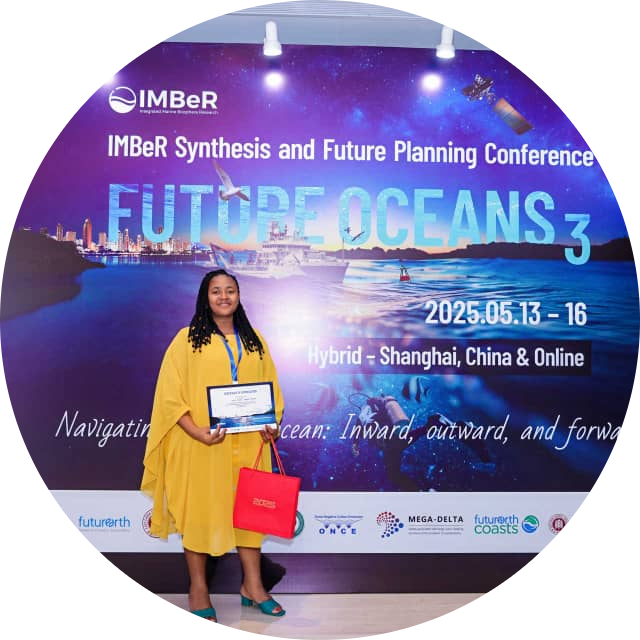
I am a marine biologist with a strong interest in jellyfish diversity, taxonomy, and ecology, particularly in the Gulf of Guinea. My research focuses on understanding the biodiversity and ecological roles of gelatinous zooplankton along the Kribi coastal region in Cameroon. I have co-authored several peer-reviewed publications, including studies that have identified previously undocumented jellyfish species. I collaborate with researchers both locally and internationally to promote marine biodiversity research and conservation. My long-term goal is to build regional research networks and training programs that empower young African scientists and contribute to sustainable ocean management.
Follow the Topic
-
Discover Oceans
This is a fully open access, peer-reviewed journal that supports multidisciplinary research and policy developments across the fields of oceanography and marine science.

What are SDG Topics?
An introduction to Sustainable Development Goals (SDGs) Topics and their role in highlighting sustainable development research.
Continue reading announcementRelated Collections
With Collections, you can get published faster and increase your visibility.
Citizen Science for Ocean Research
Citizen science – the active involvement of non-scientists in scientific research – is a powerful tool for environmental monitoring, education and advocacy. Citizen scientists can play an important role in enhancing oceanic data collection and analysis; as well as catalyzing transformative action for our marine environments.
This Collection welcomes contributions from different disciplines and regions, focusing on exploring the role citizen science and community engagement plays in advancing oceanography and marine sciences.
Keywords: Citizen science; community engagement; participatory science; ocean literacy; education; empowerment; policy; technology
Publishing Model: Open Access
Deadline: Nov 01, 2026
Emerging Contaminants in the Marine Ecosystem: Integrating Science, Policy, and Advocacy for Sustainable Oceans
In recent years, a wide range of man-made materials has been frequently observed in elevated concentrations in the ocean. They have only recently been identified as ‘emerging contaminants’, which include microplastics, pharmaceuticals, personal care products, industrial additives, and nanomaterials. They are increasingly recognized as significant threats to marine and coastal ecosystems. These substances, often persistent and bioactive, enter the ocean through upstream riverine input, wastewater discharge, atmospheric deposition, and surface runoff, thereby posing complex challenges for detection, monitoring, and ecological risk assessment.
This collection highlights interdisciplinary research addressing the occurrence, fate, and impacts of emerging contaminants in marine environments. Original studies exploring contaminant transport mechanisms, bioaccumulation in aquatic food webs, and toxicological impacts on marine organisms are particularly encouraged. Contributions that integrate chemical analysis, ecotoxicology, oceanography, and environmental modelling to advance the understanding of contaminant pathways and ecosystem responses are also welcome.
Beyond scientific insight, this Collection seeks to bridge research with actionable policy and advocacy. Emphasis is placed on studies that inform sustainable management, regulatory frameworks, and public awareness initiatives aimed at reducing pollution sources and safeguarding ocean health. Collaborative approaches that connect environmental science, governance, and community engagement are central to achieving long-term marine sustainability. This collection aims to serve as a comprehensive resource for researchers, policymakers, and environmental advocates, encouraging dialogue and innovation toward cleaner, resilient, and sustainable oceans.
Publishing Model: Open Access
Deadline: Dec 31, 2026