





Why do we care about soil phosphorus cycling upon permafrost thaw?
Permafrost region contains substantial soil carbon, which represents nearly one-third of the world's soil organic carbon storage. However, these carbon pools are vulnerable to microbial decomposition due to the ongoing climate warming. Particularly, climate warming has led to extensive permafrost thaw over the past few decades. This thawing process could enhance carbon release in the form of carbon dioxide (CO2) or (CH4) from permafrost regions, potentially leading to a positive feedback to climate change. Greenhouse gases function as "accelerators" for global warming, thereby transforming permafrost—once stable and sequestered underground—into a potential "carbon bomb." However, the strength of this feedback may be partially modulated by soil nutrients, as higher nutrient availability can not only enhance ecosystem carbon sequestration by promoting vegetation production, but also mediate soil carbon release through its effects on microbial decomposition.
To understand how nutrient availability might alter future carbon storage in permafrost regions, we first need to figure out whether and how permafrost thaw affects nutrient cycles. Surprisingly, after reviewing the literature on nutrient cycling in permafrost regions in the context of permafrost thaw, I found that previous studies focused predominantly on nitrogen, with a marked paucity of research on phosphorus cycling. The reason might stem from the long-held view: high-latitude ecosystems such as the Arctic and boreal zones are generally considered nitrogen-limited, whereas lowland tropical and subtropical regions—where soils are generally strongly weathered—are primarily phosphorus-limited. Recently, a growing body of evidence from nutrient addition experiments suggests that phosphorus limitation is widespread across permafrost regions. Due to this point, research on phosphorus cycling in permafrost ecosystems should not be overlooked. After discussing this critical research gap with my PhD supervisor, Prof. Yuanhe Yang—who also leads our team as principal investigator—we agreed that investigating how phosphorus cycling in permafrost ecosystems responds to permafrost thaw would be a highly urgent and meaningful endeavor.
How did we explore the effects of permafrost thaw on soil phosphorus cycling?
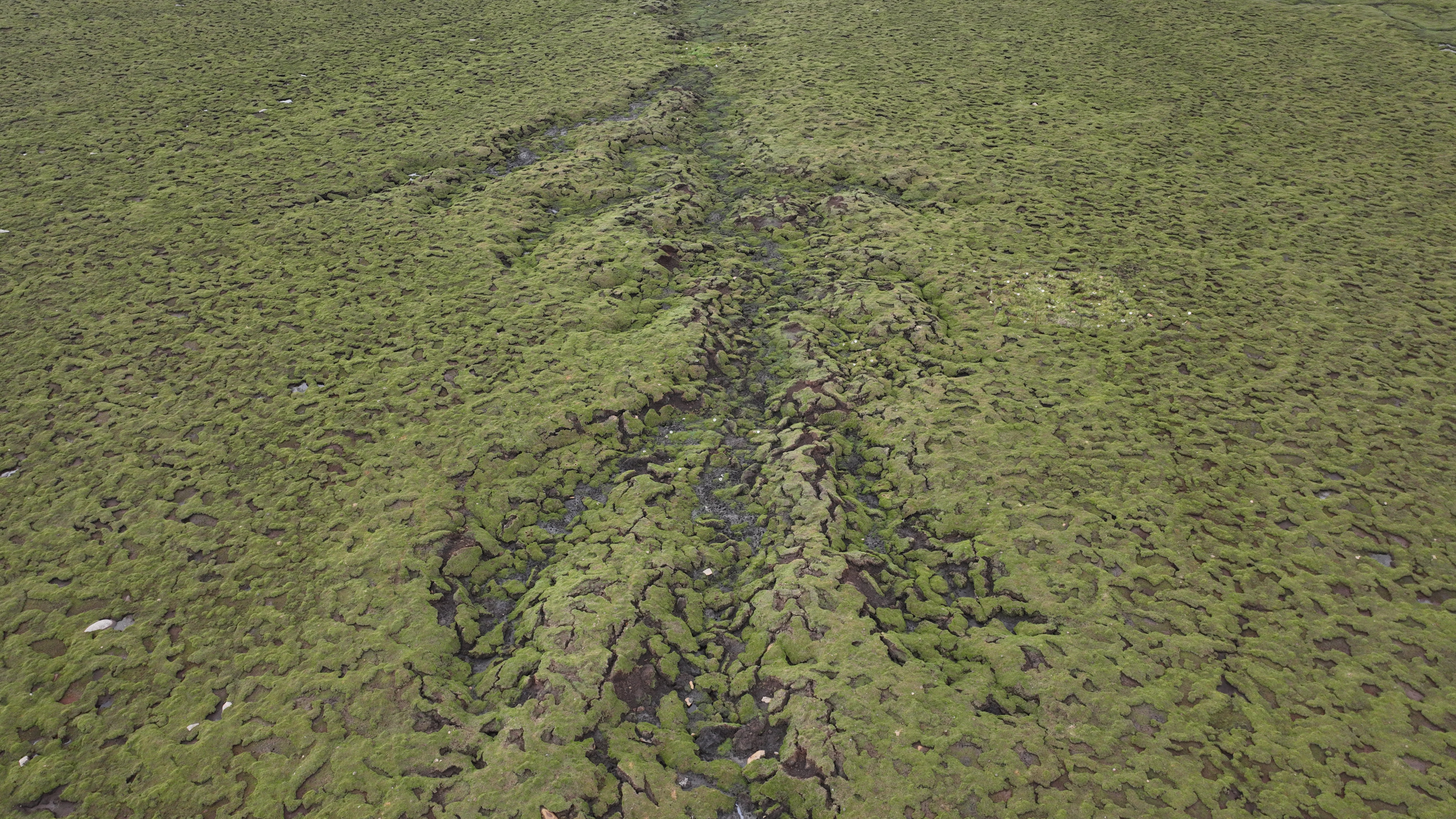
Permafrost collapse, also known as thermokarst, forms as a result of abrupt thawing of ice-rich permafrost. To address the above question, we utilized permafrost collapse observation network across the Tibetan Plateau and employed a range of techniques to clarify how soil phosphorus cycling responded to abrupt permafrost thaw. The permafrost collapse observation network was first proposed by Prof. Yuanhe Yang, and six hillslope thermokarst sites were distributed along a 550-km permafrost transect. This latitudinal gradient was selected for our study because it captured a broad range of environmental conditions, thereby improving the representativeness of sample collection. Field sampling, conducted at an average elevation of 4,000 meters, was certainly challenging: we faced frigid temperatures and a high risk of altitude sickness. However, through the joint efforts of our sampling team—including Luyao Kang, Dianye Zhang, and Guanqin Wang—we successfully collected plant and soil samples from both collapsed and non-collapsed areas across all six sampling sites.
.jpg)
Beyond the challenges of field sampling, adopting new experimental techniques presented another significant challenge. The isotope dilution method, for instance, is widely recognized as the most critical and sensitive approach for determining rates of soil phosphorus transformation, but applying this method was a new challenge for me. Fortunately, after months of testing and refining the technique with Lu Wang, and under the guidance of Prof. Wolfgang Wanek from the University of Vienna, I adjusted and optimized the experimental parameters to be specifically suited for alpine meadow soils. This step proved critical to the success of our experiments. In addition, bioinformatic analyses presented another obstacle, too. I am grateful to my collaborator Luyao Kang, who helped me work through these difficulties.
.jpg "Laboratory experiments (credit: Lu Wang and Ziliang Li)")
What did we discover?
We were encouraged by our experimental results, as both the transformation rate of soil phosphorus and plant phosphorus uptake increased significantly after permafrost collapse. These findings demonstrated that abrupt permafrost thaw accelerated soil phosphorus cycling, which might in turn modulate the permafrost carbon-climate feedback. Further analysis revealed that the increase in gross soil phosphorus mobilization rates was closely associated with the upregulated abundance of microbial functional genes involved in phosphorus cycling. Additionally, enhanced plant phosphorus uptake could be linked to changes in root morphology, increased root exudation, and improved competitiveness for soil phosphorus. Collectively, these results suggest that the elevated soil phosphorus supply upon abrupt permafrost thaw could enhance vegetation productivity and ecosystem carbon sequestration, thereby partially offsetting soil carbon loss induced by permafrost thaw. These findings could help scientists accurately project the fate of permafrost carbon and guide strategies to mitigate its impacts in these climate-sensitive regions. More details are available in our paper “Accelerated soil phosphorus cycling upon abrupt permafrost thaw”, published in Nature Climate Change.
.jpg "Conceptual diagram showing the accelerated soil P cycling upon abrupt permafrost thaw (credit: Ziliang Li)")
Looking ahead
In this study, we focused on changes in soil phosphorus cycling upon hillslope thermokarst formation. However, in flat, poorly drained areas, abrupt permafrost thaw creates thermokarst lakes, which currently cover ~7% of global permafrost regions. Investigating how phosphorus cycling in lake sediments responds to thermokarst lake development is the next research focus of our team. Beyond abrupt permafrost thaw, warming also triggers gradual permafrost thaw, resulting in an increase in active layer thickness. Yet, how active layer thickening affects ecosystem phosphorus cycling and, by extension, the carbon sequestration capacity of alpine grasslands, remains unresolved. Our team plans to tackle these scientific questions in future research, aiming to develop a more comprehensive understanding of how permafrost thaw affects phosphorus cycling.

Follow the Topic
-
Nature Climate Change
A monthly journal dedicated to publishing the most significant and cutting-edge research on the nature, underlying causes or impacts of global climate change and its implications for the economy, policy and the world at large.




Please sign in or register for FREE
If you are a registered user on Research Communities by Springer Nature, please sign in