Call for papers: Synchrotron accelerator technologies Collection
Published in Physics



Explore the Research
 Nature
Synchrotron accelerator technologies
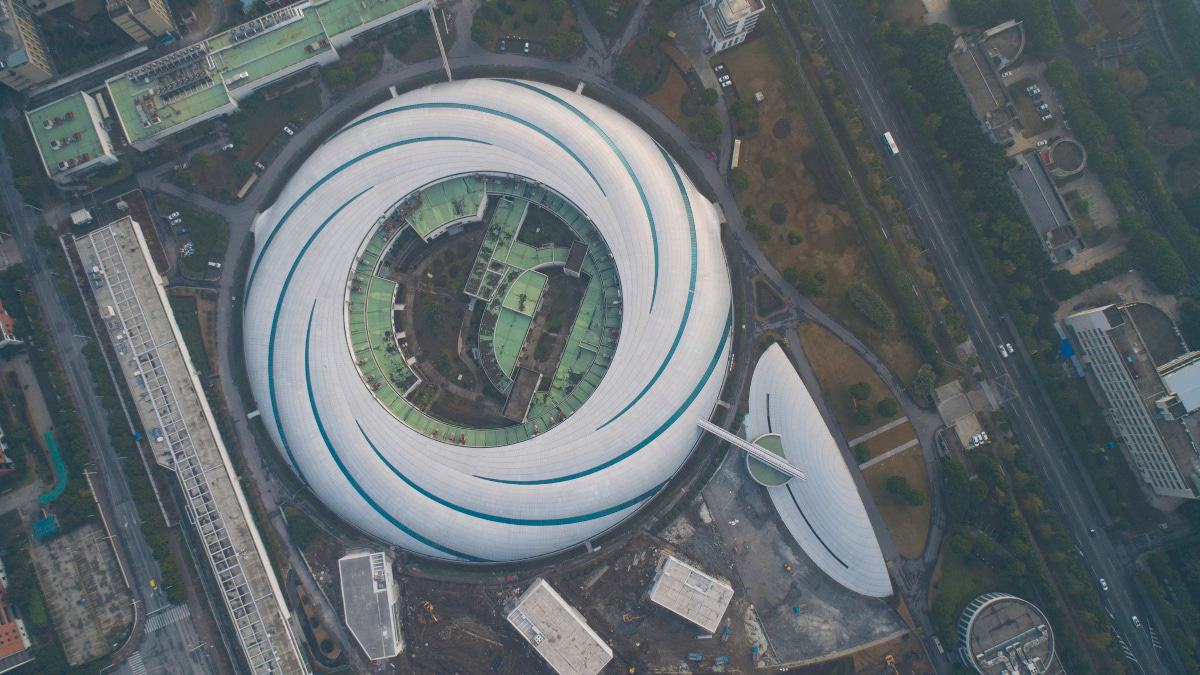
This Collection invites original research articles on the development and optimisation of synchrotron accelerator technologies.
Collection Overview
Scientific Reports has launched a Guest-Edited Collection on Synchrotron accelerator technologies.
Synchrotron accelerator technologies lie at the heart of timely research across physics, materials science, biology, and beyond. Continuous improvements in accelerator design, beam dynamics, and insertion devices have enabled unprecedented control over beam quality, brightness, and coherence. These advances are critical for pushing the frontiers of synchrotron light sources, enabling new experimental capabilities and enhancing the resolution and sensitivity of analytical techniques.
This will be a Collection of original research papers and will be open for submissions from all authors – on the condition that the manuscripts fall within the scope of the Collection and of Scientific Reports more generally. We are welcoming submissions until 16th April 2026.
Why is this Collection important?
"Synchrotron radiation facilities are important infrastructures for various disciplines of research, including crystallography and material science on the macroscopic level and the nanoscale. Synchrotron radiation is produced by electrons circulating within the storage ring at nearly the speed of light. Before that, the electrons have to be accelerated and later guided on their track along the ring. Because of the ring structure, the facilities serve many experiments simultaneously. The light is allocated to the best proposals via a peer-review system. The accelerator technology has developed over the last years dramatically. A recent highlight was the implementation of the multi-bent achromate technology, providing the most up-to-date and highest possible brilliance of light for experiments. However, the development of accelerator technology is still ongoing. It would be interesting to know more about current research projects in this field and we invite accelerator scientists to share their research with us by submitting respective articles."
- Dr. Ullrich Pietsch, Guest Editor
Why submit to a collection?
Collections like this one help promote high-quality science. They are led by Guest Editors, who are experts in their fields, and In-House Editors and are supported by a dedicated team of Commissioning Editors and Managing Editors at Springer Nature. Collection manuscripts typically see higher citations, downloads, and Altmetric scores and provide a one-stop-shop on a cutting-edge topic of interest.
Who is involved?
Guest Editors:
- María Valeria Blanco, Institute of Materials Science of Barcelona, Spain
- Ullrich Pietsch, University of Siegen, Germany
- Victor Smaluk, Brookhaven National Laboratory, USA
Internal Team:
- In-House Editor: Silvia Butera, Scientific Reports, UK
- Commissioning Editor: Robert Moran, Fully OA Brands, Springer Nature, UK
- Managing Editor: Rebecca Chan, Fully OA Brands, Springer Nature, UK
How can I submit my paper?
Visit the Collection page for more information on the Collection, and how to submit your article.
Follow the Topic
-
Scientific Reports

An open access journal publishing original research from across all areas of the natural sciences, psychology, medicine and engineering.
-
A Collection of original research articles on the development and optimisation of synchrotron accelerator technologies.
Related Collections
With Collections, you can get published faster and increase your visibility.
Obesity
Publishing Model: Hybrid
Deadline: Apr 24, 2026
Reproductive Health
Publishing Model: Hybrid
Deadline: Mar 30, 2026

Please sign in or register for FREE
If you are a registered user on Research Communities by Springer Nature, please sign in