Chiral Nano-enzymes: Harnessing Nature’s Handedness for Advanced Cancer Therapy
Published in Cell & Molecular Biology

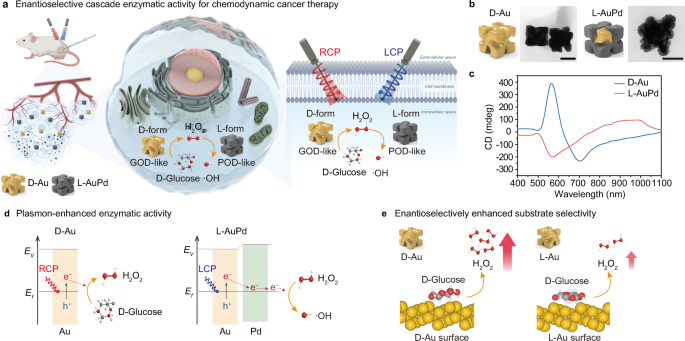

Breakthrough: Chiral Plasmonic Nanozymes
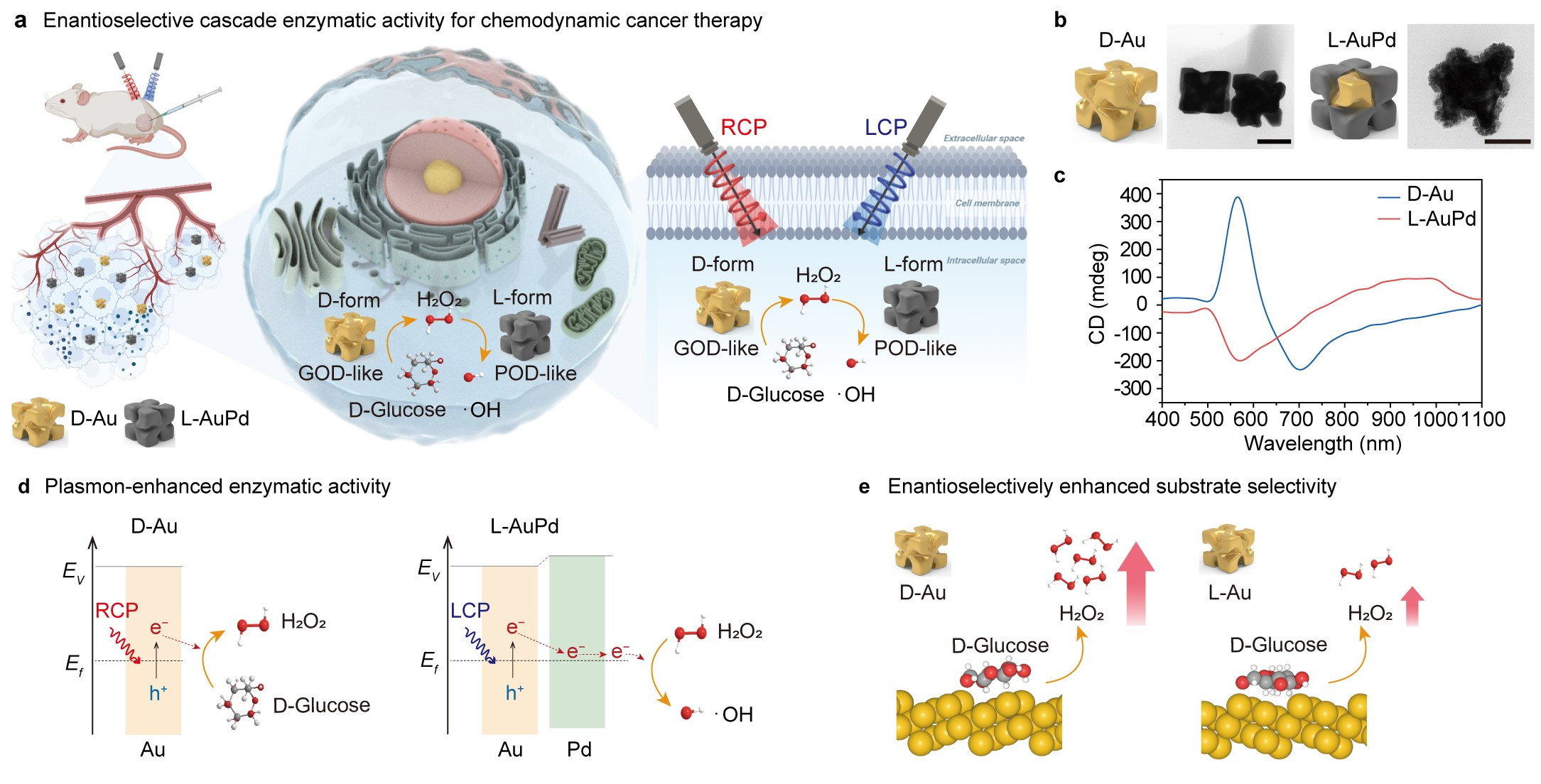
We developed chiral plasmonic nanozymes that integrate chirality into enzyme-mimicking nanoparticles, allowing them to interact with biological molecules like natural enzymes. D-Au (Right-handed gold nanoparticles) function like glucose oxidase (GOD), selectively binding to D-glucose to generate hydrogen peroxide (H₂O₂). L-AuPd (Left-handed gold-palladium hybrids) mimic peroxidase (POD), decomposing H₂O₂ into highly reactive hydroxyl radicals (∙OH) to destroy cancer cells.
These nanozymes are further activated by circularly polarized light (CPL) to enhance their catalytic performance: Right-handed CPL (RC) optimally excites D-Au, amplifying its GOD-like activity, while left-handed CPL (LC) activates L-AuPd, enhancing its POD-like efficiency.
By combining chirality-dependent substrate selectivity with light-controlled activation, this system significantly enhances reaction efficiency, reducing side effects and maximizing anti-cancer efficacy.
Key Benefits of Chiral Nanozymes in Cancer Therapy
- Enhanced Selectivity: D-Au selectively binds to D-glucose, ensuring more precise and efficient catalytic activity.
- Optimized Reaction Control: The sequence of GOD and POD reactions can be precisely regulated using light polarization, resulting in higher yields and fewer toxic byproducts.
- Improved Cancer Treatment: Mouse models demonstrated that tumor shrinkage was maximized with light-controlled chiral nanozymes, outperforming conventional non-chiral nanozymes.

Follow the Topic
-
Nature Communications
An open access, multidisciplinary journal dedicated to publishing high-quality research in all areas of the biological, health, physical, chemical and Earth sciences.

Related Collections
With Collections, you can get published faster and increase your visibility.
Women's Health
Publishing Model: Hybrid
Deadline: Ongoing
Tumor Microenvironment Crosstalk and Therapeutic Implications
Publishing Model: Hybrid
Deadline: Nov 02, 2026