Differences in Physical Activity Levels, Screen Time, and Body Mass Index and Their Associations with Oral Health in Schoolchildren in Mallorca
Published in Biomedical Research




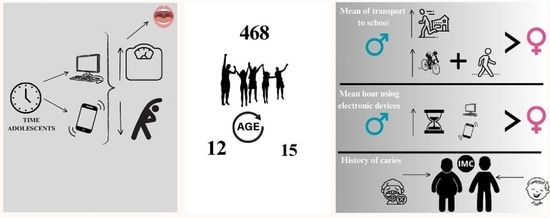

Health determinants, including lifestyles and living conditions, play an important role in an individual’s development. The adolescent years are particularly critical for the establishment of lifestyles, during which the reinforcement of certain childhood habits occurs, with the adoption of new ones learned through socialization scenarios . This behavior is conditioned by childhood experiences. Children can accumulate physical activity throughout the day through different behaviors, such as active transportation (e.g., walking or biking) to school, participation in sports or organized activities, and playing outdoors or indoors . However, it is estimated that, globally, the prevalence of sufficient physical activity in schoolchildren and adolescents is only 19.3% One element contributing to an unhealthy lifestyle is the rise in passive or motorized transportation for many daily excursions, particularly from home to school . Obesity is considered an important risk factor for non-communicable diseases, such as cardiovascular diseases, type 2 diabetes mellitus, musculoskeletal disorders, and somecancers (endometrium, breast, and colon) . Several studies relate screen use with obesity and oral health. A longer television viewing time is significantly and verifiably associated with a larger number of decayed teeth and a higher DMF (“decayed, missing, and filled”) .
This study aimed to analyze the gender differences in physical activity levels and screen time, as well as between screen use and the BMI. The analysis also included the examination of the caries history (DMFT levels) and its correlation with students’ BMI.
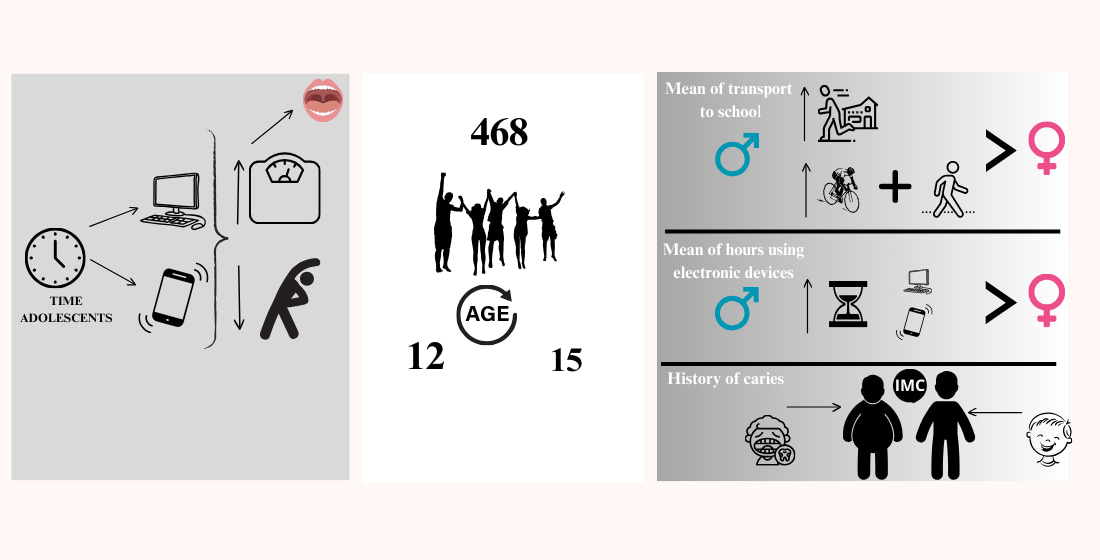
Results: Boys were more active (59.9%) than girls (40.1%) (p < 0.001) in terms of the means of transportation that they used to travel to school. It was observed that boys spent more mean hours playing outdoors than girls (boys: 1.38 °æ 0.04 vs. girls: 1.24 °æ 0.04; p = 0.040). The mean number of hours engaged in sports activities outside school was higher for boys than girls (boys: 2.22 °æ 0.06 vs. girls: 1.77 °æ 0.73; p ≤ 0.001). The mean number of hours spent using electronic devices during the weekend was higher in boys than girls (boys: 2.89 °æ 0.08 vs. girls 2.44 °æ 0.09; p ≤ 0.001). Children with a DMF > 0 had a higher mean BMI than those with a DMFT = 0 (DMFT > 0; 21.95 °æ4.80 vs. DMFT = 0; 20.77 °æ 3.67; p = 0.003).
Our data indicate that an increased number of hours spent in front of a computer correlates with a higher BMI among the schoolchildren studied. Sex seems to be a determining factor when it comes to engaging in active activities during the week and outside school hours. Caries is more frequent in children with a higher BMI. Further studies are needed to clarify the possible controversies found in the literature. Moreover, other variables, such as dietary and physical activity behaviors, could influence the studied variables.
Keywords: body mass index;

I work in the Department of Preventive Dentistry at the Adema University School (University of the Balearic Islands). I conduct research in dentistry and nutrition, associated with lifestyles.