Ecological Damage of the War in Ukraine
Published in Earth & Environment, Ecology & Evolution, and Law, Politics & International Studies


Aims and Challenges
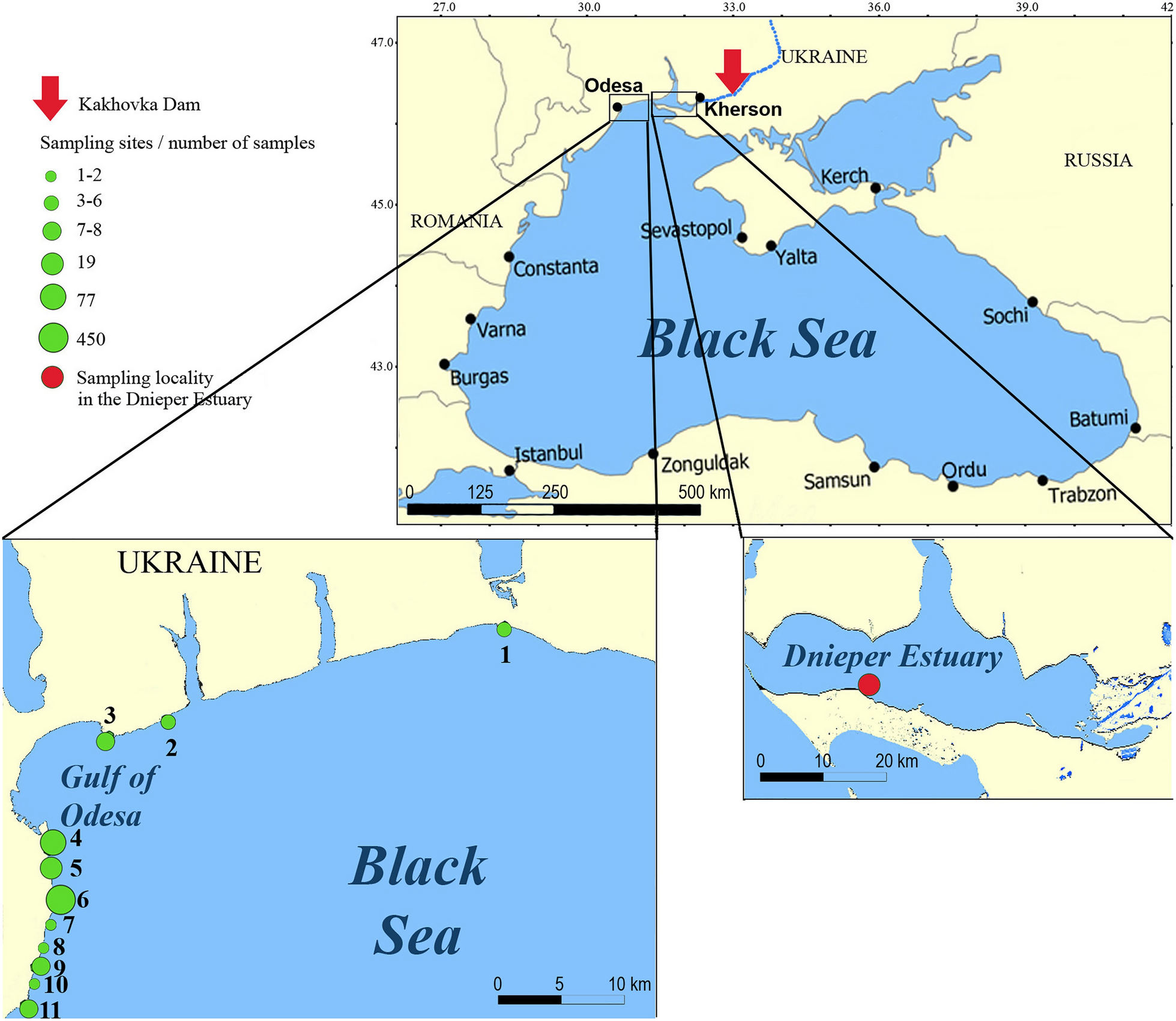
We aim to summarize and communicate findings on the ecological effects of the War, focusing on the aquatic biodiversity and habitats in the Black Sea region of Ukraine as little is known and published. Dr. Kvach and Dr. Stepien have been collaborating since 2002 on Black Sea aquatic biodiversity, including native and invasive species, and provide an evolutionary ecological and historical biogeographic perspective about this unique area and its biota and habitats. Field conditions in Ukraine have been hazardous for sampling, and one of our team died during the course of this study (Dr. Pavlo Tkachenko).
Our Approach
We analyze and compile data and results from studies conducted by scientists from the National Academy of Sciences of Ukraine, in relation to other work. We evaluate both negative and positive effects on the aquatic biota, species diversity, and their habitats from marine, estuarine and freshwaters. Our data include effects of oil spills, flooding, invasive species, pollutants, and habitat changes from the War, with sampling of plant, plankton, benthos, invertebrate, and fish communities before and after the Kakhovka Dam’s destruction on June 6 2023.
Key findings
Our results reveal a fascinating perspective of mixed findings:
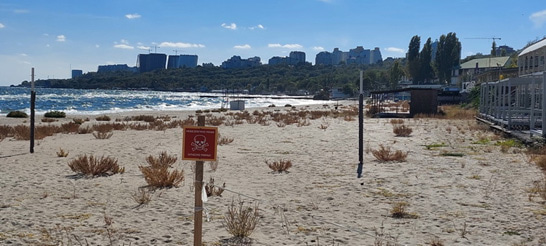
- Negative effects of the War include toxins and habitat damage from oil spills, shelling, mining, explosions, flooding, and fires; along with neglect for Protected Areas and protection of their species.
- Positive effects are reduced anthropogenic loads from less shipping, fishing, trawling, recreation, hydraulic engineering, construction, and tourism.
- The Kakhovka Dam’s destruction on June 6, 2023 has comprised the greatest ecological catastrophe to date. This caused extreme downstream flooding with freshwaters and pollutants that destroyed many populations and habitats (as well as houses and towns) resulting in permanent habitat and species assemblage changes to estuarine communities.
- However, some of the estuarine habitats and species have been replenishing, reverting to their historical biota characteristic of lower salinity regimes. Thus, the original riverine, marshland, and fishery nursery habitats and biological communities that existed prior to the Dam's construction in the 1960s have been returning.
The bigger picture
Since many of the native species evolved under conditions of broad salinity, temperature, and oxygen tolerances, the northern Black Sea ecosystem appears pre-adapted for ecological recovery and persistence. This may equate to ecological resilience during and after the War, and may accelerate species and habitat recovery. Our study is important in providing the baseline data for evaluating how this and other biological systems may be able to recover from pronounced disturbance.
Why this matters
Our study provides an important perspective and baseline data for future comparisons, in order to document species and habitat changes.
The path ahead
We hope that protection of species and habitats in the Northern Black Sea resumes in the future. This region is important in harboring many unique species and species assemblages, as well as fisheries communities. We plan to do further work and follow-up studies when it is again safe to sample.

I am an adjunct full professor at the Center for Global Change and Earth Observations at Michigan State University. My research focuses on the conservation genomics and genetics of marine and aquatic fish and invertebrate communities, especially invasive species and those threatened by anthropogenic changes. I am an elected fellow of the American Association for the Advancement of Science (AAAS) "For distinguished contributions to the fields of molecular evolutionary ecology and conservation genetics, particularly invasive and native populations, and mentorship of graduate and undergraduate students”. I also hold a lifetime honor appointment as Distinguished Professor of Ecology at the University of Toledo. I have published over 133 scientific papers and have given >297 research presentations focusing on molecular ecology, evolutionary genomics, population genetics, biogeography, and systematics and have headed many NSF, NOAA, EPA, SeaGrant, and USDA grants. Special research interests are community and species diversity comparisons, using genomic and bioinformatic analyses for evaluating planktonic and benthic communities and environmental (e) DNA across time and space, in relation to anthropogenic and natural fluctuations in chemical, physical, and biological patterns in marine, estuarine, and freshwater habitats. I serve as associate editor for the journals Ecological Processes and for Aquatic Invasions, and am on the editorial boards of the journals DNA, Environmental DNA, and Molecular Phylogenetics and Evolution.
Follow the Topic
-
Ecological Processes
This is is an international, peer-reviewed, open access journal devoted to quality publications in ecological studies with a focus on the underlying processes responsible for the dynamics and functions of ecological systems at multiple spatial and temporal scales.