Evaluation of measles elimination strategies in Dongola, Sudan: a surveillance and immunization converge analysis, 2018–2021
Published in Public Health




Behind the Paper: Tackling Measles in Dongola, Sudan — What Surveillance and Immunization Data Revealed
By Alhaj Saad Mohamed Ahmed Ali
Our research began with a fundamental question: Why do measles outbreaks still occur, even in areas where vaccination activities are regularly implemented?
We chose Dongola locality in Northern State, Sudan, as a case study to explore the interaction between immunization efforts and measles surveillance from 2018 to 2021.
Sudan has a long-standing Expanded Programme on Immunization (EPI), supplemented by periodic campaigns. Despite these efforts, sporadic measles outbreaks continued to be reported. This prompted us to examine available data more closely to understand where additional opportunities for strengthening measles control might exist.
Why Dongola?
Dongola is relatively well-resourced compared to other localities, with regular immunization activities and a functioning disease surveillance system. However, the recurrence of measles cases suggested there was value in taking a closer look at how routine immunization and surveillance data align—and how they could be used together to inform elimination strategies.
We used a convergence analysis approach, integrating data from both the immunization program and the national disease surveillance system. Our aim was not to critique existing efforts, but to identify areas where coordination and information use could be further enhanced
What Did We Find?
Our analysis yielded several key observations:
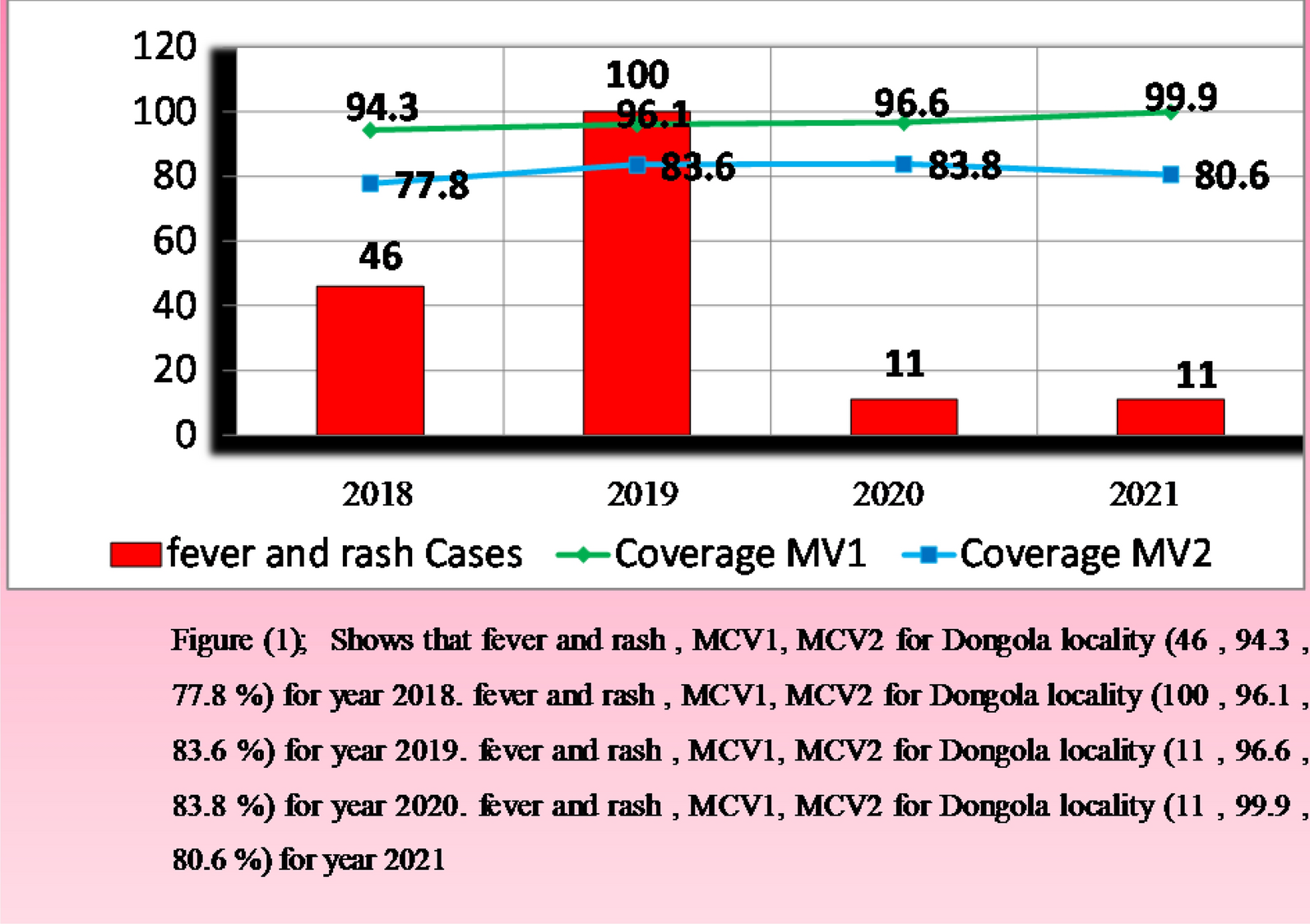
- In some years, measles cases were reported despite high administrative coverage rates, highlighting the importance of continuous follow-up to reach all target populations, particularly children who may not be fully vaccinated
- We noted the presence of “zero-dose” children—those who had not received their first dose of measles vaccine—indicating potential gaps in access or follow-up.
- Supplementary Immunization Activities (SIAs) were conducted periodically, and there may be opportunities to further align these with surveillance findings to ensure they reach the most at-risk populations.
- The sensitivity of the surveillance system appeared to vary slightly over the years, a natural challenge in many contexts, reinforcing the need for ongoing capacity building and support at the facility level.
Why This Matters
Measles remains a key indicator of immunization system performance. While great progress has been made, identifying and reaching unreached children is essential for achieving elimination goals.
This study underscores the value of using available data in a complementary way—not only to monitor progress, but also to inform targeted interventions and planning.
Behind the Numbers
At the heart of this study are the frontline health workers and surveillance officers who continue to carry out essential work under often challenging conditions. Their dedication to recording, reporting, and serving their communities forms the foundation of public health action. This research would not have been possible without their commitment.
Looking Ahead
We hope that this analysis contributes to ongoing efforts to strengthen the use of data in immunization and surveillance systems. By promoting integrated, data-driven decision-making, we believe we can take important steps toward measles elimination in Sudan and similar settings.
Read the full article here: https://doi.org/10.1186/s12982-025-00558-x

I am Alhaj Saad Mohamed Ahmed
Ali, a researcher in public health and
epidemiology. My work focuses on
disease outbreaks, health management in disasters, wars, and health emergencies.
Currently, I am working on infectious
diseases surveillance and assessing the
health needs of communities affected
by disasters and conflicts. I am keen on
advancing knowledge in these areas
through research and collaboration with
fellow researchers.
Follow the Topic
-
Discover Public Health
This is an open access journal publishing research from all fields relevant to public health.

Related Collections
With Collections, you can get published faster and increase your visibility.
The Economics of Longevity: Health Expenditure and Societal Implications for Public Health Systems
The relationship between health investment and life expectancy has long been a focal point in public health research and policy. As nations grapple with rising healthcare costs and varying health outcomes, understanding how financial allocations influence population health becomes increasingly critical. Numerous studies have illustrated that increased spending on health services often correlates with improvements in life expectancy; however, the complexities of this relationship are not fully understood. Factors such as socioeconomic status, healthcare accessibility, and the efficiency of health systems play significant roles in determining how investments translate into health outcomes.
At the national level, health investments primarily encompass government expenditure on healthcare systems, public health initiatives, and health infrastructure. Nations that allocate substantial resources toward healthcare often experience better health outcomes and increased life expectancy among their populations. For instance, countries with robust healthcare funding tend to provide more comprehensive services, including preventive care, chronic disease management, and health promotion programs, all of which contribute to enhanced population health. However, it is crucial to consider how these investments are distributed across different segments of the population. Inequities in health spending can exacerbate existing disparities, leading to significant differences in life expectancy among various demographic groups. Effective health investment strategies must address these disparities to ensure that improvements in life expectancy are equitable and inclusive.
The motivation for this Collection arises from the urgent need to bridge the gap between health expenditures and tangible improvements in life expectancy. Recent global health crises and ongoing disparities in health outcomes across different populations have underscored the necessity for a deeper exploration of how resource allocation affects health dynamics. This Collection seeks to provide a platform for researchers and practitioners to discuss empirical evidence, theoretical frameworks, and innovative approaches to understanding these critical interactions. By fostering dialogue around effective health investment strategies, we aim to contribute to the development of more equitable and efficient health systems worldwide.
The purpose of this Collection is to gather comprehensive research that elucidates the dynamics between health investment and life expectancy across diverse contexts. We welcome contributions that analyze historical trends, comparative studies, and policy evaluations, as well as those that explore the implications of financial investments on health equity. By highlighting interdisciplinary perspectives and fostering collaboration, this Collection aspires to advance the discourse on optimizing health investments for improved population health outcomes.
Topics of interest include, but are not limited to:
- Economic evaluations of health interventions
- Policy impacts on health spending and life expectancy
- Health equity and investment disparities
- Longitudinal studies on health expenditures and population health
This Collection supports and amplifies research related to SDG 3.
Keywords: health expenditure; healthcare economics; life expectancy; economic evaluation; population health; health investment; health policy
Publishing Model: Open Access
Deadline: Dec 31, 2026
Digital Frontiers in Public Health: Data-driven Solutions and Technologies for Efficiency, Effectiveness, and Equity
In recent years, the landscape of public health has been transformed by unprecedented access to high-quality data, advances in data storage and processing, and a growing willingness to share information across jurisdictions. The global response to the COVID-19 pandemic exemplified how coordinated data use and technological innovation can accelerate decision-making, enhance surveillance, and save lives. These developments mark a new era in which the application of modern data analytics in evidence-driven public health practices is not only possible but essential.
Building on this momentum, contemporary innovations are contributing to significant improvements in the three Es of public health: efficiency, effectiveness, and equity. Improved efficiency enables resources to be allocated and managed in a manner that generates the maximum attainable outputs; enhanced effectiveness ensures that public health policies, interventions, and practices achieve the expected health outcomes; and strengthened equity promotes fair access to healthcare and public health services across all populations. Together, these dimensions reflect the evolving priorities and capabilities of modern public health systems.
This Collection, “Digital Frontiers in Public Health: Data-driven Solutions and Technologies for Efficiency, Effectiveness, and Equity,” invites contributions that explore these themes through empirical studies, methodological advancements, case studies, and policy analyses. We seek manuscripts that highlight innovative data applications, cross-sector collaborations, digital health initiatives, and strategies that enhance equity through technology and data integration, as well as collaborative public health practices.
Topics of interest include, but are not limited to:
- Applications of novel data linkage and analytics methods in public health
- The role of participation and co-creation in addressing public health issues
- Digital and technological innovations in public health
- Complete or partial assessments of triple Es in public health
- Economic evaluations of public health interventions
By showcasing diverse approaches from around the world, this Collection aims to provide a comprehensive overview of how data-driven innovations are reshaping public health practice today, and in the future. Researchers, practitioners, and policymakers are encouraged to share their insights and experiences to contribute to this critical dialogue on the future of public health.
This Collection supports and amplifies research related to SDG 3.
Keywords: digital applications; data sharing; data infrastructure; economic evaluations; health equity; public health; policy analysis; health informatics
Publishing Model: Open Access
Deadline: Sep 30, 2026