Facing the challenges to secure a sustainable future for Europe's Industry 5.0
Published in Social Sciences, Earth & Environment, and Neuroscience



Europe's pursuit of a sustainable and technologically advanced future hinges significantly on access to rare earth elements (REEs), crucial for numerous industries and modern technologies. However, the continent's access to these vital materials is limited, with the European Union (EU) heavily reliant on imports, predominantly from China.
To mitigate this dependency and the associated risks of supply disruptions, the EU has initiated several strategic measures. Foremost among these is the Critical Raw Materials Act, adopted in March 2024, which aims to diversify and bolster the EU’s supply of critical raw materials. This legislation promotes the circular economy through enhanced recycling and supports innovation in resource efficiency and the development of alternatives.
Complementing this legislative effort is the European Raw Materials Alliance (ERMA), which has articulated an Action Plan to secure a sustainable supply of REEs essential for Europe's carbon-neutral ambitions. This plan underscores the importance of REEs in achieving a greener future.
Moreover, the EU is focused on boosting local production of clean technology components, such as batteries, solar panels, and permanent magnets. This move is part of a broader strategy to diminish reliance on external sources and foster a self-sufficient supply chain within Europe.
These initiatives are pivotal as Europe embarks on its green transition, exemplified by the REPowerEU plan and the impending 2035 ban on internal combustion engines. Ensuring a steady supply of REEs is critical for the EU’s vision of a green, digital economy. However, the challenges this presents for the emerging Industry 5.0 in Europe are manifold.
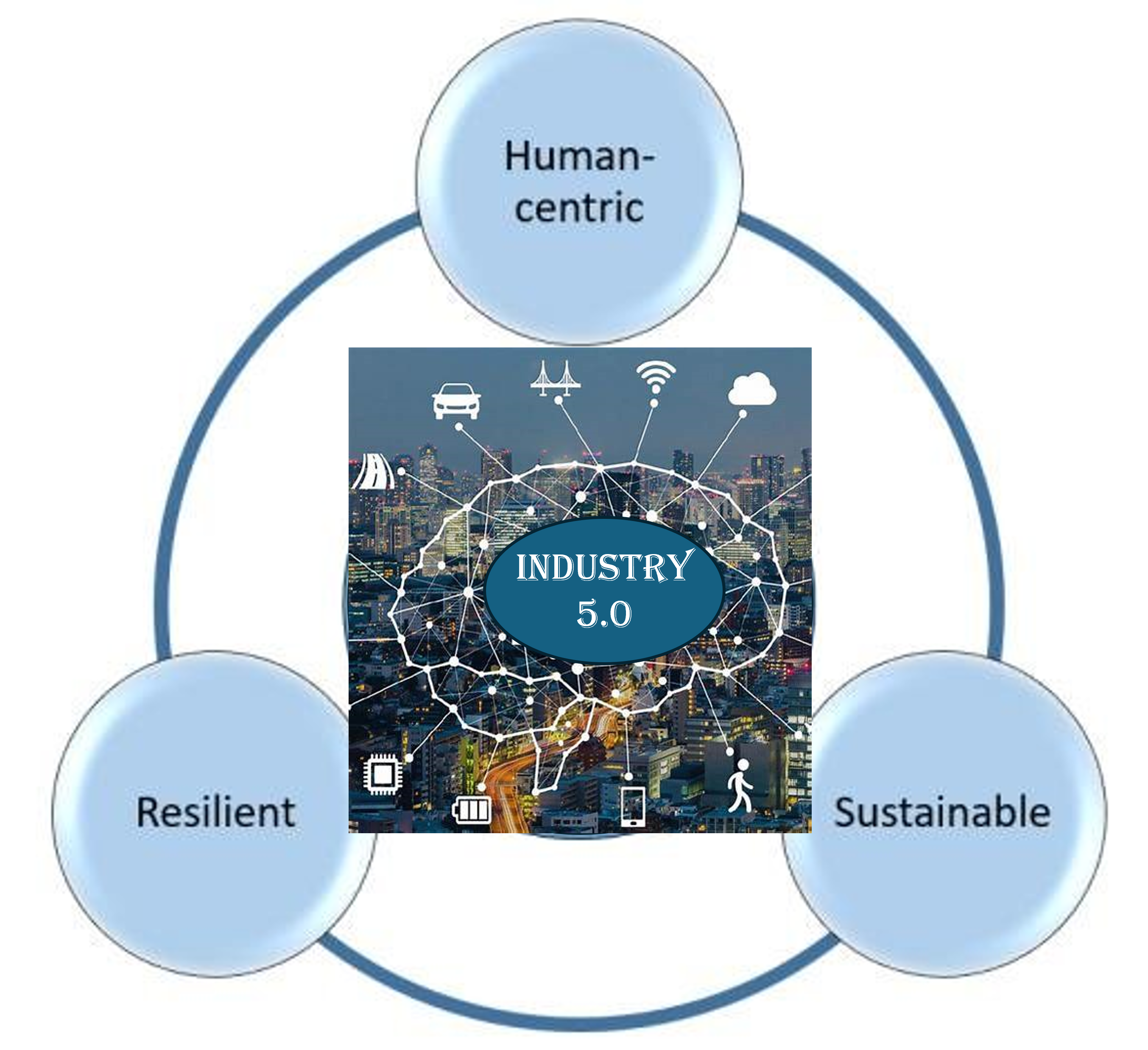
Industry 5.0 is envisioned as a more sustainable, resilient, and human-centric evolution of industrial practice, built on the digital advancements of Industry 4.0. Yet, achieving this vision in Europe is fraught with challenges.
Digital Transformation brings unprecedented opportunities but requires substantial investments in infrastructure, cybersecurity, and workforce upskilling to manage advanced technologies like AI and robotics. Additionally, the digitization of public services across Europe is hampered by incompatible software systems, often supplied by non-European companies, complicating cohesive digital integration.
Sustainability and Resource Scarcity towards a circular economy and sustainable production are impeded by resource scarcity and the demand for new, sustainable processes and materials. The shift requires not just innovation but also a fundamental rethinking of production methodologies.
Supply Chain Resilience due to recent global shocks, such as the COVID-19 pandemic and geopolitical tensions, has starkly exposed the vulnerabilities in global supply chains. Building resilient supply chains while reducing dependency on imports is a critical, yet formidable, task for Europe.
Regulatory Framework is crucial to creating a stable environment that fosters innovation while safeguarding workers and consumers. Regulatory frameworks must be flexible enough to accommodate rapid technological advancements while ensuring ethical standards and protections.
Economic and Social Stability requires a holistic approach that extends beyond traditional industrial practices. Industry 5.0 is not just about technological advancement; it must also address broader societal issues like climate change, biodiversity loss, and social stability.
Human-Centric Approach central to Industry 5.0 is the well-being of workers, necessitating a rethinking of workplace design, ergonomics, and the role of human labor in an increasingly automated industry. This approach seeks to harmonize human and machine collaboration in a way that enhances productivity while prioritizing human health and satisfaction.
Research and Innovation is pivotal to the transition to a sustainable, human-centric, and resilient European industry. Substantial investment in research and innovation demands coordinated efforts across multiple sectors and disciplines to drive the necessary technological advancements.
The future of Industry 5.0 depends on attracting top talent, particularly young professionals driven by purposeful careers. Creating attractive working conditions and promising career prospects is essential to draw and retain the best minds in the industry. Addressing these challenges is vital for Europe to achieve its Industry 5.0 goals. The vision of a more sustainable, resilient, and human-centric industrial landscape is within reach, but it demands concerted effort and strategic planning. Europe’s journey towards Industry 5.0 is a complex yet imperative endeavor, crucial for maintaining its competitive edge in the global economy while fostering a sustainable future. Additional information can be found in the article "Industry 5.0 and SDG 9: a symbiotic dance towards sustainable transformation".
Reference:
- Costa, E. (2024). Industry 5.0 and SDG 9: a symbiotic dance towards sustainable transformation. Sustainable Earth Reviews, 7(1), 4.
- ERMA (2024). New Roadmap for a Value Chain on Raw Materials, The European Raw Materials Alliance, retrieved on Jun 9, 2024 at https://erma.eu/
- European Commission (2024). Industry 5.0, Research and innovation, retrieved on Jun 9, 2024 at https://research-and-innovation.ec.europa.eu/research-area/industrial-research-and-innovation/industry-50_en
- European Commission (2024). Industry 5.0: Towards more sustainable, resilient and human-centric industry, Research and innovation, retrieved on Jun 9, 2024 at https://research-and-innovation.ec.europa.eu/news/all-research-and-innovation-news/industry-50-towards-more-sustainable-resilient-and-human-centric-industry-2021-01-07_en
- European Commission (2024). European Critical Raw Materials Act: Sustainable supply of raw materials retrieved on Jun 9, 2024 at https://commission.europa.eu/strategy-and-policy/priorities-2019-2024/european-green-deal/green-deal-industrial-plan/european-critical-raw-materials-act_en
- European Commission (2024). REPowerEU: Afordable, Secure and Sustainable Energy for Europe, retrieved on Jun 9, 2024 at https://commission.europa.eu/strategy-and-policy/priorities-2019-2024/european-green-deal/repowereu-affordable-secure-and-sustainable-energy-europe_en
- Khan, M., Haleem, A., & Javaid, M. (2023). Changes and improvements in Industry 5.0: A strategic approach to overcome the challenges of Industry 4.0. Green Technologies and Sustainability, 1(2), 100020.
- Leng, J., Sha, W., Wang, B., Zheng, P., Zhuang, C., Liu, Q., ... & Wang, L. (2022). Industry 5.0: Prospect and retrospect. Journal of Manufacturing Systems, 65, 279-295.
- Valette, E., El-Haouzi, H. B., & Demesure, G. (2023). Industry 5.0 and its technologies: A systematic literature review upon the human place into IoT-and CPS-based industrial systems. Computers & Industrial Engineering, 184, 109426.

Evaldo Costa, (Jose Evaldo Geraldo Costa), embodies a rich tapestry of expertise as a professor and interdisciplinary postdoctoral researcher. With a solid foundation in Environmental Sciences and Environmental Engineering, he holds a dual Ph.D. in Climate Change and Sustainable Development Policies from NOVA University of Lisbon, Portugal, and a Ph.D. in Business Economics from Vrije Universiteit Brussel, Brussels, Belgium. At the core of Evaldo's professional journey lies a dedicated focus on sustainable transition pathways. His research delves into the intricacies of facilitating the decarbonization of the economy. This involves reinforcing renewable energy sources (RES), electric mobility, leveraging advanced industrial technologies, and orchestrating sustainable mechanisms and innovation processes. The ultimate goal is to expedite the decentralization, digitization, and democratization of the energy system. Evaldo's academic repertoire is marked by a diverse array of theories explored and a versatile toolkit of methods and techniques applied. His prior research has delved into renewable sources such as solar and wind, electric mobility, and industrial considerations. This encompasses nuanced aspects like business model innovation, CO2 emissions inventory, energy balance assessments, and the formulation of public policies to overcome socio-technical barriers. His international footprint is substantial, engaging in collaborative research endeavors across North America (USA), Europe (Belgium, Ireland, Portugal, United Kingdom), and South America (Brazil). This global perspective is further accentuated by his publications in top/peer-reviewed journals and presentations at international conferences spanning Europe, North America, South America, and Africa. Evaldo is not only a researcher but also a vital contributor to the academic community. His role as a European Commission Industry 5.0 project member, and a reviewer for esteemed journals, membership in a Ph.D. supervisory board, and the cultivation of a robust international scientific relationship network showcase his commitment to scholarly exchange. Before transitioning to the research domain, Evaldo's journey encompassed several years as a prominent role as an international automotive industry leader and consultant, and a invited university professor. This dual perspective uniquely positions him to bridge the gap between academia and practical industry insights. In every facet of his career, Evaldo Costa remains steadfast in his hope and commitment to contributing to a more sustainable and better world.
Follow the Topic

Introducing the Palgrave Macmillan Campaign for the Humanities
At Palgrave Macmillan we publish cutting-edge humanities research that has real-world impact. This research community brings together the voices of our authors and editorial team to highlight and publicize the value of the humanities and humanities research in our world today.
Continue reading announcementRelated Collections
With Collections, you can get published faster and increase your visibility.
Advanced Renewable Energy Systems for a Climate-Resilient Future
Selected Extended Conference Papers from REST 2026 Conference
The global transition toward sustainable and low-carbon energy systems has accelerated significantly in response to climate change, energy security concerns, and international decarbonization commitments. Renewable energy technologies are now central to achieving the United Nations Sustainable Development Goals (SDGs), particularly SDG 7 (Affordable and Clean Energy) and SDG 13 (Climate Action). However, increasing penetration of renewable energy sources introduces major technical, environmental, operational, and resilience challenges that require interdisciplinary scientific solutions.
Recent advances in renewable technologies, smart conversion systems, energy storage, power electronics, hydropower modernization, distributed energy integration, and hybrid renewable systems are reshaping the future energy landscape. Simultaneously, climate change impacts on renewable energy reliability, especially hydropower resilience and grid stability, have become critical research priorities worldwide.
This Special Issue aims to provide a comprehensive platform for cutting-edge review articles, analyses, perspectives, and research syntheses addressing emerging developments in renewable energy technologies and sustainable power systems. The issue will particularly highlight selected high-quality contributions originating from the 3rd International Conference on Renewable Energies and Smart Technologies (02–04 September 2026, Polytechnic University of Tirana, Faculty of Electrical Engineering, Tirana, Albania), while remaining fully open to external submissions from the broader international scientific community.
The Special Issue seeks to bridge engineering innovation, sustainability science, environmental assessment, and energy policy to support resilient and intelligent renewable energy transitions.
Scope of the Special Issue
Topics of interest include, but are not limited to:
- Wind energy systems (onshore, offshore, floating, and airborne)
- Solar photovoltaic systems (grid-connected and off-grid)
- Floating solar PV and hybrid hydro-solar technologies
- Hydropower sustainability and modernization
- Small-scale and environmentally friendly hydropower turbines
- Pumped-storage hydropower systems
- Climate change impacts on hydropower resilience and production
- Retrofitting aging hydropower infrastructure
- Marine and geothermal renewable energy systems
- Bioenergy technologies and sustainable fuels
- Hydrogen and synthetic fuel systems
- Renewable energy storage technologies
- Battery systems and smart energy management
- Power electronics and advanced conversion technologies
- Multi-terminal and point-to-point HVDC systems
- Integration of Distributed Energy Resources (DERs)
- Smart grids and intelligent renewable energy management
- Artificial intelligence and optimization in renewable energy systems
- Life cycle assessment (LCA) of renewable energy technologies
- Environmental impacts and sustainability assessment of RES
- Innovative materials for renewable energy applications
- Resilient renewable energy systems under climate change
- Renewable energy policy, planning, and sustainability frameworks
This Collection supports and amplifies research related to SDG 7 Affordable and clean energy & SDG 13 Climate actions.
All submissions in this collection undergo the journal’s standard peer review process. Similarly, all manuscripts authored by a Guest Editor(s) will be handled by the Editor-in-Chief. As an open access publication, this journal levies an article processing fee (details here). We recognize that many key stakeholders may not have access to such resources and are committed to supporting participation in this issue wherever resources are a barrier. For more information about what support may be available, please visit OA funding and support, or email OAfundingpolicy@springernature.com or the Editor-in-Chief.
Publishing Model: Open Access
Deadline: May 04, 2027
A Future We Choose: Transforming Systems for a Stable Climate, Healthy Nature, and a Pollution-Free Planet
This collection is inspired by the 2025 GEO-7 report.
The Global Environment Outlook – Seventh Edition (GEO-7) is the most comprehensive scientific assessment of the global environment ever undertaken. Produced by 287 multidisciplinary scientists from 82 countries under the auspices of the United Nations Environment Programme, GEO-7 synthesizes the best available evidence on the state of the planet and the consequences of current development pathways. It concludes that without rapid and integrated action, climate change, biodiversity loss, land degradation, desertification, and pollution will intensify, imposing catastrophic costs on people, ecosystems, and economies worldwide. At the same time, GEO-7 demonstrates that investing in environmental sustainability can unlock trillions of dollars in economic benefits, avoid millions of premature deaths, and lift hundreds of millions of people out of poverty in the coming decades
Crucially, GEO-7 reframes the global environmental crisis as a choice: between a business-as-usual trajectory that entrenches risk and inequality, and transformative pathways that reshape economic, social, and environmental systems to secure long-term human and planetary well-being.
This thematic collection invites interdisciplinary scholarship that critically examines, advances, and operationalizes the transformative pathways articulated in GEO-7. We particularly welcome contributions that move beyond siloed approaches to explore integrated, whole-of-society and whole-of-government solutions.
This collection seeks to advance theoretical, empirical, and practice-based insights into how societies can transition toward a stable climate, healthy ecosystems, and a pollution-free planet. Contributions should engage with the systemic nature of environmental crises and foreground pathways for transformation across interconnected domains of economy, energy, food, materials, land, and governance.
Submissions may address (but are not limited to):
Key Themes
1. Transforming Economic and Financial Systems
- Moving beyond GDP toward inclusive wealth, well-being, and natural capital accounting
- Valuation of environmental externalities and redesign of fiscal and macroeconomic policy
- Reforming subsidies, incentives, and taxation to support sustainability transitions
- Mobilizing and aligning private finance for climate and nature-positive outcomes
2. Circular Materials and Waste Systems
- Circular economy design, governance, and global trade implications
- Resource efficiency, material demand reduction, and regenerative business models
- Plastic pollution, toxic exposures, and waste governance innovations
- Social, behavioural, and cultural shifts toward circular consumption
3. Energy System Transformation
- Decarbonization pathways and renewable energy transitions
- Energy access, energy poverty, and just transitions
- Critical minerals, supply chains, and environmental justice
- Demand-side management and energy efficiency strategies
4. Sustainable and Resilient Food Systems
- Healthy and sustainable diets and nutrition transitions
- Agricultural resilience, land degradation, and soil restoration
- Food loss and waste reduction
- Novel foods, alternative proteins, and food system innovation
5. Nature, Biodiversity, and Land Restoration
- Biodiversity conservation and ecosystem restoration at scale
- Nature-based solutions for climate mitigation and adaptation
- Land degradation neutrality and desertification responses
- Building resilience through natural capital regeneration
6. Pollution, Health, and Environmental Risk
- Air, water, and chemical pollution and public health impacts
- Environmental risk assessment and prevention strategies
- Integrated approaches to pollution reduction across sectors
7. Governance, Cultural Heritage, Knowledge Systems, and Just Transitions
- Whole-of-government and whole-of-society governance models
- Policy coherence across climate, biodiversity, health, and development agendas
- Indigenous Knowledge and Local Knowledge in environmental governance
- Equity, justice, and participation in sustainability transformations
- Cultural heritage risk and resilience.
Types of Contributions
This is an open access collection.
We welcome a broad range of article types, including:
- Policy guidelines
- Reviews and systematic reviews
- Analysis
- Debates and Perspectives
- Interdisciplinary syntheses
- Case studies and comparative analyses
- Conceptual and theoretical contributions
- Practice-oriented and co-produced research
Submissions from diverse disciplinary perspectives and world regions are strongly encouraged.
Why This Collection Matters
GEO-7 makes clear that the cost of inaction far exceeds the cost of transformation, and that the benefits of integrated environmental action are both economically and socially profound. Yet translating global assessments into actionable knowledge remains a critical challenge. This collection aims to bridge that gap by advancing scholarship that supports decision-makers, practitioners, and communities in co-designing and implementing solutions commensurate with the scale and urgency of the crisis
Submission Information
Manuscripts should be prepared according to the journal’s author guidelines and submitted via the online submission system. When submitting, please select this thematic collection and indicate how your contribution engages with the transformative pathways highlighted in GEO-7.
Full APC waivers are available via the handling editors for open access publication without fees. Please contact frank.koorevaar@springer.com for more information.
This Collection supports and amplifies research related to SDG 13, Climate actions.
All submissions in this collection undergo the journal’s standard peer review process. Similarly, all manuscripts authored by a Guest Editor(s) will be handled by the Editor-in-Chief. As an open access publication, this journal levies an article processing fee (details here). We recognize that many key stakeholders may not have access to such resources and are committed to supporting participation in this issue wherever resources are a barrier. For more information about what support may be available, please visit OA funding and support, or email OAfundingpolicy@springernature.com or the Editor-in-Chief.
Publishing Model: Open Access
Deadline: Dec 18, 2026