Global Creative Ecosystems: A Critical Understanding of Sustainable Creative and Cultural Production
Published in Social Sciences, Ecology & Evolution, and Arts & Humanities






In 2021, Abu Dhabi successfully applied to the UNESCO Creative Cities Network (UCCN) in the Music creative field. The extensive collective work behind this application led to the publication of a qualitative deep-dive report entitled “Performing Arts Ecosystem: Networks, Inclusivity, Sustainability.”
Published as part of the MENA region’s pioneering culture research and evidence-based policymaking CultureSTATS-AD initiative implemented in 2020, the report later inspired a peer-reviewed academic chapter in the book Global Creative Ecosystems: A Critical Understanding of Sustainable Creative and Cultural Production (2023), edited by Tarek E. Virani, who invited us to contribute to this volume articulating and underpinning examples of sustainable growth and development in cultural production.
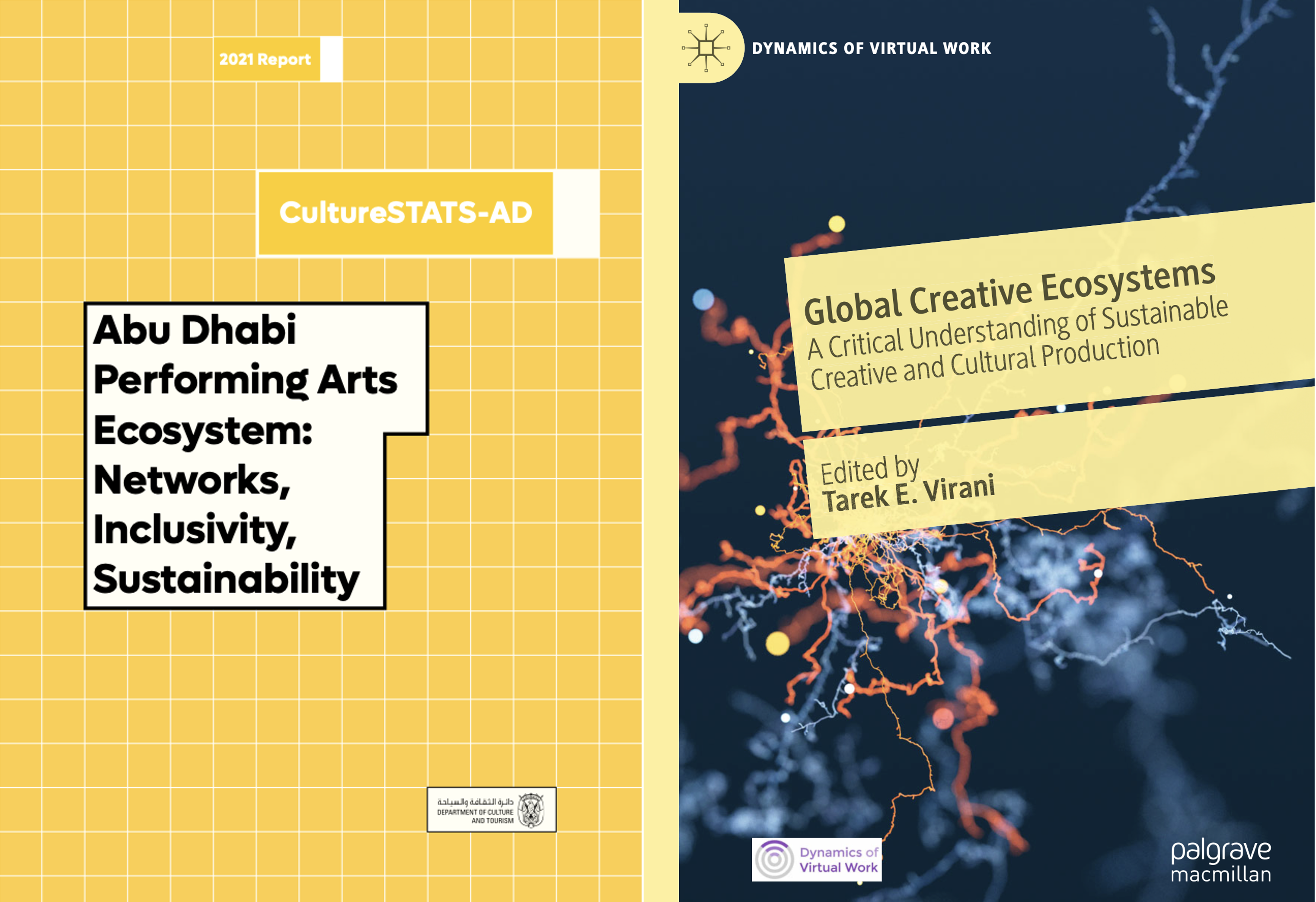
Photo 1: Abu Dhabi Performing Arts Ecosystem: Networks, Inclusivity, Sustainability Report (2021) and Global Creative Ecosystems: A Critical Understanding of Sustainable Creative and Cultural Production Volume (2023)
The present blog entry provides an overview of the chapter “The Performing Arts Ecosystem in Abu Dhabi: Sustainability, Resilience, and Local Capacity Building,” which was presented to students as part of New York University Abu Dhabi’s Community-Based Learning (CBL) courses in January 2026.
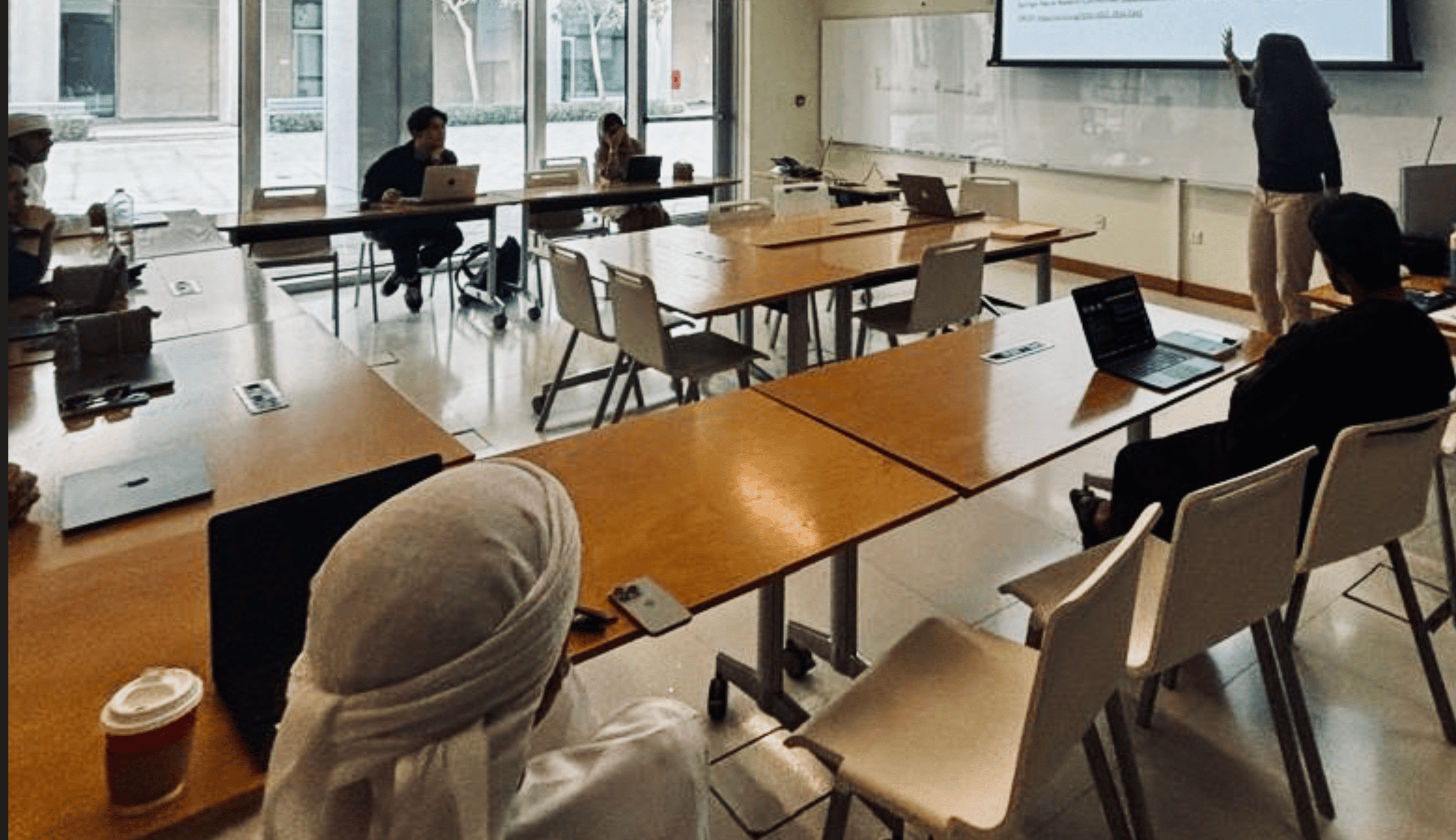
Photo 2: Session delivered as part of New York University Abu Dhabi’s Community-Based Learning (CBL) courses, January 2026.
The Performing Arts Ecosystem in Abu Dhabi: Sustainability, Resilience, and Local Capacity Building
Recently reflected in 2025 UNESCO Framework for Cultural Statistics, ecosystem approach moves beyond earlier frameworks focused on cultural industries, clusters, or creative economies by recognising the importance of networks, intermediaries, institutions, and relationships that sustain cultural production over time. This perspective allows cultural activity to be understood as a whole system rather than as isolated sectors or industries and highlights how cultural value is shaped by interactions between public policy, market dynamics, and locally embedded practices.
Cultural and creative ecosystems are conditioned by a combination of individual, market-driven dynamics and collective, state-driven structures, with their sustainability depending on how these different logics interact at the local level. Cultural institutions play a central role as intermediaries, connecting education, creation, and funding while enabling resilient and sustainable cultural development through meso- and macro-level coordination. At the same time, the cultural and creative ecosystems rely on dispersed networks of small and micro-enterprises and self-employed practitioners, whose project-based organisation reflects uncertainty and risk but also generates informal knowledge flows and forms of resilience.
Focusing on the performing arts in Abu Dhabi, the research shifts attention from consumption and attraction-led models of urban development to the question of how cultural production systems emerge, stabilise, and become rooted in place. It applies an evidence-based, qualitative approach to identify key ecosystem intermediaries and proposes a framework for assessing cultural sustainability by articulating local dynamics within broader ecosystem theory.
Methodological Approach
The research examines Abu Dhabi’s performing arts ecosystem-music, dance, and theatre-through 35 qualitative interviews . While the music sector emerges as the most extensive, followed by theatre and then dance, the study treats these sub-sectors as interdependent, with many dynamics cutting across them. Using discourse and pragmatic analysis, the research explores how cultural professionals interpret shared challenges differently depending on context, position, and experience. Issues such as infrastructure gaps may be seen simultaneously as weaknesses, opportunities, or threats, revealing multiple, coexisting logics within the ecosystem.
These perspectives are clustered into three contextual dimensions: state-driven, market- and community-led, and locally embedded dynamics:
1/ Group A: Contextual dimensions mainly related to the top-down, macro-level, state-driven type of ecosystem intermediaries (e.g., intellectual property regulations and Abu Dhabi–based entities related to this field).
2/ Group B: Contextual dimensions predominantly related to the auto-regulated, market-driven, community-supported type of ecosystem intermediaries (e.g., small businesses founded by artists to support local music production).
3/ Group C: Contextual dimensions primarily related to locally embedded variables that particularise Abu Dhabi and that also become ecosystem intermediaries (e.g., the relatively recent embedding of theatre networks at the local level and emerging structures and networks).
By interconnecting interview insights with ecosystem theory, the study develops an inductive framework to identify key intermediaries and assess cultural capacity, offering a contextual, evidence-based approach to understanding the sustainability of Abu Dhabi’s performing arts ecosystem.
Table 1 below illustrates this approach in more detail.
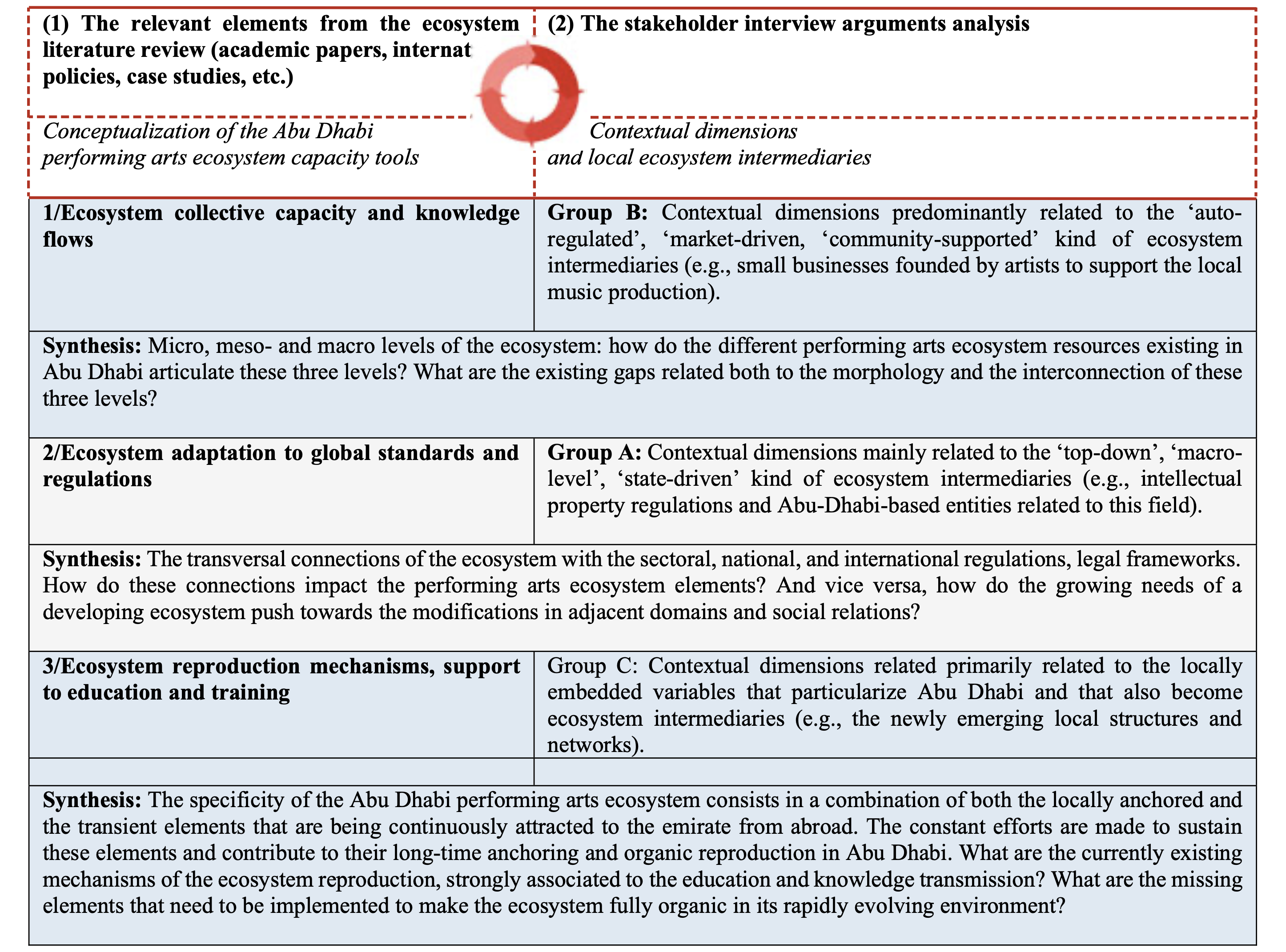
Table 1: Interconnecting the identified Abu Dhabi performing arts ecosystem intermediaries and the relevant elements of knowledge on the ecosystems
Key analytical takeaways
- Understanding performing arts as a locally embedded ecosystem provides a more robust foundation for cultural policy and capacity building than sectoral or purely economic approaches.
- This research shows that sustainable cultural production depends on resilient intermediaries - such as cultural institutions, education systems, regulatory frameworks, and community networks - that connect artists, organisations, and audiences.
- These intermediaries operate across multiple levels, combining state-driven structures with market-based and grassroots initiatives.
- The analysis strongly underlines the importance of context - including social, spatial, historical, and temporal factors - that must be considered to understand, regulate, and develop local capacities.
- It further highlights the need to balance top-down policy support with bottom-up creative practices, strengthen meso-level relationships, and invest in education, training, and regulatory coherence. Creative work needs to be further recognised as work; its progressive inclusion within policy and regulatory frameworks requires advanced approaches that go beyond GDP-centric metrics.
Core Reference:
Department of Culture and Tourism – Abu Dhabi. (2021). Abu Dhabi Performing Arts Ecosystem: Networks, Inclusivity, Sustainability Report. URL: https://zenodo.org/records/10404220

My research examines how public institutions can make better strategic decisions by integrating evidence, expertise, organisational knowledge, human judgement, and emerging technologies.
Since 2019, I have led the development of CultureSTATS-AD, the MENA region's first government-led cultural evidence programme. Developed with institutional partners, it supports cultural policy, strategic planning, resource allocation, sector development, and investment across Abu Dhabi's cultural ecosystem.
This experience raises a broader question: how can institutions evaluate different forms of knowledge, balance competing priorities, and make decisions that are transparent, implementable, and aligned with long-term objectives?
To address this question, I am developing Institutional Intelligence as a practical framework for understanding institutional decision-making. It examines how organisations generate and interpret evidence, mobilise expertise, exercise judgement, and translate knowledge into action while operating within political, administrative, financial, and regulatory constraints.
Through CultureSTATS-AD, I have led the development of Abu Dhabi's cultural evidence infrastructure, including metrics supporting the development of culture satellite account, heritage policy, and foundational sector datasets. I also contribute to working and advisory groups at the OECD, UNESCO, IFACCA, ENCATC, and the World Cities Culture Forum (WCCF).
My current research explores how stronger institutional capabilities can improve the quality, accountability, and strategic value of public sector decision-making.
I hold a PhD from the École des Hautes Études en Sciences Sociales (EHESS) and have taught in France at the University of Avignon and in India at the Indian Institute of Management Rohtak (IIM Rohtak).
I write on evidence-informed governance, institutional decision-making, and cultural policy for the World Economic Forum, OECD Cogito, and WeiyangX.
🔗 LinkedIn: Dr. Elena Raevskikh on LinkedIn
🎓 Academia.edu: Elena Raevskikh on Academia.edu
🆔 ORCID: ORCID Profile (0000-0002-2836-0345)
Follow the Topic
-
Palgrave Macmillan
Palgrave Macmillan is a world-class publisher of books and journals with more than 175 years’ experience in the Humanities and Social Sciences.