Highlights from Mathematics, Physical and Applied Sciences Communities
Published in Astronomy, Earth & Environment, and Materials




Across October and November, authors on the Research Communities continued to explore complex questions - from the depths of the seafloor to the skies above us. Authors shared breakthroughs that challenge how we observe space, understand our planet, and even listen for quakes on distant worlds.
This roundup showcases work on satellite crowding threatening cosmic clarity, balloon-borne seismology opening new planetary frontiers, hidden carbon reservoirs below the ocean floor, nanoscale “water walking,” and digital fault mapping that rewrites how Greece understands seismic risk. Together, these Behind the Paper stories remind us how interconnected discovery is, revealing that whether we are scanning galaxies or mapping micro-motions, each insight contributes to shaping a more resilient, informed, and innovative future.
When Space Gets Crowded - Can We Still See the Universe Clearly?
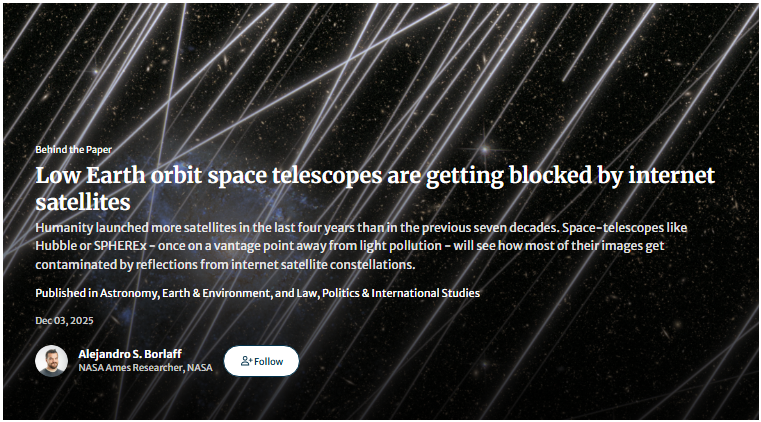
@Alejandro S. Borlaff and his team highlight a startling reality: the same low-Earth orbit that once gave humanity pristine cosmic vision is becoming saturated with thousands of commercial satellites. Once-quiet vantage points for telescopes like Hubble and the upcoming SPHEREx are now streaked with trails of reflected sunlight, obscuring faint galaxies and cosmic structure. Alejandro’s simulations show that as constellations grow, up to 96% of future space-telescope images may suffer contamination, placing astronomical discovery at risk.
The authors also remind us that this is more than an astronomy issue - rising debris, collision risks, and atmospheric pollution signal a broader environmental crisis that their article in Nature brings to public attention. With global efforts now underway to protect the “dark and quiet sky,” this post calls for action to safeguard our shared right to an unspoiled Universe. Read the full Behind the Paper post to explore the details and what comes next.
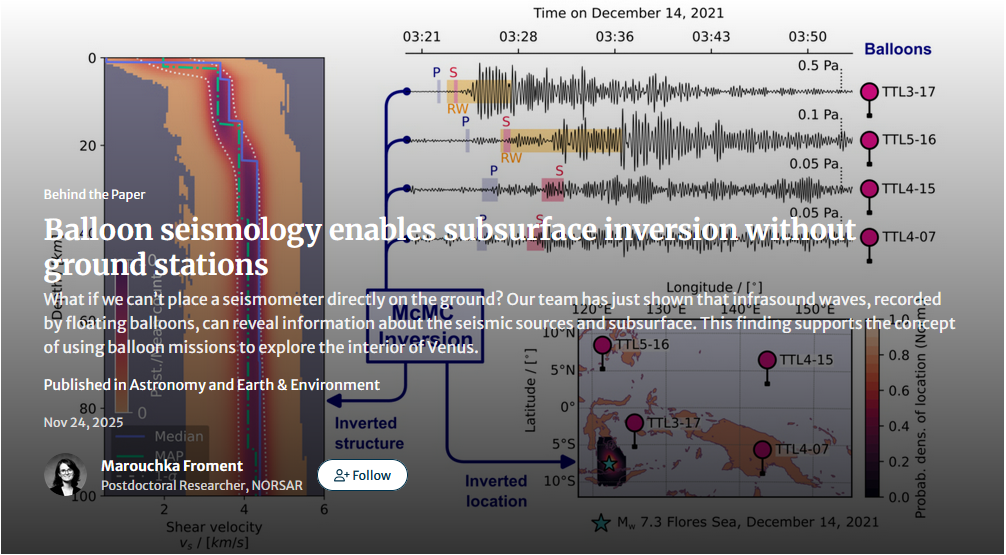
Earthquakes from the Sky - A New Way to Explore Planets
In this Behind the Paper post, @Marouchka Froment shows how balloon-borne sensors can detect quakes without touching the ground. Using infrasound from the 2021 Flores earthquake, her team proved that floating instruments can pinpoint seismic sources and reveal subsurface structure - a breakthrough for worlds like Venus where landers cannot survive.
Froment’s study shows balloon seismology as a powerful new tool for planetary science. Read the full Behind the Paper to learn how listening from the sky could unlock hidden interiors.
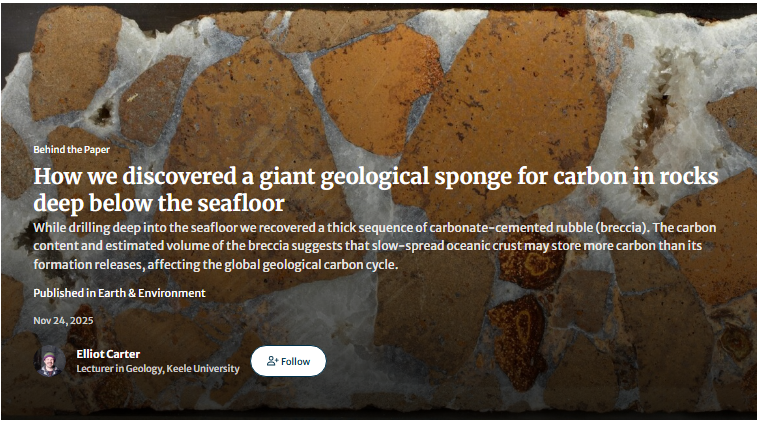
The Seafloor’s Secret Carbon Sponge
What if the ocean floor hides one of Earth’s largest carbon sponges? @Elliot Carter ’s blog reveals how drilling into Atlantic crust unexpectedly uncovered rubble-rich breccia cemented with carbonates - a concealed reservoir capable of storing vast amounts of CO₂. Published in Nature Geoscience, this research suggests slow-spreading ocean crust may absorb more carbon than it emits, reshaping how we understand Earth’s deep carbon cycle.
These rocky “sponges” could be globally significant carbon stores, potentially offsetting volcanic outputs entirely. Check out the full Behind the Paper to explore how this discovery may rewrite carbon accounting beneath our oceans.
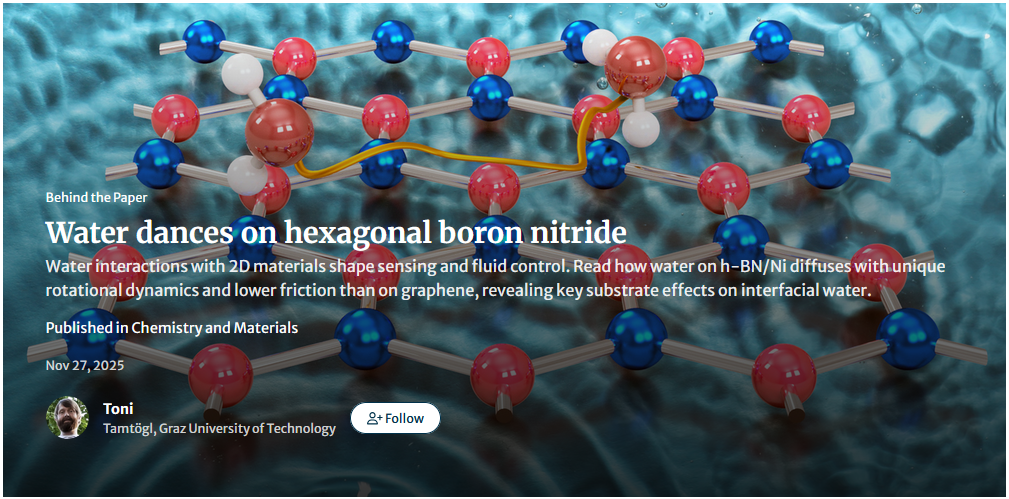
When Water Walks: The Curious Dance on 2D Surfaces
What if a single water molecule could glide, spin, and flip its way across a surface? In this Behind the Paper post, @Toni unpacks how water behaves in surprising ways on hexagonal boron nitride compared with graphene. Using helium spin-echo spectroscopy and simulations, the team reveals that water on h-BN/Ni diffuses with a smooth, rotational “walking” motion — facing far less friction than on graphene.
Published in Nature Communications, these findings show that the substrate beneath 2D materials fundamentally reshapes molecular behaviour, offering designers of membranes, coatings, and microfluidics a new lever to control water mobility. Read Toni’s full Behind the Paper blog to explore how a single molecule’s strange journey could help redefine nanoscale friction and fluid transport.
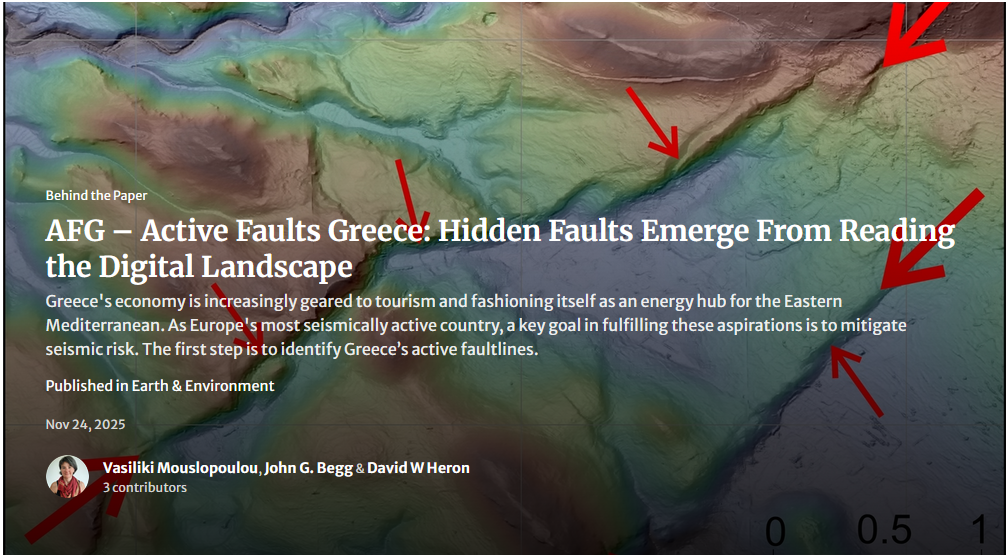
Revealing Greece’s Hidden Fault Lines Through Digital Eyes
@Vasiliki Mouslopoulou takes us on a journey beneath Greece’s iconic landscapes - from mountains and gulfs to ancient settlements - to uncover thousands of previously unmapped active faults. Using high-resolution Digital Elevation Models, her team translated subtle topographic clues into Greece’s first consistent, nationwide geomorphology-based active fault database published in Scientific Data. More than half of the 3,815 mapped traces were identified for the first time, offering an unprecedented digital portrait of a restless nation. Read the full Behind the Paper to see how pixels, geological insight, and digital landscapes are reshaping how Greece anticipates and manages seismic risk.
Alongside these research findings, our Communities also leaned into two globally recognised themes. World Cities Day, an annual UN initiative celebrating sustainable, inclusive urban growth, aligned closely with our Call for Papers on circularity in the built environment that underscores how research contributes to smarter, greener cities. Similarly, World Statistics Day honoured the critical value of trustworthy data in science and society. Discussions within our Communities - including how graphic design can reveal predatory publishing - served as a timely reminder that research quality is not only about producing new knowledge but also about identifying and protecting against what undermines it.
Curious to explore further? Discover more highlights from across our Communities:
From discovery to dialogue, October and November brought momentum across our Communities. With World Cities Day and World Statistics Day also on the calendar, we were reminded of science’s role in shaping resilient societies. More exciting work awaits as we move into the next chapter.
Passionate about connecting researchers and amplifying their voices through digital engagement. As Manager for the Research Communities by Springer Nature, I work with researchers to showcase their discoveries and experiences.
With a strong interest in public engagement and creative science communication, I’m dedicated to making research more accessible and inspiring wider conversations around scientific discovery and innovation.
Follow the Topic
-
Nature
A weekly international journal publishing the finest peer-reviewed research in all fields of science and technology on the basis of its originality, importance, interdisciplinary interest, timeliness, accessibility, elegance and surprising conclusions.
-
Nature Communications
An open access, multidisciplinary journal dedicated to publishing high-quality research in all areas of the biological, health, physical, chemical and Earth sciences.
-
Scientific Data
A peer-reviewed, open-access journal for descriptions of datasets, and research that advances the sharing and reuse of scientific data.
-
Communications Engineering
A selective open access journal from Nature Portfolio publishing high-quality research, reviews and commentary in all areas of engineering.
-
Nature Geoscience
A monthly multi-disciplinary journal aimed at bringing together top-quality research across the entire spectrum of the Earth Sciences along with relevant work in related areas.
-
Communications Earth & Environment
An open access journal from Nature Portfolio that publishes high-quality research, reviews and commentary in the Earth, environmental and planetary sciences.
-
Scientometrics
This is an international, peer-reviewed, monthly journal that publishes original research on all quantitative aspects of the production, communication, and use of scientific and technological information.


Related Collections
With Collections, you can get published faster and increase your visibility.
Climate adaptation and resilience in urban and rural communities
Publishing Model: Open Access
Deadline: Sep 30, 2026
Ecological resistance and resilience under global change
Publishing Model: Open Access
Deadline: Apr 07, 2027