Highlights from Mathematics, Physical and Applied Sciences Communities
Published in Chemistry and Earth & Environment






Over the past couple of months, our Research Communities have been engaged in meaningful discussions and impactful discoveries. Highlights from the Mathematics, Physical, and Applied Sciences Communities include groundbreaking work on adaptive resetting, resilience in informal settlements, and new insights into iceberg calving. Researchers have shared their latest findings, sparking conversations and inspiring future innovations. As we move forward, the momentum from these discussions continues to drive research, fostering exciting collaborations and shaping the future of our fields.
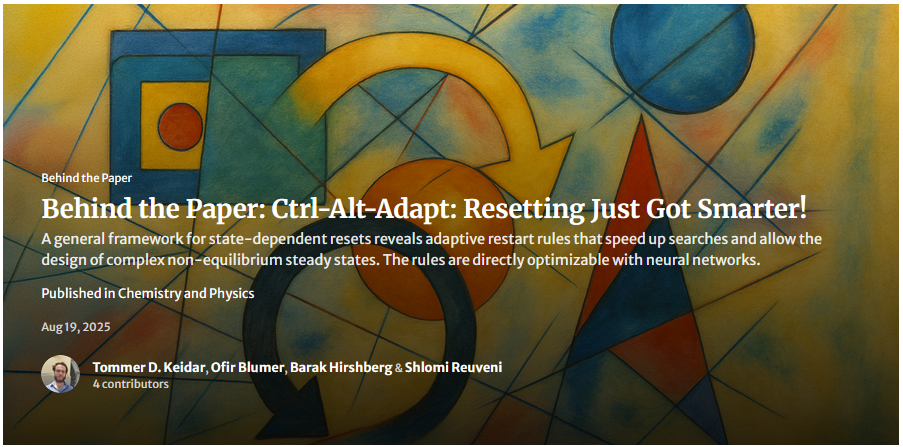
Smarter Resetting: Accelerating Searches with Adaptive Strategies
In a new Behind the Paper post, @Tommer D. Keidar , @Ofir Blumer , @Barak Hirshberg and @Shlomi Reuveni unveil the stories behind a revolutionary framework for adaptive resetting, published in Nature Communications. This approach adjusts the timing of resets based on a system's state, improving efficiency in processes like molecular simulations and biological searches. By integrating machine learning, they’ve created a method that optimizes reset strategies and speeds up searches beyond traditional methods.
The research showcases how adaptive resetting can surpass state-independent strategies, where resets occur at fixed or random intervals without considering the system's current condition, adaptive resetting optimises when to reset based on the system's state. By integrating machine learning, they’ve created a method that not only speeds up searches but also makes them more energy-efficient. Learn more about this work and its potential impact.
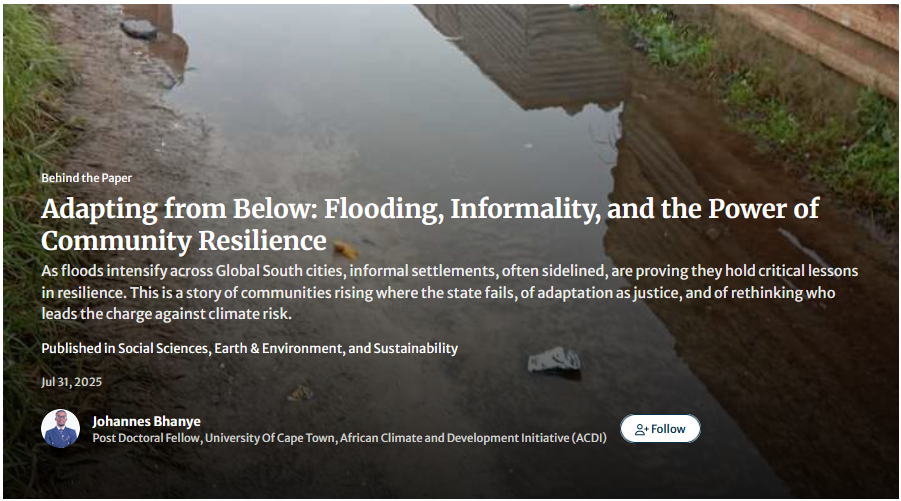
Can Communities Adapt Without External Help? Resilience in Informal Settlements
@Johannes Bhanye ’s research published in Discover Sustainability reveals how informal settlements in flood-prone cities across the Global South are developing their own adaptive strategies in response to climate risks. From community-led reblocking in Cape Town to mobile-based early warning systems in Jakarta, these grassroots efforts challenge the traditional view of vulnerability. Discover more in the Behind the Paper post.
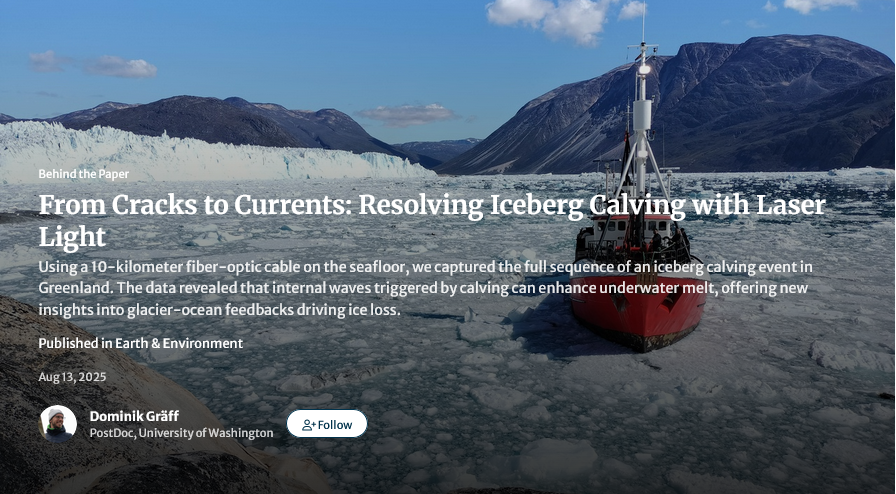
Unveiling the Secrets of Iceberg Calving: New Insights from the Seafloor
@Dominik Gräff and his team provide fresh insights into the dramatic process of iceberg calving, in their recent post. By deploying a 10-kilometer fiber-optic cable on the seafloor, they captured the full sequence of a calving event in Greenland, uncovering how internal waves, triggered by the calving, enhance underwater melting. These findings – published in Nature - offer a deeper understanding of the feedback loops driving ice loss in the Greenland Ice Sheet. Read more in this Behind the Paper post.
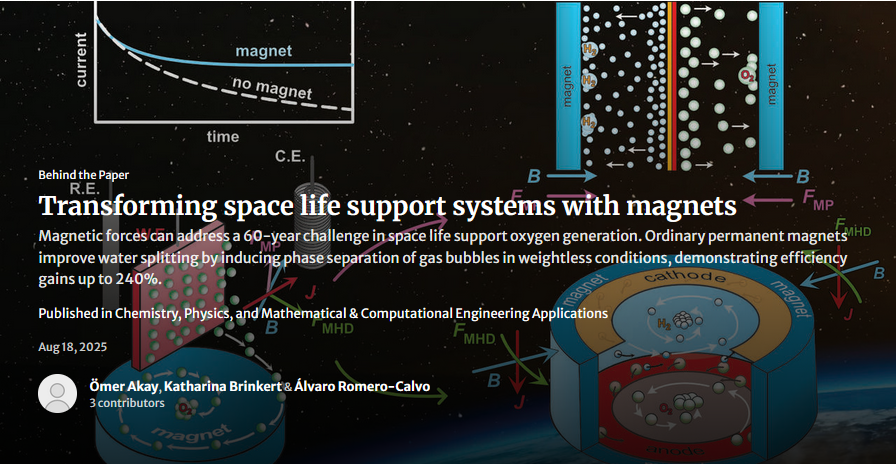
Magnetic Forces Revolutionize Space Life Support: A Breakthrough in Oxygen Generation
In this Behind the Paper post, @Ömer Akay , @Katharina Brinkert and @Álvaro Romero-Calvo explore an advancement in catalysis, published in Nature Chemistry. Their study explores a novel approach that significantly enhances the efficiency of chemical reactions by using innovative catalysts. This breakthrough not only offers a more sustainable solution to industrial processes but also opens new pathways for reducing energy consumption and minimizing waste in chemical manufacturing.
The research introduces a new class of catalysts that demonstrate remarkable stability and activity, even under extreme conditions. By improving the selectivity and speed of chemical reactions, this work has the potential to transform a wide range of industries, from pharmaceuticals to energy production, making it a key development for the future of green chemistry.
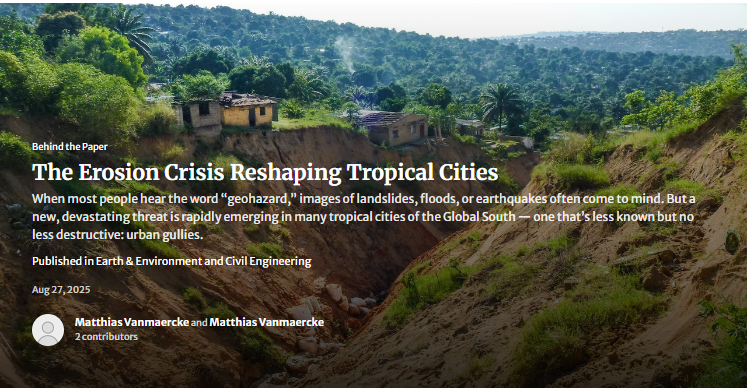
How Urban Gullies Are Transforming Tropical Landscapes
@Matthias Vanmaercke highlights the growing threat of urban gullies in tropical cities, a problem that is often overlooked but increasingly destructive. Published in Nature, the research reveals how rapid urbanization and poor infrastructure are creating deep erosion channels in cities across the Democratic Republic of the Congo (DRC), displacing thousands of residents and devastating communities. The study offers new insights into how these urban disasters can be prevented through better planning and infrastructure.
Read the full Behind the Paper post to learn more about this pressing issue and the solutions outlined by Matthias and his team.
As always, we invite you to engage with these fascinating stories and join the conversations shaping the future of research – why not add comment to your favourite post to start a conversation today?
Your insights, questions, and experiences are invaluable as we continue to foster a dynamic and supportive community for those working across disciplines. Register today to stay connected and be sure to check out more exciting updates and discussions in the Behind the Paper channel.
Additional Highlights from July and August:
If you are interested in exploring more interesting posts from this period, here are some recommendations:
Curious to explore further? Discover more highlights from across our Communities:
Research Communities Updates:
- Topic pages are designed to help you keep up with the latest developments in your own field and explore emerging areas of interest. Start exploring and personalising your Communities’ experience today!
- To provide even more focused support, we’ve created the Early Career Researchers (ECR) Hub - a dedicated space for those in the first ten years of their research career.
Passionate about connecting researchers and amplifying their voices through digital engagement. As Manager for the Research Communities by Springer Nature, I work with researchers to showcase their discoveries and experiences.
With a strong interest in public engagement and creative science communication, I’m dedicated to making research more accessible and inspiring wider conversations around scientific discovery and innovation.
Follow the Topic
-
Nature
A weekly international journal publishing the finest peer-reviewed research in all fields of science and technology on the basis of its originality, importance, interdisciplinary interest, timeliness, accessibility, elegance and surprising conclusions.
-
Nature Communications
An open access, multidisciplinary journal dedicated to publishing high-quality research in all areas of the biological, health, physical, chemical and Earth sciences.
-
Nature Chemistry
A monthly journal dedicated to publishing high-quality papers that describe the most significant and cutting-edge research in all areas of chemistry, reflecting the traditional core subjects of analytical, inorganic, organic and physical chemistry.
-
Discover Sustainability
A multi-disciplinary, open access, community-focussed journal publishing results from across all fields relevant to sustainability research whilst supporting policy developments that address all 17 of the United Nations Sustainable Development Goals (SDGs).




Your space to connect: The Fuel cell technologies Hub
A new Communities’ space to connect, collaborate, and explore research on Electrochemistry, Chemical Engineering, and Fuel Cells!
Continue reading announcementRelated Collections
With Collections, you can get published faster and increase your visibility.
Regenerative Agriculture Pathways for Sustainable Environment and Food Systems
Regenerative agriculture is a holistic approach to farming that aims to restore and enhance the health of ecosystems while producing food sustainably. It goes beyond sustainability by actively improving soil health, biodiversity, water cycles, and carbon sequestration. There is a need to understand the concept in the context of basic and applied sciences, science-based advice for policy makers as well as implications for rapid evolution of knowledge generation. Scholarly reviews and original research articles are invited to answer current questions on relevant topics in agriculture, life sciences, environmental sciences, agricultural extension communication, statistical modeling and relevant disciplines.
Keywords: Soil health restoration, Agroecological biodiversity, Water management, Carbon sequestration, Community and economic resilience, Animal integration, Climate mitigation, Biodiversity, Food quality, Food security, Farmer livelihoods.
This Collection supports and amplifies research related to SDG 1, SDG 2, SDG 3, SDG 6, SDG 7, SDG 12, SDG 13, and SDG 15.
Publishing Model: Open Access
Deadline: Aug 31, 2026
Clean Water and World Sustainability
Water is the lifeblood of our planet, fundamental to all life forms and a cornerstone of human progress. Yet, despite its critical importance, ensuring universal access to clean and safe water remains a pressing global challenge. In the face of complex issues such as climate change, urbanization, and population growth, the need for sustainable water management has never been more urgent. Water security, quality, and accessibility are integral to fulfilling the United Nations' Sustainable Development Goal (SDG) 6, which emphasizes ensuring the availability and sustainable management of water and sanitation for all. However, the path to water sustainability is laden with challenges, ranging from the pollution and contamination of freshwater resources to the degradation of ecosystems that support vital water cycles.
In this context, the proposed research collection, “Clean Water and World Sustainability”, aims to compile pioneering research that addresses the multifaceted issues surrounding clean water, ecosystem health, and global sustainability. This collection seeks to showcase groundbreaking solutions and interdisciplinary approaches that promote sustainable water practices while considering the broader environmental, economic, and social impacts of water use.
We welcome contributions from scholars worldwide that present original research on topics such as: (i) the impact of industrial and agricultural practices on water quality and availability; (ii) advances in water treatment technologies and wastewater management; (iii) the role of freshwater ecosystems in mitigating climate change; (iv) sustainable water governance models and policy frameworks; and (v) the interaction between water scarcity, human health, and socioeconomic development.
This collection provides a unique platform for researchers to disseminate their cutting-edge findings on transformative solutions to the world’s water crisis and contribute to global sustainability efforts. The research presented will not only inform policy decisions but also empower local communities, industry leaders, and environmental advocates to take action in safeguarding and rejuvenating this invaluable resource.
This Collection supports and amplifies research related to: SDG 6 & SDG 11
Keywords: Water Accessibility and Management; Water Security; Water Treatment Technologies; Sustainable Development; Ecosystem Health; Interdisciplinary Approaches; Sewage/Wastewater Reuse
Publishing Model: Open Access
Deadline: Sep 30, 2026



Please sign in or register for FREE
If you are a registered user on Research Communities by Springer Nature, please sign in