Integrative single cell atlas revealed intratumoral heterogeneity generation from an adaptive epigenetic cell state in human bladder urothelial carcinoma
Published in Cancer and Genetics & Genomics


Explore the Research
Just a moment...
onlinelibrary.wiley.com needs to review the security of your connection before proceeding.
Bladder cancer (BLCA) is known to be particularly challenging to treat because of its variability within the tumor itself, a phenomenon called intratumor heterogeneity (ITH). This variability enables the cancer to resist therapy and evade the immune system, worsening the outlook for patients. Although the exact processes behind this are not fully understood, our research has uncovered some important insights.
Our previous study identified high expression of TM4SF1 could predict poor prognosis of muscle invasive bladder cancer (MIBC) [1]. Using a newly developed tool by our group named EpiTrace tracking single cell evolution via chromatin accessibility [2], we discovered that a specific group of cancer cells, which we refer to as TM4SF1-positive cancer subpopulation (TPCS), plays a crucial role in creating this variability in bladder cancer.
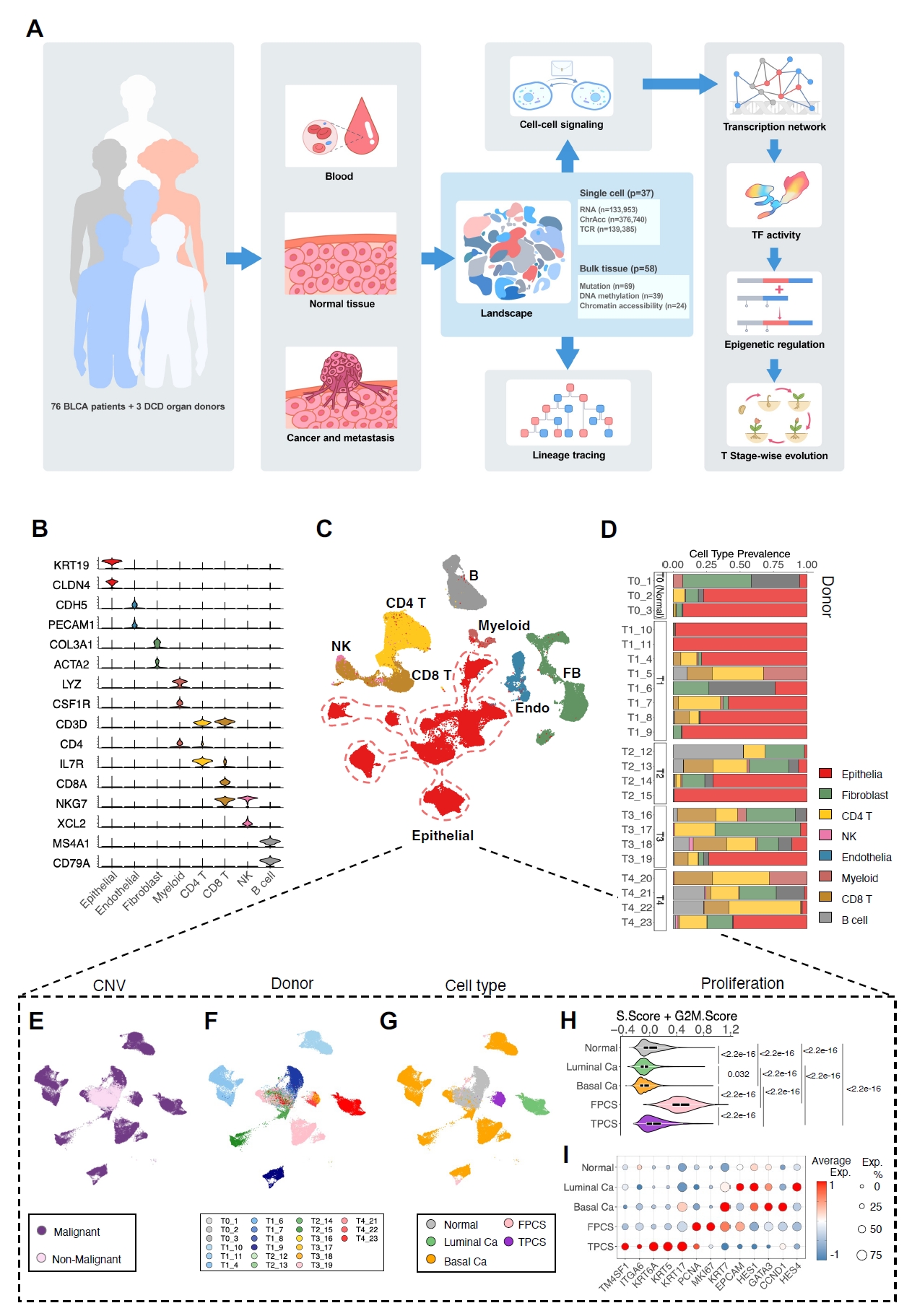
Using advanced techniques that analyze single cells, we found that these TPCS cells are able to change and evolve, which contributes to the complexity and diversity seen in bladder cancer tumors. Our study looked at the entire genetic landscape and the activity of genes (through epigenome and transcriptome profiling) across all stages of bladder cancer. We saw how different types of bladder cancer cells emerged from common ancestor cells and how changes in the control of gene activity led to diverse groups of cancer cells. Specifically, during the early stages of cancer development, a process known as the epithelial-to-mesenchymal transition helped create these TPCS cells that have stem-cell-like abilities and can adapt their gene expression profiles. These adaptable cells are linked to more aggressive and advanced stages of cancer, as well as poorer outcomes for patients.
Furthermore, our research shows that these TPCS cells are initially formed from the basal cells of the normal bladder lining. They are not only shaped by interactions with immune cells as the cancer progresses, but they also do not need additional genetic mutations to continue evolving, which allows them to adapt and survive under different conditions.
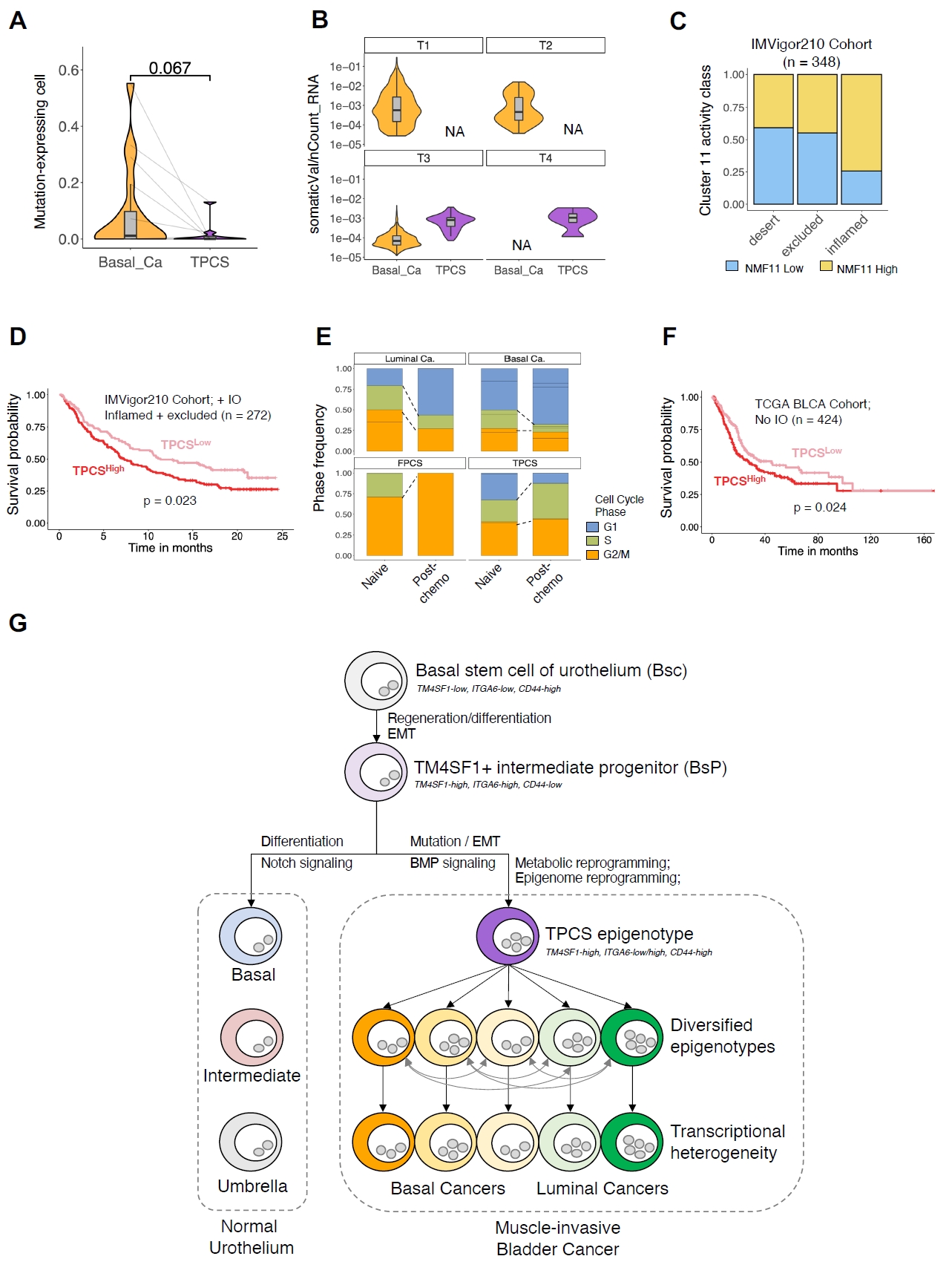
In summary, our findings offer a detailed view of how bladder cancer develops and changes over time, highlighting the role of TPCS cells in driving the complexity and variability of the disease, which in turn influences how the cancer progresses and responds to treatment.
References
[1] Cao R., et al. TM4SF1 regulates apoptosis, cell cycle and ROS metabolism via the PPARγ-SIRT1 feedback loop in human bladder cancer cells. Cancer Lett, 414:278-293 (2018).
[2] Xiao Y., et al. Tracking single-cell evolution using clock-like chromatin accessibility loci. Nat Biotechnol, doi: 10.1038/s41587-024-02241-z. Epub ahead of print (2024).