Lessons from the Human Brain: Building AI That Heals Itself
Published in Neuroscience, Protocols & Methods, and Computational Sciences
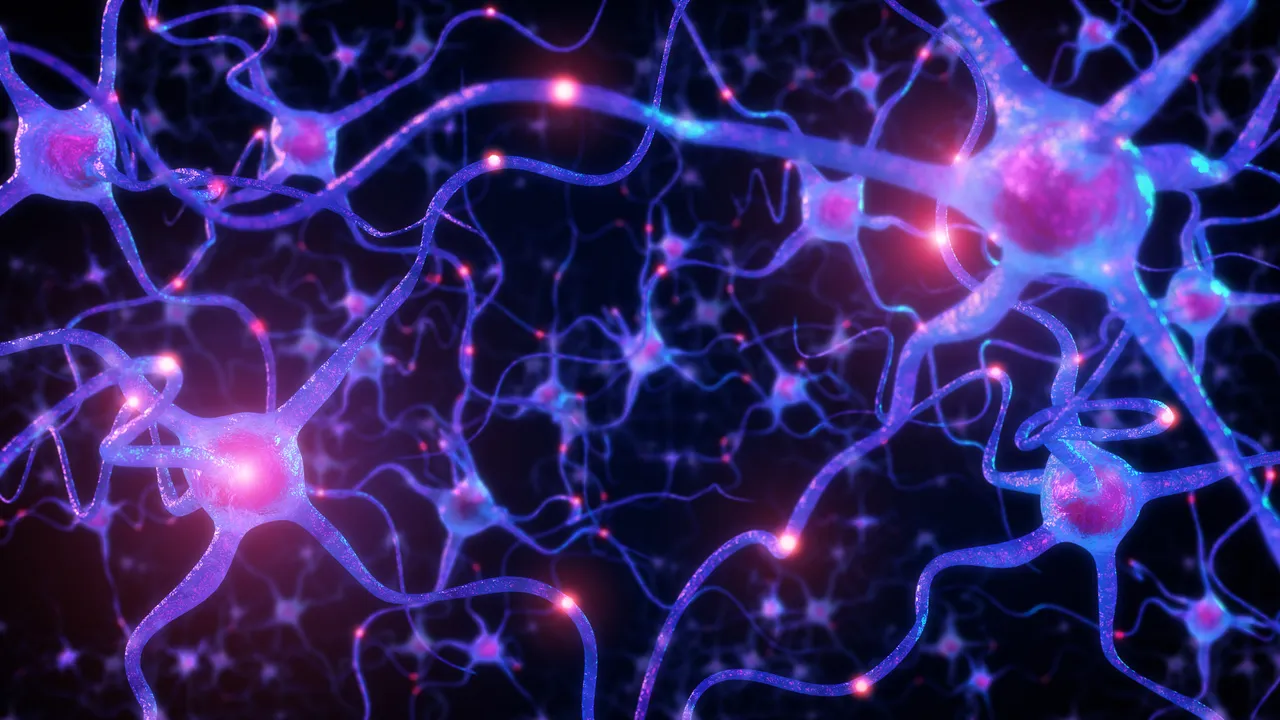



Train a neural network for too long, and it “forgets.” Feed it noisy data, and accuracy collapses. Push the gradients too far, and learning becomes unstable. Unlike our biological brain, which sustains itself for decades while learning continuously, an artificial network often needs constant babysitting—dropout, batch normalization, early stopping, learning rate tuning.
This fragility inspired our research: can AI learn to stabilize and repair itself, just like the human brain?
Learning from Biology
The human brain is not just a learning machine—it is also a healing system. Neurons regulate their own activity, prune weak connections, and repair damaged pathways. This process, known as homeostasis, keeps the brain stable and functional even under stress.
We asked: what if artificial neurons could do the same?
The BioLogicalNeuron Layer
In our recent work, published in Scientific Reports (Nature Portfolio), we introduced a new neural network layer called BioLogicalNeuron, inspired directly by brain mechanisms.
It has three key features:
-
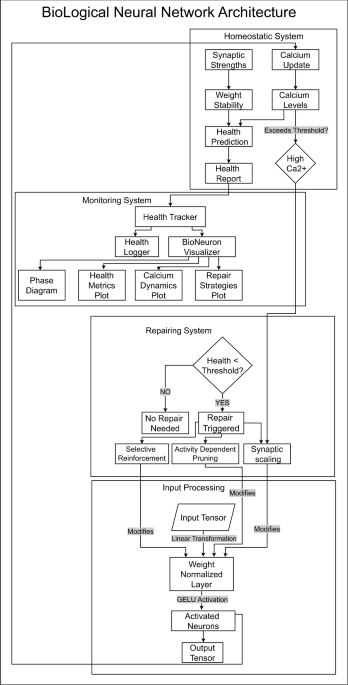
Calcium-based monitoring – Just like real neurons track calcium levels to gauge activity, our artificial neurons monitor their “health” during training.
-
Homeostatic assessment – Instead of waiting for failure, the layer continuously evaluates stability in real-time.
-
Adaptive repair – When instability is detected, the network heals itself by scaling down overactive pathways, reinforcing strong ones, and pruning weak ones.
In other words, the network doesn’t just learn—it self-repairs.
Why This Matters
This self-healing ability makes AI:
-
More reliable in critical areas like healthcare, robotics, and autonomous vehicles.
-
More efficient on edge devices (IoT, mobile), where resources are limited.
-
More adaptable, capable of handling noisy or incomplete data without collapsing.
Our experiments showed not only improved stability, but also surprising gains in accuracy and generalization across molecular, graph, and image datasets.
A Step Toward Resilient AI
Biological intelligence has thrived for millions of years because it can regulate and repair itself. By borrowing this principle, we believe artificial intelligence can become more robust, adaptive, and sustainable.
The BioLogicalNeuron layer is just a first step—but it shows that AI can heal itself, and that the future of neural networks may look a lot more like the human brain than we ever imagined.
Read the full paper here: https://doi.org/10.1038/s41598-025-09114-8

A researcher specializing in biologically-inspired artificial intelligence and robust neural network architectures. My work bridges neuroscience principles with machine learning, focusing on developing systems that exhibit the stability and resilience characteristic of biological intelligence. I approach research with commitment to both theoretical rigor and practical impact, developing methods that are grounded in biological principles while addressing fundamental limitations in current artificial neural networks.
Research Interests
My research program centers on creating artificial intelligence systems that embody principles of biological robustness and adaptability:
Biologically-Inspired Neural Architectures
Developing neural network layers and systems that incorporate homeostatic regulation, self-repair mechanisms, and multi-scale temporal dynamics inspired by biological nervous systems.
Robust and Resilient AI Systems
Addressing the brittleness of artificial neural networks through bio-inspired stability mechanisms that enable consistent performance under perturbations, distribution shifts, and adverse conditions.
Multi-Scale Temporal Coordination
Investigating how coordination across multiple temporal scales—from milliseconds to hours—can enhance the efficiency, stability, and recovery capabilities of artificial neural systems.
Neuromorphic and Brain-Inspired Computing
Translating principles from neuroscience and evolutionary biology into computational frameworks that advance the capabilities of artificial intelligence.
General AI Agent Systems
Building integrated platforms combining LLMs, computer vision, and researching multi-agent collaboration, developing cross-domain knowledge transfer, and creating benchmarks for general AI capabilities.
Follow the Topic
-
Scientific Reports
An open access journal publishing original research from across all areas of the natural sciences, psychology, medicine and engineering.

Related Collections
With Collections, you can get published faster and increase your visibility.
Healthy Aging
Publishing Model: Open Access
Deadline: Dec 31, 2026
Kidney Disease and Health
Publishing Model: Open Access
Deadline: Oct 22, 2026