Mapping the proteins of the human kidney to understand health and disease
Published in Protocols & Methods, Cell & Molecular Biology, and Genetics & Genomics




Chronic kidney disease (CKD) affects millions of people around the world. It is closely linked to heart disease and metabolic conditions like high cholesterol and diabetes. These connected health problems are now often grouped under the name cardio-kidney-metabolic (CKM) syndrome.
While scientists have found many regions in our DNA that are related to kidney function and blood pressure, it has been hard to understand how these genetic signals actually cause disease. One important missing piece has been a clear look at proteins in the kidney—the molecules that carry out most of the body’s functions and help determine how organs work.
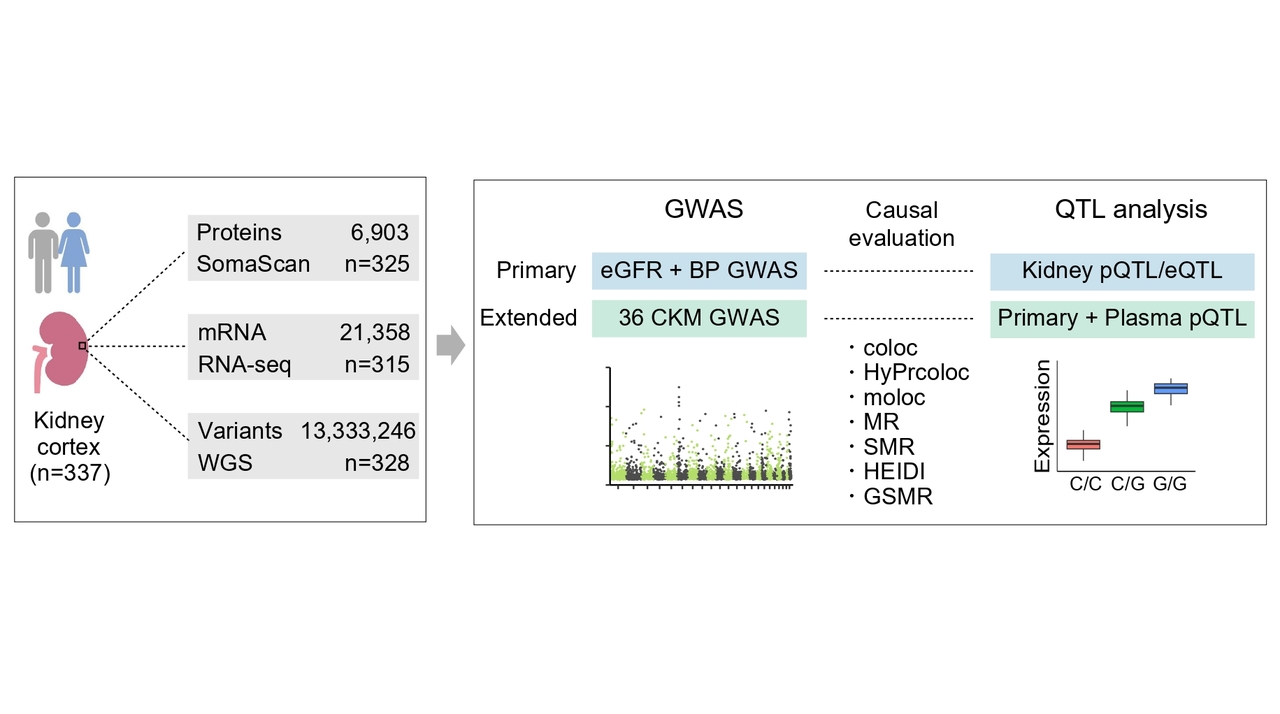
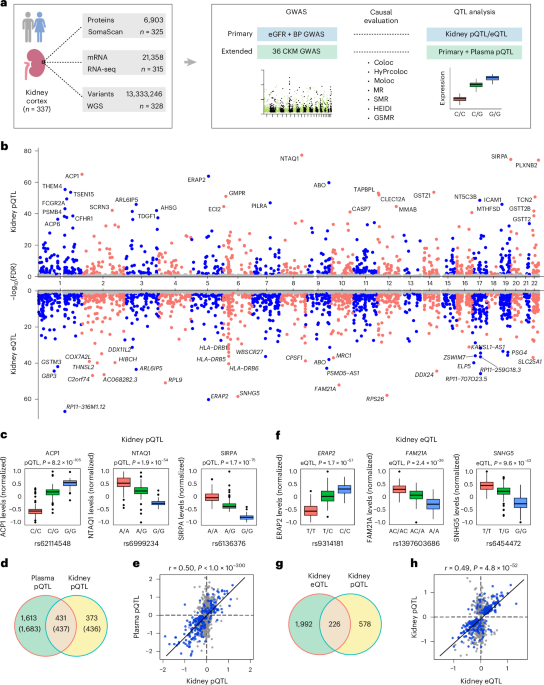
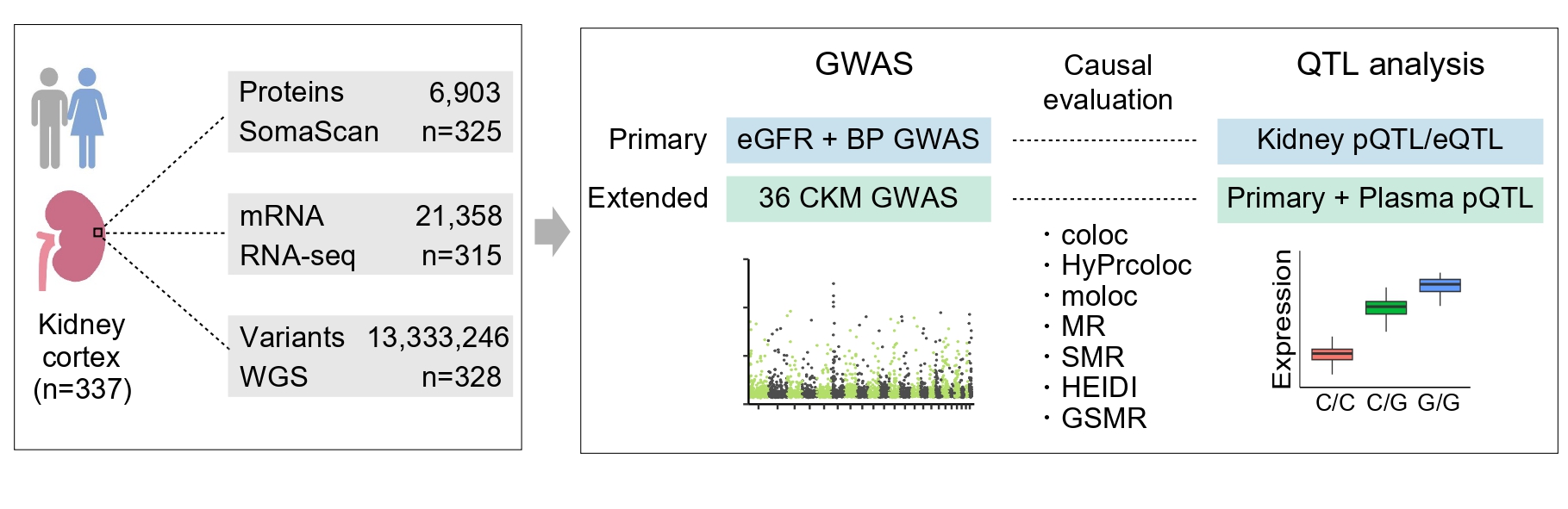
In our study, we examined kidney tissue from over 300 people who had kidney surgery. For each person, we used the SomaScan assay to measure thousands of proteins in their kidney tissue. We also looked at gene expression (RNA) and DNA to understand how genetic differences affect the kidney. This let us see how genetic differences lead to changes in protein levels inside the kidney.
The results were eye-opening. We found hundreds of genetic changes that affect protein levels in the kidney. Many of these changes could not be detected by looking at RNA or blood alone. This shows that studying the kidney itself gives unique and important insights.
To understand how these proteins relate to human health, we compared our data to results from large studies on kidney, heart, and metabolic traits. We found several proteins that may play key roles in these diseases.
For example:
- PLA2R1 (Phospholipase A2 receptor 1) is already known in one type of kidney disease, but we found it may be important for kidney health more broadly.
- CHMP1A (Charged multivesicular body protein 1A) appears to affect both kidney function and blood pressure, hinting at a shared pathway.
- ANGPTL3 (Angiopoietin-like 3), which helps control cholesterol and fat in the blood, may also connect kidney and metabolic health.
We also used a technique called single-nucleus RNA sequencing to figure out which types of kidney cells make these proteins. This helps us understand where in the kidney changes are happening and which cells might be involved in disease.
This project contributes three key resources:
- A map showing how genes affect protein levels in human kidney tissue
- Insights into how kidney proteins are involved in CKM (cardio-kidney-metabolic) diseases
- A free online portal where researchers can explore this data
By combining genetics and protein data directly from the kidney, we hope this work will help researchers better understand disease mechanisms—and ultimately lead to more precise ways to diagnose and treat kidney and related conditions.
This is just the beginning. Next, we plan to test these findings in other populations and with different types of protein measurement tools. We also aim to study their effects in lab-based models. Our long-term goal is to help develop personalized treatments for kidney disease and beyond.
Daigoro Hirohama & Katalin Susztak

Follow the Topic
-
Nature Medicine
This journal encompasses original research ranging from new concepts in human biology and disease pathogenesis to new therapeutic modalities and drug development, to all phases of clinical work, as well as innovative technologies aimed at improving human health.

Related Collections
With Collections, you can get published faster and increase your visibility.
Microbiome and energy metabolism
Publishing Model: Hybrid
Deadline: Dec 06, 2026
Digital Medicine for Infectious Diseases
Publishing Model: Hybrid
Deadline: Nov 09, 2026



Please sign in or register for FREE
If you are a registered user on Research Communities by Springer Nature, please sign in