Methane-hydrogen-rich fluid migration may trigger seismic failure in subduction zones at forearc depths
Published in Chemistry and Earth & Environment


Metamorphic fluids, i.e. fluids that are produced by metamorphic reactions, carry life-essential elements such as carbon and hydrogen from the deep Earth to shallower reservoirs. These elements may combine to form energy sources such as molecular hydrogen and methane, which play a fundamental role in metabolic processes in the subsurface biosphere.
However, how such geologic energy sources seep from the deep is still unclear.
Using the fossil rock-record accessible on the surface in the Italian Western Alps, our study shows that the fluids migrate along tectonic discontinuities in subduction zones, and that they may trigger earthquakes.
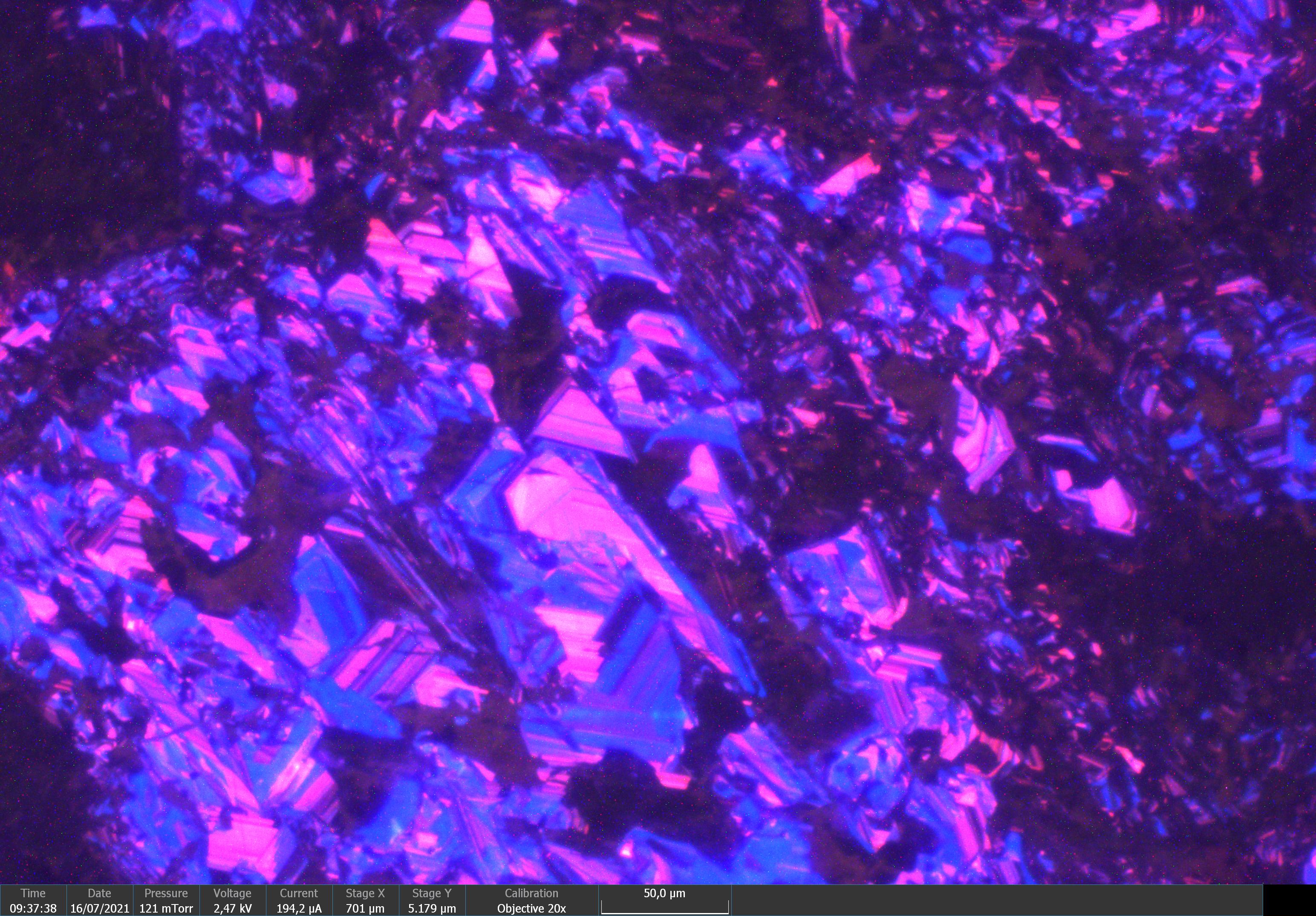
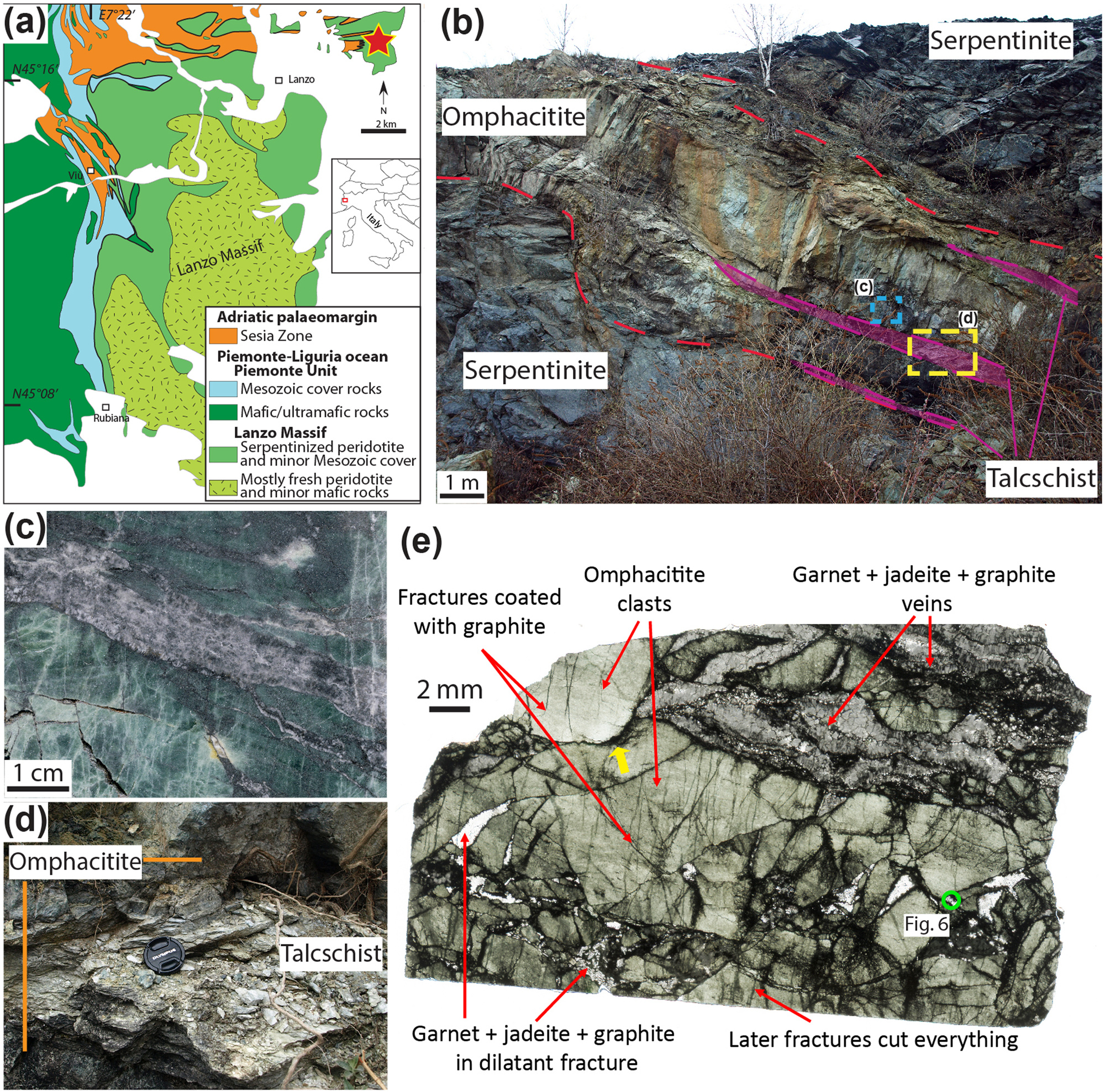
In detail, we show evidence of brecciation (i.e. brittle failure leading to fragmentation) of rocks rich in mineral omphacite, a dense and stiff mineral forming at very high pressure where tectonic plates collide. This strong rock type is in contact with other rock types producing molecular hydrogen and methane, such as rocks called serpentinites, at depths in the range of 30-80 km in the Alpine subduction zone.
We suggest that the migration and accumulation of methane and hydrogen rich fluids below a permeability seal led to supralithostatic fluid pressure conditions that triggered brittle, and potentially seismic, failure of the host rock. Thermodynamic models indicate that methane- and hydrogen-rich fluids can produce fluid overpressure more easily than just aqueous fluids.
These processes play an important role in promoting the migration of deep energy sources in the subduction zone from deep source areas towards shallower reservoirs, including the subsurface biosphere where microbial life can take advantage of them through metabolic processes.
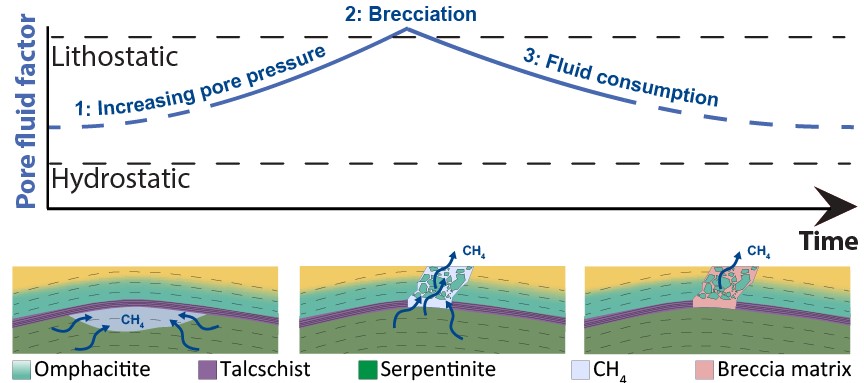
Figure caption: Interpretation of the studied structures

My research is focussed on the study of orogenic chains (Alps, Scandinavian Caledonides, Apennines, Oman Mountains), from the micro- to the macroscale. I am interested in investigating the interactions between deformation mechanisms and metamorphic processes. I reconstruct the tectonometamorphic evolution of polydeformed terranes to unveil mechanisms and processes responsible for the formation of orogens. To do so, I use multidisciplinary tools and skills deriving from structural geology, metamorphic petrology and geochronology, including fieldwork, microstructural and petrographic analyses, electron backscattered diffraction analyses, thermodynamic modelling, electron probe micro-analyser, laser ablation inductively coupled plasma mass spectrometry and Raman spectroscopy.
Follow the Topic
-
Nature Communications
An open access, multidisciplinary journal dedicated to publishing high-quality research in all areas of the biological, health, physical, chemical and Earth sciences.

Related Collections
With Collections, you can get published faster and increase your visibility.
Women's Health
Publishing Model: Hybrid
Deadline: Ongoing
Tumor Microenvironment Crosstalk and Therapeutic Implications
Publishing Model: Hybrid
Deadline: Nov 02, 2026