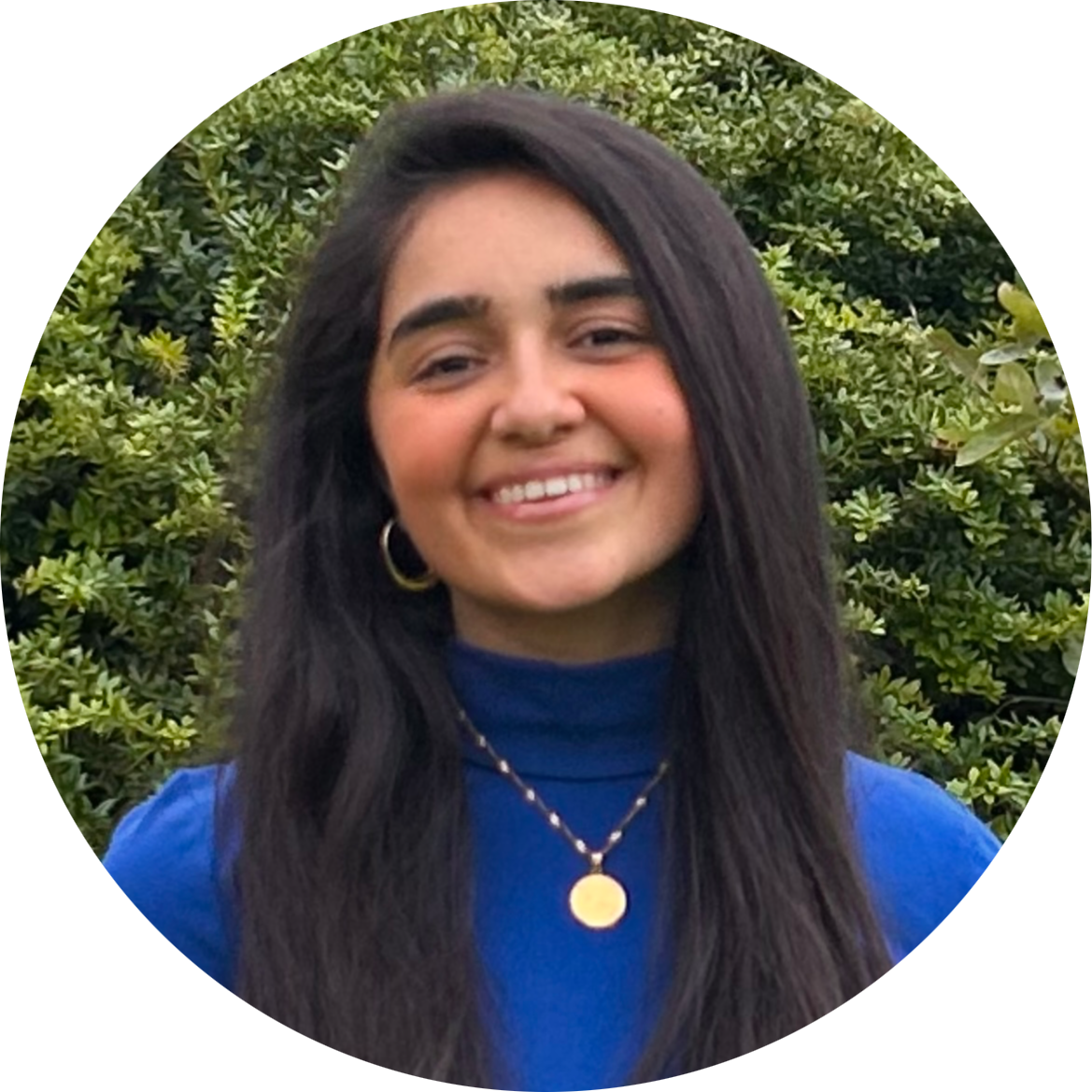
Myasthenia: more than muscle weakness – Zainab Alani
Published in Social Sciences, Neuroscience, and Genetics & Genomics
Rare. A term that describes a condition that affects fewer than 1 in 2,000 people. Together, there are over 10,000 rare conditions, with 3.5 million people being affected by a rare disease in the UK. Rare disease exist across a spectrum, with some rare conditions affecting relatively more people worldwide while some ultra-rare diseases exist which can affect fewer than 1 in a million people. Rare diseases are in and of themselves isolating, with some individuals likely being the only person in their area, country or event continent diagnosed with their specific rare condition.
However, once diagnosed, rare becomes a feeling that comes with it a sense of community and belonging once you meet others with rare conditions. If you have a strong family and support network, as I am blessed and grateful to have, this beneficial impact is amplified. The rare community is a community in all senses of the word – it is a collection of people, all connected through their shared experience of rare conditions. The conditions needn’t be the same nor they need have the same prevalence, but we are all connected, quite paradoxically, by the isolation of the rare diagnosis. Together, we create a network where we feel listened to, supported and uplifted.
Despite the positive aspects that I have been able to appreciate from having a rare condition, I would like to stress that having a rare condition is life-changing and detrimental. I still vividly remember the day I received my diagnosis, prior to embarking upon my medical school journey and therefore blissfully ignorant; I recall sitting in a room being told I had a rare condition, for which there was no cure. I did not know what Myasthenia meant but I could gauge a rough idea once I saw the tears that ran down my mother’s cheeks and the sadness on my father’s face. My parents, who were always so strong and unshaken, were visibly distressed. Only when I later learnt about myasthenia and its possible downstream effects, including potential life threatening complications, did I truly understand the strength of the blow dealt by the delivery of this diagnosis. Two words. But two words which turned my life upside down.
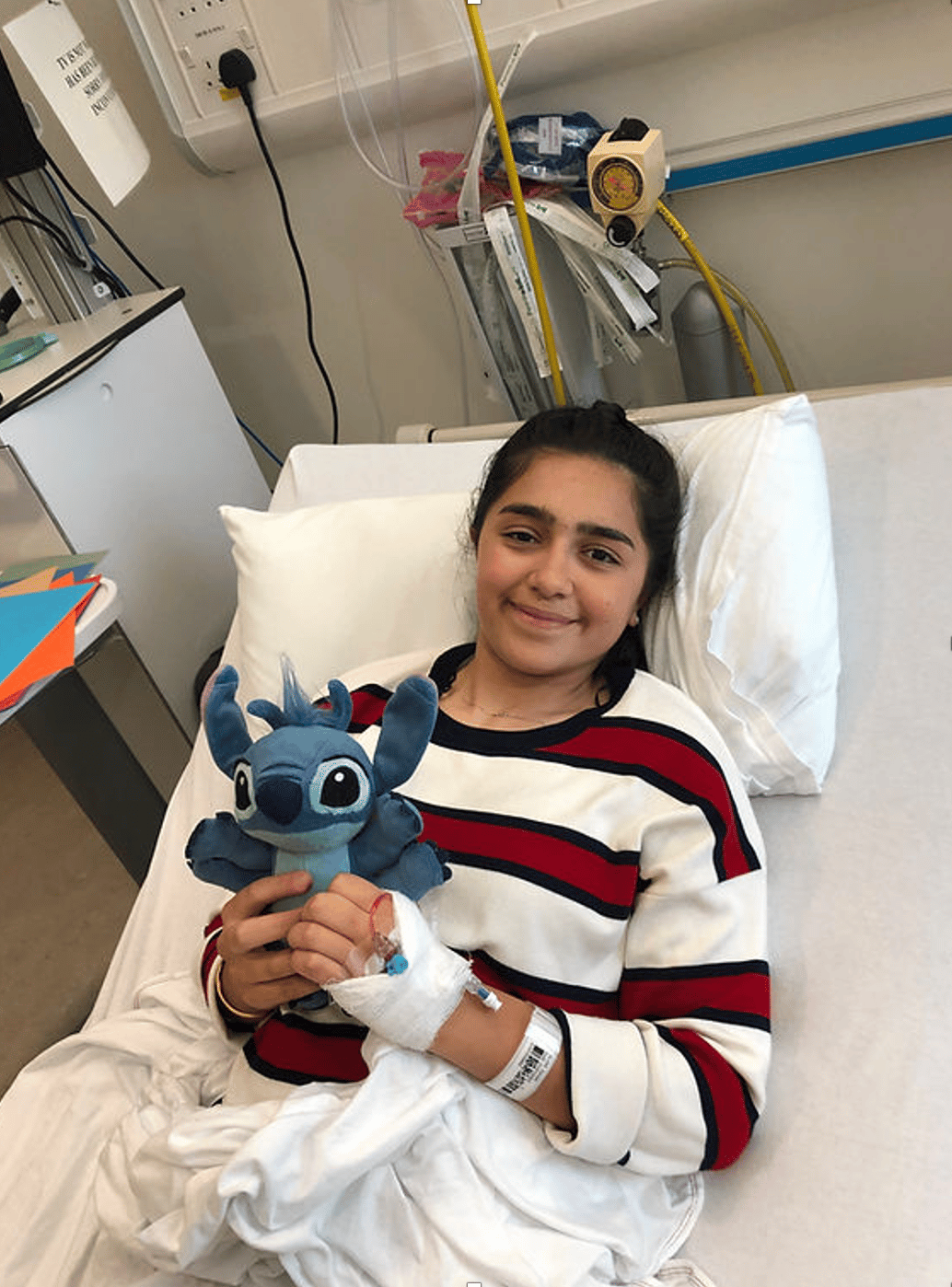 However, the change myasthenia enforced upon my life cannot be described a single sentence. Myasthenia, and indeed all rare conditions have an overarching effect on not only the patient’s life but also their family’s lives. Small tasks are slowly adapted, routines are adjusted to a new normal, adjustments are made to daily life. We, as patients, subconsciously alter what we do. With myasthenia I have to pace myself and plan any activities for a time when I have more energy. Simple decisions about where to sit in a lecture hall become tactical, as I have to plan which angle is least likely to exacerbate my ptosis. Activities which should be detached from medical reasoning become inter-related; even choosing what bag to carry becomes medicalised, as I must ensure that I can carry the necessary medications. We slowly learn, and are forced to accept, that the lines between medical life and daily life become blurred. Our rare condition begins to impact our own and our family’s lives in ways we may have never considered nor anticipated.
Amongst all the difficulties, however, we must see and recognise the good. I am grateful for my family who were undoubtedly the reason I was able to handle the diagnosis and its burden at such a young age. They shielded me when I decided, at first, that I did not want to share my diagnosis and supported me when I became an advocate. With their empowerment and encouragement, I became a strong young woman and learnt that I was so much more than Myasthenia. I learnt that Myasthenia did not define me. I learnt that I, largely, did not have to let Myasthenia limit my life choices. I was still Zainab, who I had always been. Having a condition that affects nearly every muscle in my body makes simple tasks more tiring, but even if the impact of Myasthenia meant something was a little harder or took a little longer, I persevered.
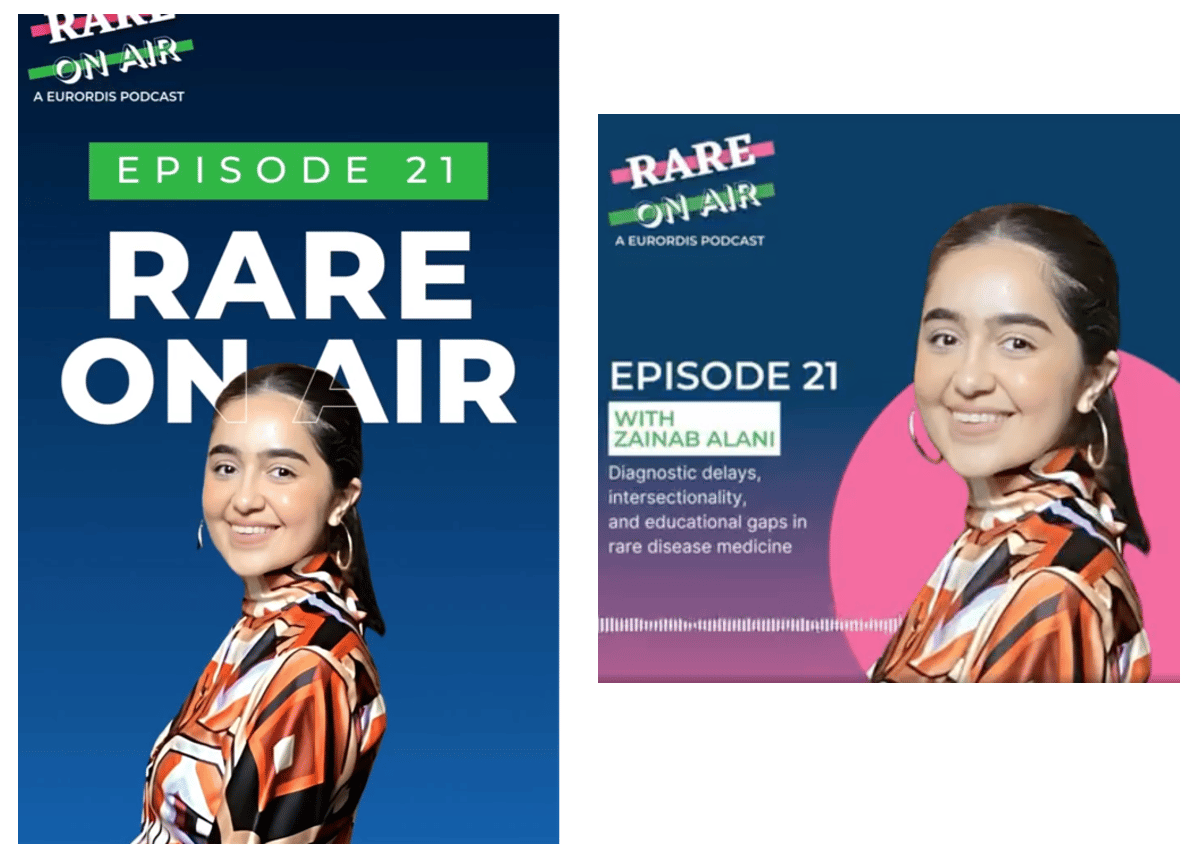
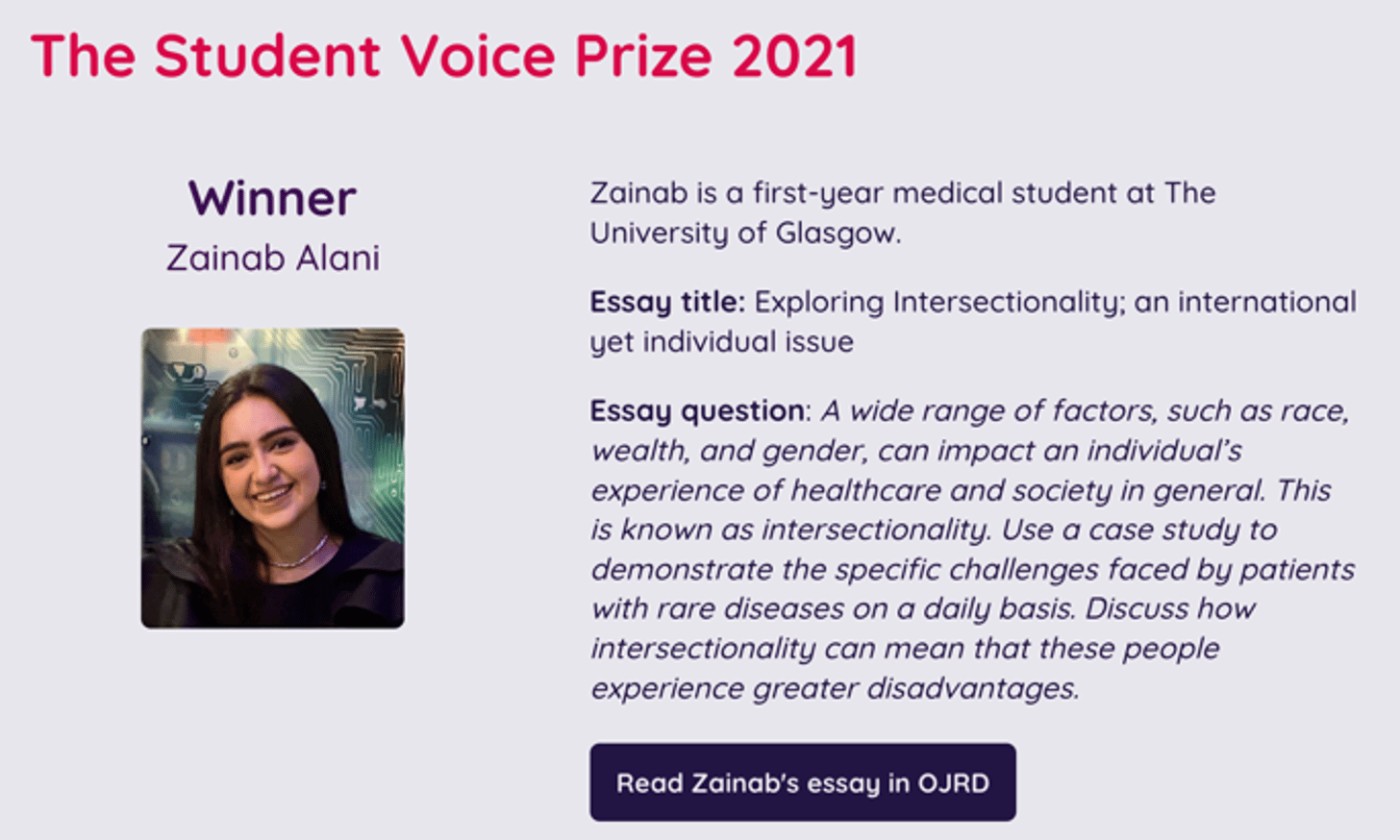
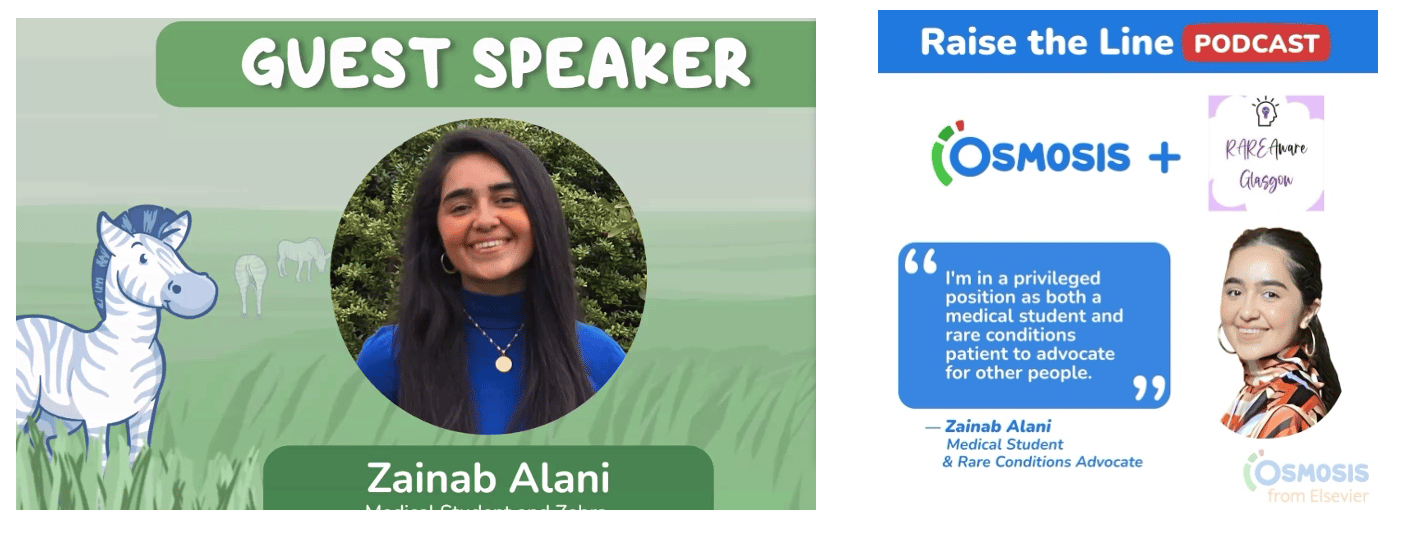
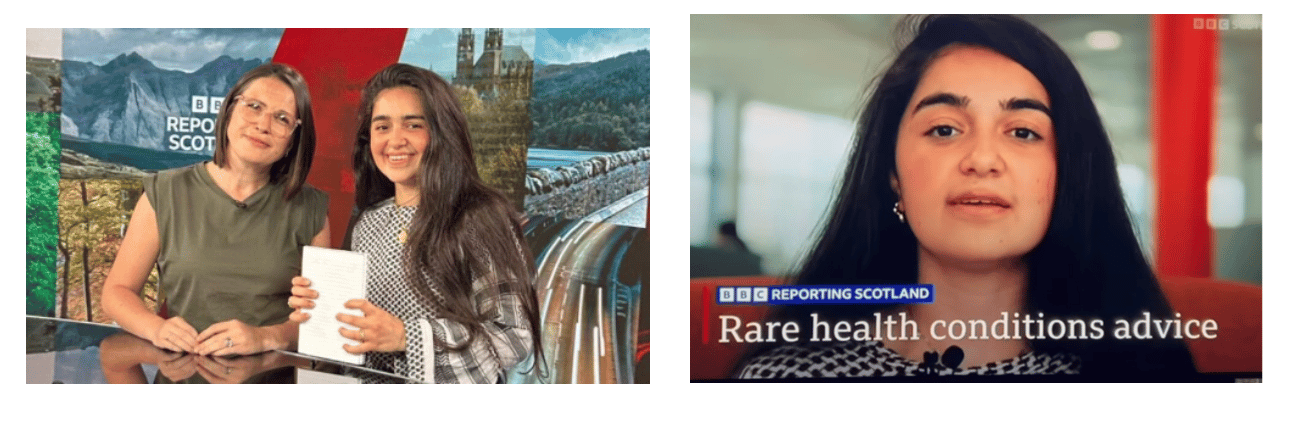
Once I decided to become vocal about rare conditions and my diagnosis, doors began to open. To some it may have appeared to be a simple essay competition, but the Student Voice Prize provided the platform from which I could begin to share my story with others. I had the opportunity to share my journey in a medical journal, bringing a personal perspective to the field of rare conditions to medical professionals who too often dismiss our diagnoses as a differential. I became an ambassador for rare conditions, working alongside charities and organisations such as Medics 4 Rare Disease and Beacon for Rare Diseases. Collaborating with EURORDIS, I became a European Yong Ambassador and shared my story in a series of podcasts and blogs showing that rare conditions warriors needn’t be limited by borders. Educating medical professionals and, more importantly, medical students who will be the next generation of healthcare professionals is core to the work that I do. To this end, I have collaborated with Osmosis, a medical education platform, to share my story and educate medical professionals on Myasthenia. I also shared my story nationally on BBC Scotland, using my voice to share on primetime news a topic which may seem negligible to others but is often the breaking news to families of patients with rare conditions. My aim is to raise awareness about the existence of rare conditions, emphasising that we needn’t expect doctors to know the minutiae of each rare disease diagnosis but at least acknowledge our existence and consider rare condition. Indeed, our conditions are rare. But rare does not mean impossible.
While I work hard at raising awareness, my autoimmune disease works hard to find new ways in which to target itself. There lies the difficulty of battling an autoimmune disease – the unpredictability and fluctuating nature of the day to day. Small challenges can quickly feel overwhelming for those who already have a lot on their plate. An example is as recent as a couple of months ago when I entered into a relapse and later had to receive intravenous treatment called immunoglobulins, from which I later suffered the rare side effect of developing meningitis. This series of unfortunate (and rare!) events, occurring on a background of autoimmune disease, can set you back. I speak from experience as my six years of hard work, slowing tapering down immunosuppressant and steroid medication, was undone in that single moment of my relapse.
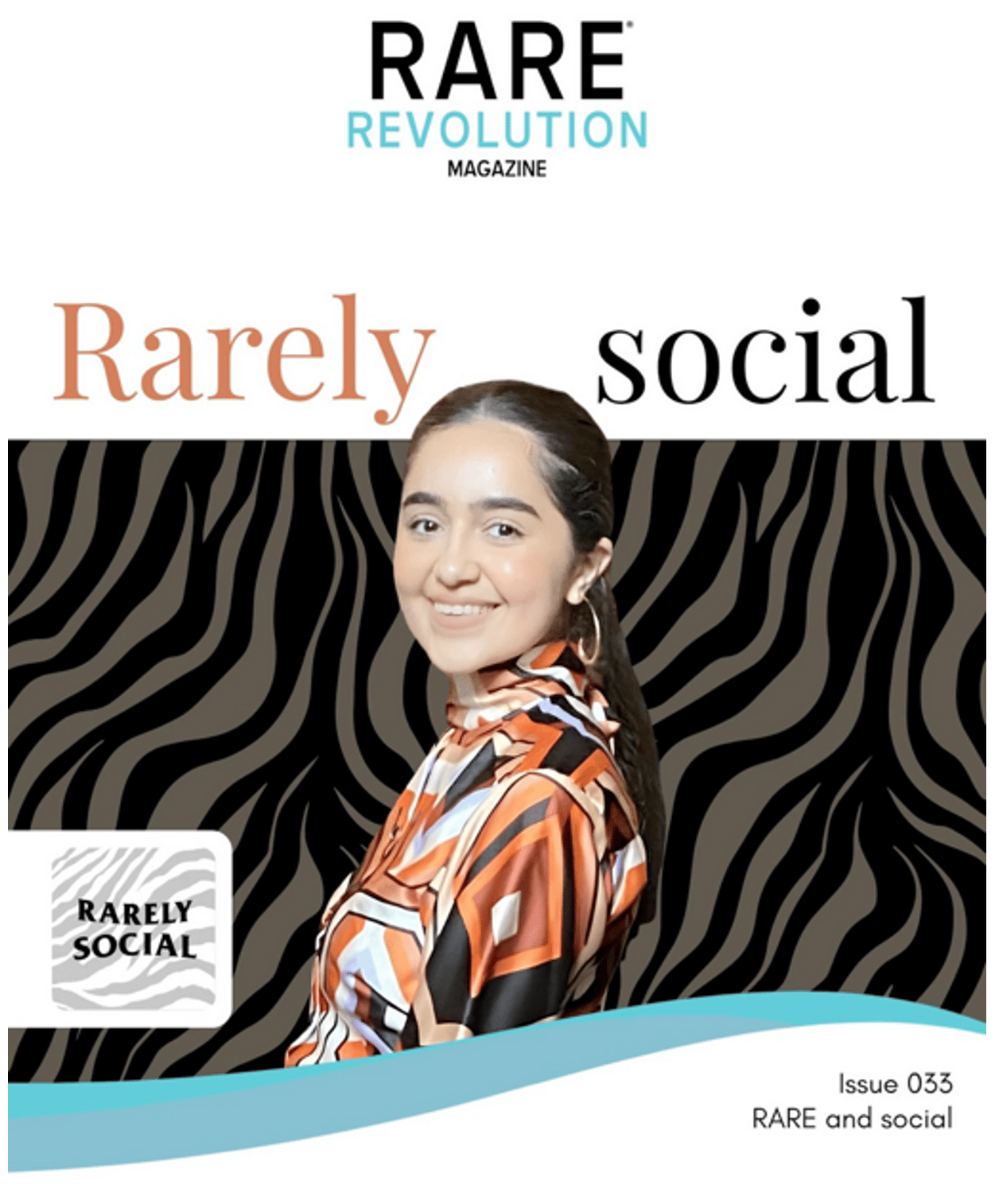
Although my current health hurdles have delayed its progression, my newest project is Rarely Social – a platform I have created to allow young people with rare conditions to connect with one another, from all over the world. With Rarely Social, my goal is to create a source from which young people can meet others and then take these friendships and connections forward independently to build their own communities and networks. Thus, the goal of rarely Social is not only to create networks but to empower young people to make their own.
Arguably, in contrast to my previous statement, I am not the girl I have always been. I have emerged stronger, more resilient and more powerful. With thanks to my family – my dad Ahmed, my mum Amina, my sister Fatima and my brother Ali – I was empowered to forge a stronger self following my Myasthenia diagnosis, rather than let it consume me. I see life in a different light now, and appreciate even the littlest of things. Each of us has a place and purpose on this world, and despite all the hurdles in my path, I try to fulfil mine. To raise awareness for rare conditions, to empower other young people and to stay true to myself.